Author: jasmeet

  • What is Artificial intelligence (AI)? How to Become an Artificial Intelligence Engineer?

    What is Artificial intelligence (AI)? How to Become an Artificial Intelligence Engineer?

    Reading Time: 3 minutes

    Artificial Intelligence (AI) is a computer system’s ability to mimic human behavior. Machines demonstrate this sort of intelligence, which can be compared to the natural intelligence that humans and animals demonstrate. 

     What does AI mean?

    Artificial intelligence is the machine’s response and ability to simulate and mimic human behavior in different situations. It is the science and engineering of building intelligent machines and computer programs. 

    Machines represent themselves with intelligence which is comparable to natural intelligence and take decisions based on those facts and learnings that is a characteristic of human and animal intelligence. Some of the common applications of AI are expert systems, natural language processing systems, speech recognition, and machine intelligence.

    How does AI work?

    As a toddler learns from new learnings and experiments, Ai learns from experiences. Artificial intelligence has its solution bank vested in past data and actions that may be assertive or negative. This solution bank along with the new information is used to make corrections and make a better version of itself by giving appropriate answers.

    As such to a great extent machine behaves human-like as both take decisions based on past information and experiences and simultaneously use fresh input commands.

    Who operates AI? What is AI Engineering?

    Artificial intelligence engineering is an emerging disciple that synchronizes principles from various fields of engineering, software development, computer science, and human-personified designs that replicate the Intelligence expected from humans. 

    What Does an AI Engineer Do?

    Ai works on the foundation base of AI models that make interpretations based on machine learning algorithms and deep learning neural networks. AI engineers primarily take the responsibility of building diverse AI applications like contextual advertising based on sentiment analysis, visual identification, and perception.

    AI engineer is a well-versed knowledgeable human that possesses a solid understanding of programming, software engineering, and data sciences. They apply different combinations of tools and techniques that perpetually process data and maintain the AI systems.

    What Does It Take To Become an AI Engineer?

    One can certainly have a promising career by opting for AI engineering by systematically following the stepping stones to success

    Obtain a Secondary School Diploma

    The most basic prerequisite to enter the field of artificial intelligence is to get a promising high school diploma with a specialization in a scientific discipline, such as chemistry, physics, or mathematics. Having Statistics as one of the objects is another. A strong foundation in scientific subjects helps you dive into the ocean of infinite knowledge smoothly.

    Complete a Bachelor’s Degree

    After the elementary phase, you need to get to your name a certified bachelor’s degree that is a 3 year integrated course. An engineering degree in information technology or computer science can also act as a connecting link to the professional artificial intelligence discipline. Your pervasive knowledge of data science and machine learning can fetch you a better career.

    Pursue a Master’s Degree

    After a good bachelor’s degree opt for a master’s to give your career a better chance. Not only it will increase your earning capacity but also a higher confidence. Master’s will allow you to peak in the details that would brush up your technical skills and entitle you to a specialized opportunity. An entrance like GATE will help you reserve a seat for the same.

     Employment opportunities.

    Technical knowledge with implied success in degree courses will help you specialize in the domain to rule the world. Now you would be eligible to apply for job positions in artificial intelligence (AI), deep learning, and machine learning. Amongst these, you can also earn the title of data scientist, AI expert, machine learning developer, ML engineer, robotics engineer, and data scientist. Such a promising educational background can help you earn the job role that can advance you on the path of transcending success.

    What does an AI Engineer actually do?

    As an AI engineer or an ML engineer, you will perform certain tasks that will include the development, testing, and deployment of AI models through programming algorithms like random forest, logistic regression, linear regression, and so on.

    The AI engineer has the following responsibilities:

    ? AI engineer primarily converts the machine learning models into application program interfaces (APIs).

    ? Build realistic AI models from scratch that will help the different departments of the organizations, product managers, and stakeholders understand what results they could gain from the models.

    ? Create the data ingestion and data transformation infrastructure

    ? Automate the infrastructure for data scientists.


    ? Perform statistical analysis and tune the results for the function of controlling and redirecting the efforts.


    ?
    Set up and ensure AI development and production infrastructure is up to industry standards

    ? Be a good team player, and work with liaison with others.

    How to Build a Career in AI

    Learnings and education come a long way, but working with industry people gives you the right understanding and exposure to the real world.

    Today Artificial intelligence is used in the fields of healthcare, education, research, science and solves the easiest to complex queries in everyday life.

    How Can Sifars Help You?

    Sifars has the best resources that can help you land an Artificial Intelligence career, especially for professionals willing to know how to become an AI engineer. The exponential growth of Sifars with diverse projects has helped Sifars to be one of the most preferred AI companies with expertise in Python and data science. 

    Talk to our Experts now.

    .

  • What is a Cookie? Should you Accept or Decline the Cookie?

    What is a Cookie? Should you Accept or Decline the Cookie?

    Reading Time: 4 minutes

    How often do you get the option of Accepting Cookies on your screen? The modern internet offers the user to accept or decline the HTTP cookies that are vulnerable to your privacy. Certainly, these cookies are a necessary aspect of a smooth web browsing experience. Cookies help you

    *Login immediately as you open the website

    *Remembers your passwords

    *Retrieve your Shopping cart and wishlist

    But as every coin has two sides, some cookies bring you a sweet experience some may bring you a bitter one. Cookies are the most vulnerable treasure trove that is a hub of private info for criminals and cyber attackers to spy on. So how often should you accept the cookies? Let us dive in deeper-

    What are Cookies?

    Cookies are particularly the text files that contain small sets of data that are retrieved to identify the computer as one works on the network. Eg- Storing your username and passwords. Another set of cookies known as HTTP cookies is beneficial to improve your web browsing experience and helps identify specific users.

    How Do Cookies Work?

    It is the server connection that stores the data in the form of cookies. Every set of data gets a unique ID that then gets labeled to the particular computer.

    As the cookie gets exchanged between the computer and network server, the server automatically reads the ID and retrieves the information to serve a smooth web experience for the user.

    What Are Cookies Used For?

    We all know the pain to enter the password every time you open a particular webpage or imagine every time you open your eCommerce website, your shopping cart and wishlist are empty and you have to find them all over again. Life would turn so miserable. At least for me!

    Websites make use of HTTP cookies to help you reach your favorites and make easy payments for a smooth internet experience.

    Cookies essentially help in the following ways

    # Session management with Cookies

    Cookies restore the data by recognizing the users and gathering the individual login information and preferences of the users. Such information helps retrieve the data on the website as per the user history.

    #Personalization.

    Ever wondered why you start getting Ads from various sellers once you visit any website for a product? It is all the work of cookies that use the data for making customized advertising based on your personalized sessions. Cookies help in targeted customized ads to the users.

    #Tracking.

    Ecommerce sites track the product previously viewed and remind you about the product now and then until you make the buy. They particularly make the best use of cookies to identify the user’s shopping needs and keep the items in the carts and wishlist until you make the payment. 

    Where are they stored?

    Cookies are stored in your computer systems. They are stored in your devices and retrieve information when the server matches itself with the unique label Id. As such you can manage the cookies yourself on your system.

    Why Cookies Can Be Dangerous ?

    Since the cookies are on your device and data doesn’t change itself they aren’t harmful in themselves. It is sometimes that the other websites may hijack the information stored in these cookies making them vulnerable to cyber-attacks.

    They work out smartly by accessing the browser histories and getting access to important information that is stored in the cookies that may attack your financial information.

    There are mainly two types of cookies that can be dangerous for your system –

    First-Party Cookies

    First-party cookies are generally safer and are generated by the website itself. They are less threatful and work in your favor until you are browsing some reputed secure websites only.

    Third-Party Cookies 

    It is the Ads that play the role of culprit here. You might see ads on the web page you are browsing. These Ads start generating cookies as soon as you reach the web page irrespective of you clicking on the ad. These third-party cookies pose a threat as they track the browsing history and gather personal information about the user.

    They track your browsing history by determining the user’s needs. Like if you first searched for a Camera, then you went on a certain eCommerce site and lastly to the particular online camera website.

    Zombie Cookies

    Zombie cookies are from a third-party and most threatful cookies that are permanently installed on users’ computers, even if you uninstall them. Also known as Flash cookies they remain on your system device even if you repeatedly delete them. Zombie cookies are also used by websites to ban specific users or retrieve important information as a part of a cyber attack.

    Allowing or Removing Cookies

    So next time you see the option of Accept or Decline. Think wisely. They are a part of creating the web experience smoother. It’s completely up to the user to accept /reject or limit them.

    So for easy surfing and streamlined web browsing, accept the cookies. Some users opt for NO cookies security risk than a convenient web experience.

    Removing cookies

    So by the time you reach this section, you may want to mitigate your risks of privacy breaches. It can also reset your browser tracking and personalization. To help, Sifars, your dedicated web development company provides the step-by-step procedure to help you remove the cookies.

    Removing the normal cookies is quite easy, but it could make certain websites harder to navigate. You may enlist some other internet security software to detect malicious cookies.

    Here’s how you can Allow or Remove Cookies:

    * Find the cookies by going through this path- Settings > Privacy> listed under Tools, Internet Options, or Advanced.

    * Now Click the boxes to allow the required cookies. 

    * The option may be written as -Allow local data. Identify the ones and click.

    * Simply uncheck the boxes for unwanted cookies

    Takeaway

    Regardless of how risky the cookies can be, one must evaluate the ease of use expected from the website that uses cookies. Mostly, cookies improve the web experience. Although it’s best to remain on guard and clean up the cookies often.

  • What is Laravel? What is Laravel used for in 2022?

    What is Laravel? What is Laravel used for in 2022?

    Reading Time: 3 minutes

    If you are planning to build a simple one-page website, a business platform, or even a large social networking site, Laravel can be an excellent choice. Laravel is known for delivering high performance, scalable architecture, and robust backend systems that power modern web applications.

    Laravel is a common term you will hear frequently if you are learning web development or working in software teams. If you are new to web technologies or want a clear understanding of Laravel, this guide will help you understand what Laravel is, how it works, and why it has become one of the most popular frameworks for developers.

    What is Laravel?

    Laravel is one of the most widely used web frameworks for building modern web applications. It is based on PHP and provides developers with powerful tools to convert ideas into fully functional web solutions.

    Laravel is a completely free and open-source framework supported by a large global developer community. It helps developers build scalable applications by providing a solid backend foundation.

    Many businesses rely on Laravel when working with a php web development company in usa because it enables developers to build secure, high-performance applications quickly.

    Laravel in Technical Terms

    Technically, Laravel is a PHP-based server-side framework used to develop custom web applications. It follows the MVC (Model–View–Controller) architecture, which helps developers organize application code into structured components.

    This architectural structure makes development more efficient and maintainable. Laravel also simplifies common tasks such as routing, authentication, templating, and database management.

    Because of these capabilities, Laravel is widely used in custom web application development projects across industries.

    How Does Laravel Work?

    Laravel operates using the MVC architecture pattern, which divides an application into three main components.

    Model

    The Model represents the structure of data used in the application. It defines how data is stored, accessed, and managed within the system.

    For example, a user database table that stores user information, posts, or activities would be part of the Model layer.

    Controller

    The Controller manages the logic of the application. It interacts with the Model to retrieve or update data and processes requests from users.

    For example, when a user requests to view a list of blog posts, the controller retrieves the relevant data from the database and prepares it for display.

    View

    The View is responsible for displaying data to users. It consists of the visual elements such as HTML templates and interface layouts that present the information retrieved by the controller.

    Together, these components make Laravel an efficient framework for building scalable applications.

    What is Laravel Used For?

    Laravel is widely used by thousands of companies around the world. Many well-known companies such as GitLab, Wattpad, and 9GAG use Laravel for building and maintaining their web platforms.

    Businesses across industries rely on Laravel because it supports the development of secure and scalable applications.

    Laravel is commonly used for:

    • Building both static and dynamic websites
    • Creating single-page applications (SPAs) and multi-page applications (MPAs)
    • Developing eCommerce platforms and social networking websites
    • Creating content management systems (CMS)
    • Building enterprise-level applications
    • Developing portals, forums, job platforms, and news websites

    Because of its flexibility, many organizations work with a web application development company in usa to build Laravel-based platforms that support large-scale business operations.

    Key Features of Laravel

    Laravel includes several powerful features that make it one of the most preferred frameworks for developers.

    MVC Architecture

    Laravel follows the MVC architecture pattern that helps organize application logic efficiently. This structured approach allows developers to manage complex applications while keeping the code clean and maintainable.

    Blade Template Engine

    Blade is Laravel’s powerful templating engine that simplifies the process of designing web interfaces. It allows developers to integrate dynamic data into templates easily and improves application performance.

    Artisan CLI

    Artisan is Laravel’s command-line interface that helps developers automate repetitive tasks. It assists in managing migrations, controllers, models, and application structures, significantly improving development efficiency.

    Eloquent ORM

    Laravel’s Eloquent ORM helps developers interact with databases using expressive PHP syntax rather than complex SQL queries. This feature simplifies database operations and improves productivity during development.

    PHPUnit Testing

    Laravel integrates PHPUnit, a powerful testing framework used to test application code. It helps developers identify bugs early and ensures that applications run smoothly with minimal errors.

    Because of these features, Laravel is widely used for building scalable custom web application development services for businesses and startups.

    Why Laravel Is So Popular

    Laravel has become extremely popular due to its developer-friendly environment and powerful built-in tools. The framework helps developers build applications faster while maintaining high performance and security.

    Some of the main reasons for Laravel’s popularity include:

    • Clean and structured architecture
    • Faster development cycles
    • Strong security features
    • Large developer community support
    • Easy integration with modern technologies

    These advantages make Laravel a preferred framework for companies building modern digital platforms.

    Conclusion

    Laravel has earned its reputation as one of the most powerful frameworks for building modern web applications. Whether you want to develop a simple business website or a large enterprise platform, Laravel provides the flexibility and scalability required for modern development.

    Its powerful architecture, built-in tools, and strong community support make it an ideal choice for developers and businesses alike.

    If you are planning to build a scalable web application, working with an experienced development team can help turn your ideas into reality.

  • A Complete Guide on How to Hire a React js Developer

    A Complete Guide on How to Hire a React js Developer

    Reading Time: 5 minutes

    React is one of the most popular JavaScript libraries used for building modern and interactive web applications. Initially developed by Facebook and released as an open-source project in 2013, React quickly became a preferred choice for developers worldwide.

    React is known for its component-based architecture, which allows developers to build reusable UI components. This modular approach improves development speed and makes web applications easier to maintain and scale.

    Because of these advantages, many companies choose to hire React developers to build high-performance web applications and modern user interfaces.

    This guide will help you understand why React developers are important, what React JS is, and how to hire the right developer for your project.

    Why Hire a React JS Developer?

    A React JS developer is a specialized web professional who understands the React library and modern frontend development technologies. Hiring an experienced developer ensures your website or application performs efficiently and delivers a better user experience.

    Businesses often partner with a web development company USA to access skilled developers who can build scalable and secure digital platforms.

    Here are some major advantages of hiring a React JS developer.

    Time Efficiency

    Time is one of the most valuable resources for any business. Hiring a professional React developer helps reduce development time and ensures your project is completed efficiently.

    Experienced developers already understand the framework and can quickly solve technical challenges. This allows business owners to focus on branding, marketing, and growing their business instead of dealing with technical issues.

    Modern Technical Expertise

    Technology evolves rapidly, and React developers stay updated with the latest tools and frameworks. A skilled developer can implement advanced features, improve performance, and create modern user interfaces that enhance your brand’s digital presence.

    Professional Development Approach

    A professional developer does more than just build a website. They focus on designing a product that stands out in the market. React developers can add creative elements and unique design structures that improve the usability and visual appeal of your platform.

    High Performance Applications

    React applications are known for their speed and scalability. Hiring a skilled developer ensures that your web application runs smoothly while handling high traffic and complex user interactions.

    Companies that need scalable applications often work with a custom web development company to build optimized React-based platforms.

    What is React JS?

    React JS is a JavaScript library used to build dynamic user interfaces, especially for single-page applications. It allows developers to create reusable UI components that improve development efficiency and application performance.

    Since its launch in 2013, React has gained massive popularity among developers and businesses. Today, many large organizations use React to power their web applications.

    Major companies like Facebook and Netflix rely on React to build fast and interactive user interfaces.

    Key Features of React JS

    React includes several powerful features that make it a preferred choice for modern web development.

    Component-Based Architecture

    React applications are built using reusable components. Each component represents a specific part of the user interface and can be reused across the application.

    This modular approach simplifies development and reduces coding effort.

    SEO Friendly Structure

    React applications can support server-side rendering, which helps improve SEO performance. Search engines can easily crawl and index React-based websites when properly optimized.

    This is especially beneficial for businesses that want their applications to rank higher in search engine results.

    Active Developer Community

    React has a strong developer community that actively contributes tutorials, tools, and support resources. Developers can quickly find solutions and best practices through community forums and documentation.

    Strong Industry Adoption

    React has become one of the most widely used frontend technologies. Many global companies rely on React for building modern web platforms because of its performance and flexibility.

    Virtual DOM

    React uses a Virtual DOM system that improves application performance. Instead of updating the entire page, React only updates the components that have changed.

    This approach significantly improves speed and user experience.

    Before Hiring a React Developer: Analyze Your Requirements

    Before starting the hiring process, it is important to clearly define your project requirements.

    Many developers claim expertise in React, but understanding your project needs helps you identify the right professional.

    Ask yourself the following questions before you hire dedicated developers:

    • Do you need a frontend developer or full-stack developer?
    • What technologies will your project require?
    • What is the scope and timeline of the project?

    Defining these factors will help you hire the right developer for your project.

    Frontend Developer

    A frontend developer focuses on the client-side of the application. They build the user interface using technologies such as HTML, CSS, and JavaScript.

    Frontend developers ensure the application works smoothly across different browsers, devices, and operating systems.

    Backend Developer

    Backend developers build the server-side logic of applications. They handle databases, APIs, and core system functionality that supports the frontend interface.

    Full-Stack Developer

    Full-stack developers have expertise in both frontend and backend technologies. They can manage the entire development process including design, coding, database management, and deployment.

    Many businesses prefer hiring full-stack professionals when building complex applications.

    Five Steps to Hire the Perfect React JS Developer

    Hiring the right developer requires careful evaluation. Here are five important steps that help you find the best React JS developer.

    Check Technical Expertise

    Always hire developers who have proven experience with React and modern JavaScript technologies. Experienced developers can handle complex challenges and deliver better solutions.

    Understand the Development Process

    Web development is a multi-stage process that includes planning, designing, coding, testing, and deployment. Choose developers who follow structured development processes.

    Ensure SEO-Friendly Development

    A website must not only look good but also perform well in search engines. Developers should build applications that support SEO best practices.

    Evaluate Communication Skills

    Communication plays a critical role in project success. Developers should clearly understand your requirements and provide regular project updates.

    Review Portfolio and References

    Before hiring a developer, review their previous work and client testimonials. This helps you evaluate their experience and the quality of their projects.

    Freelance Platforms to Hire React Developers

    Freelance platforms are a popular way to find skilled developers. These platforms allow businesses to connect with professionals from around the world.

    Upwork

    Upwork is one of the largest freelancing platforms with millions of developers offering services across different technologies including React JS.

    Fiverr

    Fiverr is a popular marketplace where developers provide services at competitive prices. Businesses can hire experienced React developers for various project needs.

    Freelancer

    Freelancer.com allows companies to post projects and receive bids from developers worldwide. It is a trusted platform for hiring skilled professionals.

    Social Media Platforms for Hiring Developers

    Social media platforms also help businesses connect with talented developers.

    Facebook Groups

    Many Facebook communities are dedicated to web development and React programming. These groups allow companies to connect with skilled developers.

    LinkedIn

    LinkedIn is one of the most professional platforms for finding experienced developers. Companies can review developer profiles, skills, and experience before contacting them.

    Twitter

    Developers frequently share their work and knowledge on Twitter. Searching hashtags like #ReactDeveloper or #ReactJS can help businesses discover talented professionals.

    Conclusion

    React JS is a powerful JavaScript library used to build modern, fast, and interactive web applications. Its component-based architecture, strong community support, and high performance make it one of the best tools for frontend development.

    Hiring the right developer plays a crucial role in the success of your web project. By understanding your requirements and following a structured hiring process, you can find the perfect React developer for your business.

    Businesses that want scalable and professional applications often hire React developers from experienced development teams to ensure high-quality results.

  • 14 Best Web Development Frameworks in 2022 (Frontend & Backend)

    14 Best Web Development Frameworks in 2022 (Frontend & Backend)

    Reading Time: 3 minutes

    Modern web applications require strong architecture, efficient performance, and scalable development environments. This is where web development frameworks play a crucial role.

    Frameworks help developers build powerful web applications faster by providing structured tools, reusable components, and built-in functionalities.

    In this guide, we will explore the 14 best web development frameworks in 2022 that are widely used for frontend and backend development.

    What is a Web Development Framework?

    A web development framework is a software framework designed to support the development of web applications, web services, and APIs.

    To understand it simply, imagine preparing tea. Basic tea requires water, milk, and tea leaves. But when you add sugar, cardamom, and ginger, the flavor becomes richer and more enjoyable.

    Similarly, frameworks enhance web applications by adding powerful functionalities, improving performance, and simplifying development.

    Frameworks act as a foundation that allows developers to build modern applications faster and more efficiently. Businesses often rely on an experienced web development company USA to select the right framework based on their project requirements.

    What Are Frontend and Backend Frameworks?

    Web applications consist of two main components: frontend and backend.

    Frontend Frameworks

    Frontend frameworks manage the user interface (UI) of a web application. They control how the application looks and how users interact with it.

    These frameworks help developers build responsive layouts, dynamic interfaces, and interactive web experiences.

    Backend Frameworks

    Backend frameworks manage the server-side logic of web applications. They handle database interactions, APIs, authentication systems, and application logic.

    Many businesses partner with a web application development company in usa to build scalable applications using both frontend and backend frameworks.

    Best Backend Web Development Frameworks

    Below are some of the most popular backend frameworks used by developers worldwide.

    1. Express.js

    Express.js is one of the most popular Node.js frameworks used for building web applications and APIs. It is minimal, flexible, and highly efficient for creating scalable server-side applications.

    Express is widely used in the MEAN stack and supports REST APIs for seamless web experiences.

    Language: JavaScript
    Trusted by: Accenture, IBM, Uber

    2. Django

    Django is a powerful Python framework known for its security and scalability. It follows the Model–View–Template (MVT) architecture and provides built-in features for authentication, database management, and security.

    Language: Python
    Trusted by: Google, YouTube, Instagram

    3. Ruby on Rails

    Ruby on Rails is a developer-friendly framework that follows the Model–View–Controller (MVC) architecture. It simplifies web development by offering libraries and tools that accelerate development.

    Language: Ruby
    Trusted by: Airbnb, GitHub, Shopify

    4. Laravel

    Laravel is a powerful PHP framework widely used for building modern web applications. It provides features like routing, authentication, and API integration.

    Laravel follows the MVC architecture and is popular among businesses seeking custom web application development services for scalable web solutions.

    Language: PHP

    5. Spring Framework

    Spring is a powerful backend framework based on Java. It is widely used to build large-scale enterprise applications due to its speed, security, and scalability.

    Language: Java

    6. CodeIgniter

    CodeIgniter is a lightweight PHP framework used for building dynamic web applications. It provides excellent performance without heavy dependencies.

    Language: PHP

    7. Play Framework

    Play is a modern web framework based on Java and Scala. It offers high productivity and follows the convention-over-configuration principle.

    Language: Java & Scala

    8. Meteor.js

    Meteor is a full-stack JavaScript framework used for building real-time web and mobile applications. It supports cross-platform development using a single codebase.

    Language: JavaScript

    9. ASP.NET

    ASP.NET is a Microsoft framework used to build high-performance web applications and enterprise platforms.

    Language: C#

    Best Frontend Web Development Frameworks

    Frontend frameworks focus on building responsive and interactive user interfaces.

    10. Angular

    Angular is a powerful frontend framework developed by Google. It is widely used for building single-page applications (SPAs) and enterprise-level web platforms.

    Language: TypeScript / JavaScript

    11. React

    React is one of the most popular JavaScript libraries used for building modern UI components. It uses Virtual DOM technology to improve performance and user experience.

    Language: JavaScript

    12. Vue.js

    Vue.js is a progressive JavaScript framework that helps developers build dynamic interfaces and scalable web applications. It is known for its simplicity and flexibility.

    Language: JavaScript

    13. Ember.js

    Ember.js is a feature-rich JavaScript framework that supports two-way data binding and strong architectural patterns.

    Language: JavaScript

    14. Backbone.js

    Backbone.js is a lightweight frontend framework used to build single-page applications. It follows the MV architecture pattern and integrates easily with other libraries.

    Language: JavaScript

    How to Choose the Right Web Framework

    Selecting the right framework depends on several factors such as project complexity, scalability requirements, and development goals.

    Businesses looking to build modern web platforms often consult a custom web development company to determine the best technology stack for their project.

    Some important factors to consider include:

    • Application size and complexity
    • Development speed requirements
    • Community support and documentation
    • Performance and scalability needs

    Final Thoughts

    Web development frameworks play a vital role in building modern web applications. They provide structure, improve efficiency, and help developers create scalable digital products.

    The frameworks mentioned above represent some of the most widely used technologies for both frontend and backend development. Each framework has its own strengths, and the right choice depends on the specific goals of your project.

    Organizations that want high-performance digital platforms often collaborate with a professional development team to select the most suitable technologies and build scalable web applications.

  • Why Ionic? 5 Good Reasons to Use Ionic

    Why Ionic? 5 Good Reasons to Use Ionic

    Reading Time: 3 minutes

    Choosing is never easy. Selecting a gift for someone can already be difficult, and making technology choices can be even harder. Most people prefer going with what is trending or what delivers the best results.

    In today’s digital world, the market is flooded with mobile apps. Online shopping, food delivery, payments, and bookings have become part of everyday life. Almost every smartphone today is filled with visually appealing apps that make daily tasks easier.

    This shift in user behavior has completely transformed the mobile app industry.

    Whether you run a business, a coaching institute, or a restaurant, having a strong digital presence is essential. Even if you do not have a physical store, a mobile application can help you reach customers globally.

    But once you decide to build an app, the next important question appears:

    Which framework should you use for mobile app development?

    Earlier, native apps were the most common choice. However, today hybrid frameworks are gaining huge popularity. One such framework that has changed the landscape of app development is Ionic.

    The Ionic framework works well with technologies such as HTML5, CSS, and JavaScript, allowing developers to create apps that are visually appealing and highly functional. It enables developers to build powerful cross-platform apps that provide an excellent user experience.

    Businesses looking for modern app solutions often rely on a mobile app development company USA to build scalable applications using frameworks like Ionic.

    If you are still wondering why Ionic is a good choice, here are five key reasons.

    5 Reasons to Choose Ionic

    1. Open-Source Framework

    Ionic is one of the most reliable open-source frameworks available for mobile app development.

    Because it is open source, developers can access a large community, extensive documentation, and powerful tools without expensive licensing costs.

    This makes Ionic a cost-effective option for businesses looking to build high-quality apps without heavy development expenses.

    2. Cross-Platform Development

    One of the biggest advantages of Ionic is cross-platform compatibility.

    Once your application is developed, it can run on multiple platforms including:

    • Android
    • iOS
    • Windows

    This means businesses can reach a larger audience without developing separate apps for different platforms.

    Companies often hire experts or hire ionic developers to ensure their applications work smoothly across all devices and operating systems.

    3. Backed by Angular

    Ionic integrates seamlessly with Angular, one of the most powerful frameworks for building dynamic web and mobile applications.

    Angular provides a strong structure for applications and supports advanced features such as:

    • Data binding
    • Component-based architecture
    • Performance optimization

    The combination of Angular and Ionic allows developers to build reliable and high-performance applications.

    4. Powerful UI Components

    The Ionic platform acts like a canvas for developers to build visually engaging user interfaces.

    Developers can easily add:

    • Buttons
    • Menus
    • Layout elements
    • Custom themes
    • Interactive animations

    Because Ionic is built on CSS and JavaScript, it allows developers to create elegant and responsive interfaces.

    This is why many businesses choose a custom mobile app development company to design visually impressive apps using Ionic technology.

    5. Cordova Plugin Support

    Ionic supports Apache Cordova plugins, which allow developers to integrate native device features into applications.

    These features include:

    • Camera access
    • Battery status
    • Geolocation
    • Device storage
    • Push notifications

    Cordova plugins enable developers to combine web technologies with native device capabilities, resulting in powerful hybrid apps.

    Testing and Debugging

    Testing mobile applications is an important part of the development process.

    Ionic simplifies testing by allowing developers to run applications directly in desktop browsers. This helps developers quickly identify issues before deploying the app.

    It also supports remote debugging and real-device testing to ensure apps perform well across different platforms.

    Businesses often work with a mobile app development company for startups to ensure that testing, debugging, and performance optimization are handled professionally.

    Conclusion

    Choosing the right framework for your mobile app can be challenging. However, Ionic stands out as one of the most reliable frameworks for cross-platform app development.

    Its open-source nature, cross-platform compatibility, powerful UI components, and Cordova plugin support make it an excellent choice for building modern applications.

    If you are planning to build a mobile app using Ionic, working with experienced developers can help bring your idea to life.

    At Sifars, our expert developers help businesses build scalable and user-friendly applications using modern technologies.

    👉 If you are looking to hire ionic developers, connect with our team to transform your idea into a powerful mobile application.

    🌐 www.sifars.com

  • What is Digital Transformation? Necessity or Disruption

    What is Digital Transformation? Necessity or Disruption

    Reading Time: 3 minutes

    Digital transformation is the process of integrating digital technologies into every area of a business to improve operations, efficiency, and customer experience. It is not a one-time change but a continuous journey that involves adaptation, experimentation, evaluation, and improvement.

    Organizations adopt digital transformation to deliver better value to customers and stay competitive in a rapidly evolving digital economy.

    To understand this concept more clearly, imagine students moving from junior classes to senior classes in school. As students progress, they adopt new rules, responsibilities, and expectations. Some students welcome the change, while others take time to adapt.

    A similar transformation happens inside organizations. Some departments adapt quickly to new technologies and automation, while others find it challenging. However, successful companies understand that adapting to change is essential for long-term growth.

    Many organizations rely on custom web application development services to build digital platforms that support modern workflows and improve operational efficiency.

    Digital Transformation in 2021

    The COVID-19 pandemic became one of the biggest catalysts for digital transformation across the world. Businesses, institutions, and organizations had to rapidly shift toward digital technologies to survive.

    New working models such as remote work, online collaboration, and digital platforms became the new normal. Companies adopted innovative business models and digital tools to meet changing customer expectations.

    Traditional business methods evolved into digital products and services. Mobile apps, cloud platforms, and eCommerce websites experienced massive growth during this period.

    Many companies accelerated their transformation by working with a web application development company in USA to create scalable platforms that support online operations and digital customer experiences.

    Rapid application development and modern technologies opened new opportunities for innovation and growth.

    Embarking on Digital Transformation

    Organizations that want to succeed in the digital age must follow a structured approach to transformation.

    Understanding Customer Needs

    The first step toward successful digital transformation is understanding customer behavior and expectations.

    Businesses must analyze how customers interact with products, services, and digital platforms. Based on these insights, companies can align their strategies, processes, and technologies with customer needs.

    Customer-centric transformation allows businesses to create better digital experiences and deliver higher value.

    IT as a Model Creator

    Earlier, IT departments were mainly responsible for managing infrastructure and fixing technical issues.

    Today, IT has become a strategic driver of innovation.

    Technology teams now help organizations design new business models, implement automation, and develop scalable digital platforms. They play a critical role in aligning technology solutions with business objectives.

    Organizations often partner with a custom software development company to build tailored systems that support digital transformation initiatives.

    Responding to Customer Expectations

    Modern customers expect faster, smarter, and more personalized services.

    To meet these expectations, businesses are redesigning their operational models and adopting advanced technologies such as:

    • Cloud computing
    • Artificial intelligence
    • Data analytics
    • Automation tools

    These technologies enable companies to deliver seamless experiences and improve efficiency across departments.

    For example, businesses increasingly invest in enterprise software development services to automate workflows, manage data effectively, and scale operations.

    Getting Acquainted with Digital Technologies

    Today, digital technology touches almost every aspect of daily life. Cloud platforms, remote collaboration tools, mobile applications, and DevOps practices have become essential for modern organizations.

    Companies must train employees and customers to adapt to these digital systems. Successful transformation requires both technological adoption and cultural change within the organization.

    Why Digital Transformation Matters

    Many businesses initially question the need for digital transformation.

    For example:

    • If designs can be drawn manually, why use design software?
    • If employees can sign attendance registers, why use biometric systems?
    • If traditional stores work well, why invest in online platforms?

    The pandemic provided a clear answer to these questions.

    Organizations that embraced digital technologies were able to continue operating even during global disruptions.

    Digital transformation enabled:

    • Remote work and virtual collaboration
    • Online commerce and digital marketing
    • Cloud-based business operations
    • Digital communication with customers

    Businesses that adopted digital tools were better equipped to adapt and survive.

    Conclusion

    Digital transformation is no longer optional. It has become a necessity for businesses that want to remain competitive in the modern economy.

    Organizations must embrace change, experiment with new technologies, and continuously improve their digital capabilities.

    Although transformation can be challenging, companies that adapt successfully gain significant advantages in efficiency, innovation, and customer engagement.

    At Sifars, we help businesses implement modern technology solutions that support digital transformation and long-term growth.

    If you are planning to modernize your operations, explore how our custom web application development services and enterprise software development services can help your organization build scalable digital systems.

    🌐 www.sifars.com

  • 5 Best Examples of Apps Made With Python

    5 Best Examples of Apps Made With Python

    Reading Time: 3 minutes

    Websites and web applications have become one of the biggest trends in the digital world. Businesses are increasingly shifting toward web apps because they offer smooth functionality, better performance, and a clean user experience.

    Among the many programming languages available today, Python has proven to be one of the most powerful and versatile technologies for web development. Python provides a wide range of libraries and frameworks that enable developers to build scalable and feature-rich applications.

    It is also an open-source language supported by a large developer community. Because of its flexibility and efficiency, many popular platforms rely on Python for their backend systems.

    Companies often work with a python developers or a software development company for startups to build scalable digital products using Python and Django frameworks.

    Below are some of the most popular apps built with Python.

    5 Best Examples of Apps Made With Python

    Instagram

    Instagram is one of the most popular social media platforms in the world. Initially, it was created as a simple photo-sharing application that allowed users to capture images and apply filters before sharing them.

    Over time, Instagram evolved into a massive social networking platform with features such as:

    • Stories
    • Reels
    • Messaging
    • Business marketing tools

    Today Instagram has hundreds of millions of active users daily. Python plays a major role in managing its scalability and backend infrastructure.

    Many companies use AI development company services to build modern applications inspired by large platforms like Instagram.

    Pinterest

    Pinterest became extremely popular as a visual discovery platform where users can find and save creative ideas.

    The platform allows users to bookmark and organize images related to topics such as:

    • Fashion
    • Home design
    • Food
    • Travel
    • Business ideas

    Pinterest uses Python and the Django framework to manage its large content database and deliver a smooth user experience.

    Python helps the platform handle millions of users and huge volumes of visual data efficiently.

    Disqus

    Disqus is one of the most widely used commenting platforms on the internet. It allows websites and blogs to add interactive comment sections where users can share opinions and participate in discussions.

    Disqus offers features such as:

    • Multiple login options
    • Cross-site notifications
    • Moderation tools
    • Community engagement features

    The platform uses Python and Django to build scalable web infrastructure capable of handling millions of interactions every month.

    Businesses planning to build discussion platforms or community websites often work with a custom web application development services provider to build similar systems.

    Spotify

    Spotify is the world’s leading music streaming platform and serves millions of users globally.

    The platform allows users to:

    • Stream music instantly
    • Discover new artists
    • Create playlists
    • Receive personalized recommendations

    Python plays a key role in Spotify’s backend architecture, especially in areas such as:

    • Data analysis
    • Recommendation algorithms
    • Backend services

    Its ability to process large data sets quickly makes Python ideal for applications like Spotify that require advanced analytics and scalability.

    Uber

    Uber is a globally recognized ride-hailing and delivery platform operating in thousands of cities worldwide.

    The platform manages complex operations such as:

    • Ride booking
    • Route optimization
    • Payment processing
    • Real-time driver tracking

    Python helps Uber handle large volumes of data and perform complex calculations efficiently.

    Its scalability and performance allow Uber to manage millions of rides and transactions daily.

    Many startups building transportation or delivery platforms rely on software development company for startups services to create scalable solutions similar to Uber.

    The Portfolio Speaks for Itself

    The success of these platforms clearly demonstrates the power of Python as a programming language.

    In its early days, Python was mostly used by startups because it was simple and cost-effective. However, as companies began to realize its scalability and flexibility, it quickly became one of the most widely used programming languages in the world.

    Today Python is used across industries for:

    • Web development
    • Artificial intelligence
    • Data analytics
    • Automation
    • Software development

    Many businesses partner with an experienced AI development company or development team to build powerful digital products using Python.

    Python continues to grow in popularity and is considered one of the most promising technologies for developers and businesses alike.

    If you have an idea for a web application or digital platform, working with a professional development team can help bring your concept to life.

  • 7 Best Examples of Web Apps (PWA)

    7 Best Examples of Web Apps (PWA)

    Reading Time: 3 minutes

    In the rapidly evolving digital world, the pandemic of 2020 significantly increased internet traffic on mobile devices. People began relying heavily on digital platforms for shopping, education, entertainment, and online services.

    Businesses that already had a strong online presence were able to adapt quickly. Others accelerated their digital strategies to meet changing customer expectations.

    During this period, many companies adopted a modern development approach known as Progressive Web Apps (PWA). PWAs are advanced web applications that combine the features of websites and mobile apps to deliver faster performance, better navigation, and an improved user experience.

    Today, many businesses work with a web application development company in usa to build scalable Progressive Web Apps that work smoothly across multiple devices.

    Why Progressive Web Apps?

    A Progressive Web App is essentially a responsive web application enhanced with advanced capabilities that provide an app-like experience.

    PWAs are built using core web technologies such as:

    • HTML
    • CSS
    • JavaScript

    These technologies enable developers to build lightweight applications that load quickly and provide seamless user interaction.

    Companies that focus on custom web application development services often recommend PWAs because they combine performance, accessibility, and cost efficiency.

    A Simple Explanation of PWA

    Progressive Web Apps look and behave like native mobile applications but run inside a browser. They are lighter, faster, and easier to maintain than traditional apps.

    Some of the features that make PWAs powerful include:

    • Push notifications
    • Bluetooth connectivity
    • Camera access
    • Offline support
    • App-like interface

    These capabilities allow businesses to provide a smooth and engaging digital experience.

    Why Progressive Web Apps Became Popular

    In the technology landscape, PWAs are often associated with performance and accessibility. A web application must meet certain standards to qualify as a Progressive Web App.

    These include:

    • Mobile-friendly design
    • Search engine indexability
    • GPS capability
    • Installable interface
    • Offline functionality

    When opened in a browser, a PWA can even create a desktop shortcut and behave like a native application.

    7 Best Examples of Progressive Web Apps

    1. Spotify

    Spotify is one of the most popular music streaming platforms in the world. The company introduced a PWA version to deliver faster performance and a smoother interface.

    The PWA improved accessibility and allowed users to experience the platform without installing the native application.

    Goals Achieved

    • Monthly users increased by up to 130%
    • Increased user engagement
    • Higher listening hours

    2. Pinterest

    Pinterest is one of the most widely used platforms for discovering and sharing ideas through images.

    By adopting PWA technology, Pinterest improved its performance and user engagement across global markets.

    Goals Achieved

    • Increased user interaction
    • 30% increase in time spent on the website
    • Revenue growth of nearly 40%

    3. Trivago

    Trivago is a hotel search platform used by millions of travelers to compare hotel prices.

    Its Progressive Web App enabled faster browsing and improved functionality, especially in areas with low internet connectivity.

    Goals Achieved

    • Conversion rates increased by up to 90%
    • Higher user engagement
    • 120% increase in traffic to offer pages

    4. Twitter Lite

    Twitter introduced Twitter Lite as a PWA to deliver faster performance for users with limited internet connectivity.

    The lightweight application improved engagement and increased social interaction.

    Goals Achieved

    • 70% increase in tweets through PWA
    • Lower bounce rate
    • Increased user engagement

    5. Alibaba

    Alibaba implemented a Progressive Web App to improve the experience for its global eCommerce users.

    The PWA provided faster page loads, improved navigation, and enhanced mobile performance.

    Goals Achieved

    • Conversion rates increased by 80%
    • Active users increased by 30%
    • 70% increase in engagement

    6. Flipkart

    Flipkart, one of India’s largest eCommerce platforms, introduced its PWA to provide a smooth shopping experience even on slower internet connections.

    Goals Achieved

    • Conversion rate increased by 60%
    • Longer time spent on the platform
    • Improved customer re-engagement

    7. OLX

    OLX is one of the world’s largest online classified marketplaces.

    The platform adopted PWA technology to deliver faster performance and improve engagement across mobile devices.

    Goals Achieved

    • User engagement increased by 200%
    • Click-through rate increased by 150%
    • Bounce rate decreased by 80%

    And the List Goes On

    Progressive Web Apps have proven their effectiveness by delivering measurable results in terms of performance, engagement, and conversions.

    Many global companies now rely on PWAs to provide faster digital experiences while reducing development costs.

    Popular platforms using PWA technology include:

    • Facebook
    • NASA
    • Instagram Lite
    • Uber
    • Forbes
    • Google Maps
    • Telegram
    • The Weather Channel

    Organizations increasingly collaborate with SaaS web application development company teams to build scalable PWA platforms that support modern digital services.

    How to Build Your Own Progressive Web App

    If you own an eCommerce website or a digital platform, converting it into a Progressive Web App can significantly improve performance and user engagement.

    PWAs are suitable for:

    • eCommerce platforms
    • service marketplaces
    • business portals
    • content websites
    • startup platforms

    Many startups partner with a startup web development company to transform their existing websites into high-performing Progressive Web Apps.

    At Sifars, we help businesses build modern digital platforms using scalable technologies and advanced web architectures.

    If you want to build a Progressive Web App or upgrade your existing website, our development team can help turn your idea into a powerful digital solution.

    🌐 www.sifars.com

  • Angular Js and its Super Features

    Angular Js and its Super Features

    Reading Time: 4 minutes

    In today’s era of digital transformation, adapting to technological change has become essential for businesses. The rapid shift toward online platforms, especially after the global pandemic, has made a strong digital presence a necessity for organizations of every size.

    Today, businesses interact with customers through websites and web applications for activities such as:

    • Online shopping
    • Digital education
    • Social networking
    • Professional webinars
    • Online services and consultations

    A powerful website or web application acts as the digital face of a business. To build high-performing applications that offer speed, flexibility, and scalability, developers rely on modern frameworks.

    One of the most widely used frameworks for building modern web applications is AngularJS.

    What is AngularJS?

    AngularJS is an open-source front-end framework developed by Google that helps developers build dynamic and interactive web applications. Since its introduction in 2009, Angular has evolved into one of the most powerful tools for creating scalable and feature-rich applications.

    Angular simplifies development by providing structured architecture, reusable components, and powerful development tools. Because of these advantages, many organizations collaborate with a web application development company in USA to build scalable platforms using Angular technology.

    Businesses often choose Angular when developing custom web application development services because it improves productivity, performance, and maintainability.

    Key Features of AngularJS

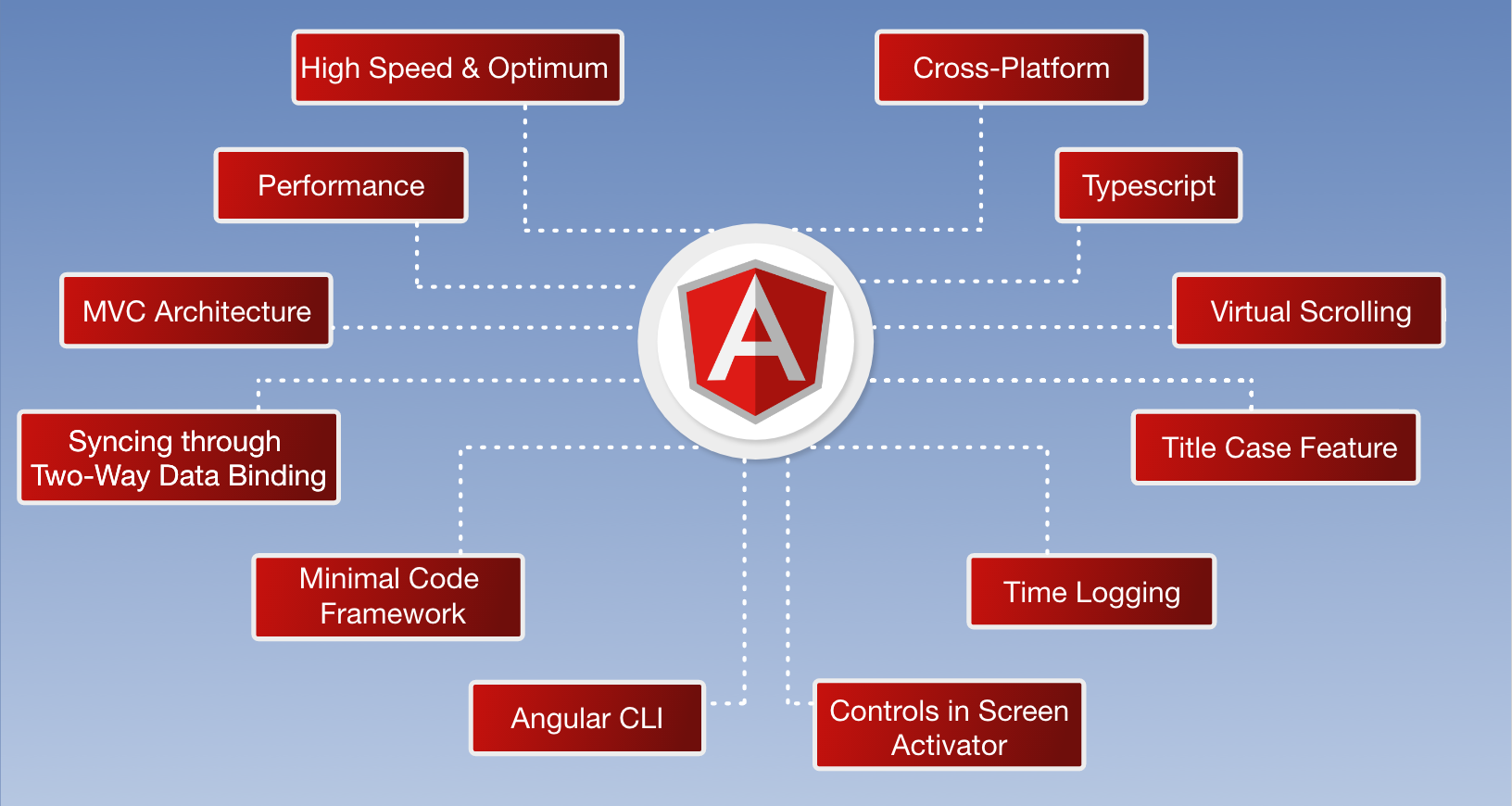
    1. Cross-Platform Development

    Angular supports cross-platform development, allowing developers to create applications that run smoothly across multiple devices and operating systems.

    Developers can also build Progressive Web Apps (PWAs) using Angular. These applications provide an app-like experience within a browser and can run on desktops, tablets, and mobile devices.

    Cross-platform development ensures consistent performance and user experience across different platforms.

    2. High Speed and Performance

    Angular applications are known for their fast loading speed and high performance. The framework optimizes the rendering process and efficiently converts code into browser-friendly structures.

    Angular can also integrate easily with backend technologies such as:

    • Node.js
    • PHP
    • .NET

    Another powerful feature is automatic code splitting, which loads only the components required for a specific user interaction. This reduces loading time and improves application performance.

    Businesses building scalable digital platforms often rely on enterprise web development services to implement optimized Angular applications.

    3. MVC Architecture

    Angular follows the Model-View-Controller (MVC) architecture that separates application logic into three components:

    Model – manages application data
    View – handles the user interface and presentation
    Controller – connects the model and view while managing application behavior

    This architecture helps developers maintain a well-structured codebase and simplifies long-term maintenance.

    4. Two-Way Data Binding

    Two-way data binding is one of Angular’s most powerful features. It allows automatic synchronization between the application data and the user interface.

    When the application data changes, the interface updates instantly. Similarly, any changes made by users in the interface automatically update the underlying data.

    This feature reduces manual coding and significantly improves development efficiency.

    5. Minimal Coding Structure

    Angular reduces the amount of code developers need to write by automating many development processes. The framework automatically connects different components of the application.

    Because of this simplified structure:

    • Development becomes faster
    • Applications become easier to maintain
    • Scaling the application becomes simpler

    6. TypeScript Support

    Angular is built using TypeScript, an advanced version of JavaScript that improves code reliability and maintainability.

    TypeScript offers several advantages, including:

    • Strong typing
    • Improved debugging
    • Better code organization
    • Enhanced developer productivity

    These features help developers create scalable and reliable applications.

    7. Virtual Scrolling

    Angular includes virtual scrolling, which improves performance when handling large data sets.

    Instead of loading all elements at once, Angular loads only the elements currently visible to the user. This approach reduces memory usage and significantly increases application speed.

    8. Efficient Navigation and Routing

    Angular provides powerful routing capabilities that help developers control navigation between different pages or components.

    This allows developers to manage user flows efficiently while ensuring smooth transitions between application views.

    9. Angular CLI (Command Line Interface)

    Angular CLI is a powerful development tool that automates many common development tasks.

    With Angular CLI, developers can:

    • Create new projects quickly
    • Generate components and services automatically
    • Run development servers easily
    • Perform testing and debugging
    • Maintain code quality

    This tool greatly speeds up the development process and improves productivity.

    10. Directives for Dynamic UI

    Angular allows developers to extend HTML functionality through directives.

    Directives help manipulate elements, attributes, and behaviors within the Document Object Model (DOM). This enables developers to create highly dynamic and interactive user interfaces.

    11. Component Development Kit (CDK)

    Angular’s Component Development Kit (CDK) provides tools for building reusable user interface components.

    It includes features such as:

    • Virtual scrolling support
    • Performance optimization tools
    • Dynamic component loading

    These tools make it easier to build scalable and maintainable applications.

    12. Drag and Drop Functionality

    Angular also provides built-in support for drag-and-drop functionality, allowing developers to create interactive user interfaces for managing lists, dashboards, and data elements.

    This feature is particularly useful for applications such as task managers, project management tools, and analytics dashboards.

    Why Businesses Choose AngularJS for Web Development

    Angular has become a preferred framework for modern web development because it offers:

    • High performance
    • Scalable architecture
    • Simplified development workflow
    • Strong community support
    • Continuous updates from Google

    Many global brands and organizations use Angular to power their digital platforms due to its flexibility and reliability.

    Conclusion

    AngularJS remains one of the most powerful frameworks for building modern web applications. Its advanced features, efficient architecture, and strong ecosystem enable developers to create high-performance digital platforms.

    From startups to large enterprises, businesses use Angular to develop applications that are fast, scalable, and user-friendly.

    If you are planning to build a modern digital platform, working with an experienced custom web application development services provider can help you create scalable and secure web solutions.

    At Sifars, our expert developers build modern Angular applications designed to deliver powerful digital experiences and long-term business value.

    🌐 www.sifars.com