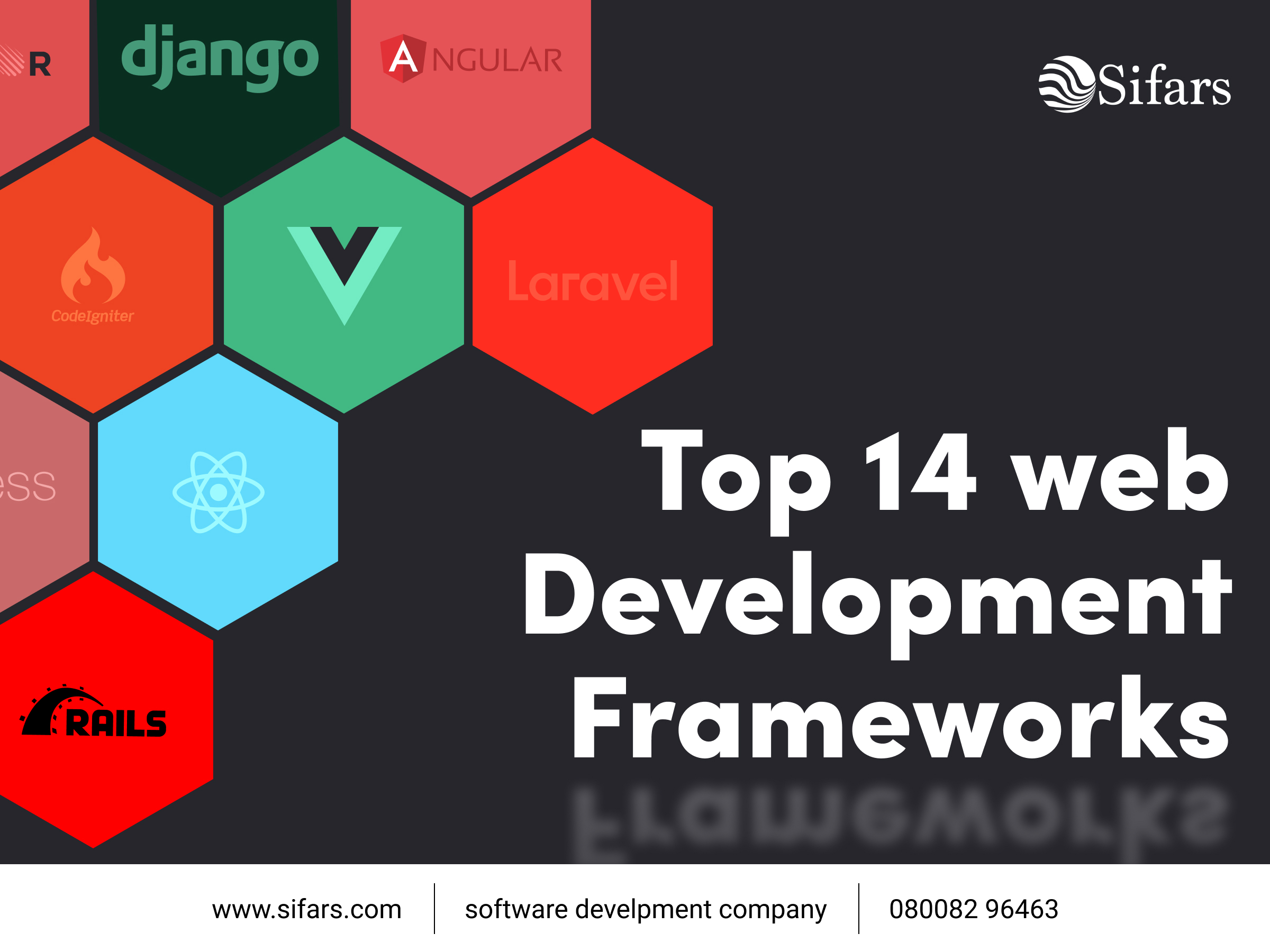
Modern web applications require strong architecture, efficient performance, and scalable development environments. This is where web development frameworks play a crucial role.
Frameworks help developers build powerful web applications faster by providing structured tools, reusable components, and built-in functionalities.
In this guide, we will explore the 14 best web development frameworks in 2022 that are widely used for frontend and backend development.
What is a Web Development Framework?
A web development framework is a software framework designed to support the development of web applications, web services, and APIs.
To understand it simply, imagine preparing tea. Basic tea requires water, milk, and tea leaves. But when you add sugar, cardamom, and ginger, the flavor becomes richer and more enjoyable.
Similarly, frameworks enhance web applications by adding powerful functionalities, improving performance, and simplifying development.
Frameworks act as a foundation that allows developers to build modern applications faster and more efficiently. Businesses often rely on an experienced web development company USA to select the right framework based on their project requirements.
What Are Frontend and Backend Frameworks?
Web applications consist of two main components: frontend and backend.
Frontend Frameworks
Frontend frameworks manage the user interface (UI) of a web application. They control how the application looks and how users interact with it.
These frameworks help developers build responsive layouts, dynamic interfaces, and interactive web experiences.
Backend Frameworks
Backend frameworks manage the server-side logic of web applications. They handle database interactions, APIs, authentication systems, and application logic.
Many businesses partner with a web application development company in usa to build scalable applications using both frontend and backend frameworks.
Best Backend Web Development Frameworks
Below are some of the most popular backend frameworks used by developers worldwide.
1. Express.js
Express.js is one of the most popular Node.js frameworks used for building web applications and APIs. It is minimal, flexible, and highly efficient for creating scalable server-side applications.
Express is widely used in the MEAN stack and supports REST APIs for seamless web experiences.
Language: JavaScript
Trusted by: Accenture, IBM, Uber
2. Django
Django is a powerful Python framework known for its security and scalability. It follows the Model–View–Template (MVT) architecture and provides built-in features for authentication, database management, and security.
Language: Python
Trusted by: Google, YouTube, Instagram
3. Ruby on Rails
Ruby on Rails is a developer-friendly framework that follows the Model–View–Controller (MVC) architecture. It simplifies web development by offering libraries and tools that accelerate development.
Language: Ruby
Trusted by: Airbnb, GitHub, Shopify
4. Laravel
Laravel is a powerful PHP framework widely used for building modern web applications. It provides features like routing, authentication, and API integration.
Laravel follows the MVC architecture and is popular among businesses seeking custom web application development services for scalable web solutions.
Language: PHP
5. Spring Framework
Spring is a powerful backend framework based on Java. It is widely used to build large-scale enterprise applications due to its speed, security, and scalability.
Language: Java
6. CodeIgniter
CodeIgniter is a lightweight PHP framework used for building dynamic web applications. It provides excellent performance without heavy dependencies.
Language: PHP
7. Play Framework
Play is a modern web framework based on Java and Scala. It offers high productivity and follows the convention-over-configuration principle.
Language: Java & Scala
8. Meteor.js
Meteor is a full-stack JavaScript framework used for building real-time web and mobile applications. It supports cross-platform development using a single codebase.
Language: JavaScript
9. ASP.NET
ASP.NET is a Microsoft framework used to build high-performance web applications and enterprise platforms.
Language: C#
Best Frontend Web Development Frameworks
Frontend frameworks focus on building responsive and interactive user interfaces.
10. Angular
Angular is a powerful frontend framework developed by Google. It is widely used for building single-page applications (SPAs) and enterprise-level web platforms.
Language: TypeScript / JavaScript
11. React
React is one of the most popular JavaScript libraries used for building modern UI components. It uses Virtual DOM technology to improve performance and user experience.
Language: JavaScript
12. Vue.js
Vue.js is a progressive JavaScript framework that helps developers build dynamic interfaces and scalable web applications. It is known for its simplicity and flexibility.
Language: JavaScript
13. Ember.js
Ember.js is a feature-rich JavaScript framework that supports two-way data binding and strong architectural patterns.
Language: JavaScript
14. Backbone.js
Backbone.js is a lightweight frontend framework used to build single-page applications. It follows the MV architecture pattern and integrates easily with other libraries.
Language: JavaScript
How to Choose the Right Web Framework
Selecting the right framework depends on several factors such as project complexity, scalability requirements, and development goals.
Businesses looking to build modern web platforms often consult a custom web development company to determine the best technology stack for their project.
Some important factors to consider include:
- Application size and complexity
- Development speed requirements
- Community support and documentation
- Performance and scalability needs
Final Thoughts
Web development frameworks play a vital role in building modern web applications. They provide structure, improve efficiency, and help developers create scalable digital products.
The frameworks mentioned above represent some of the most widely used technologies for both frontend and backend development. Each framework has its own strengths, and the right choice depends on the specific goals of your project.
Organizations that want high-performance digital platforms often collaborate with a professional development team to select the most suitable technologies and build scalable web applications.
Leave a Reply