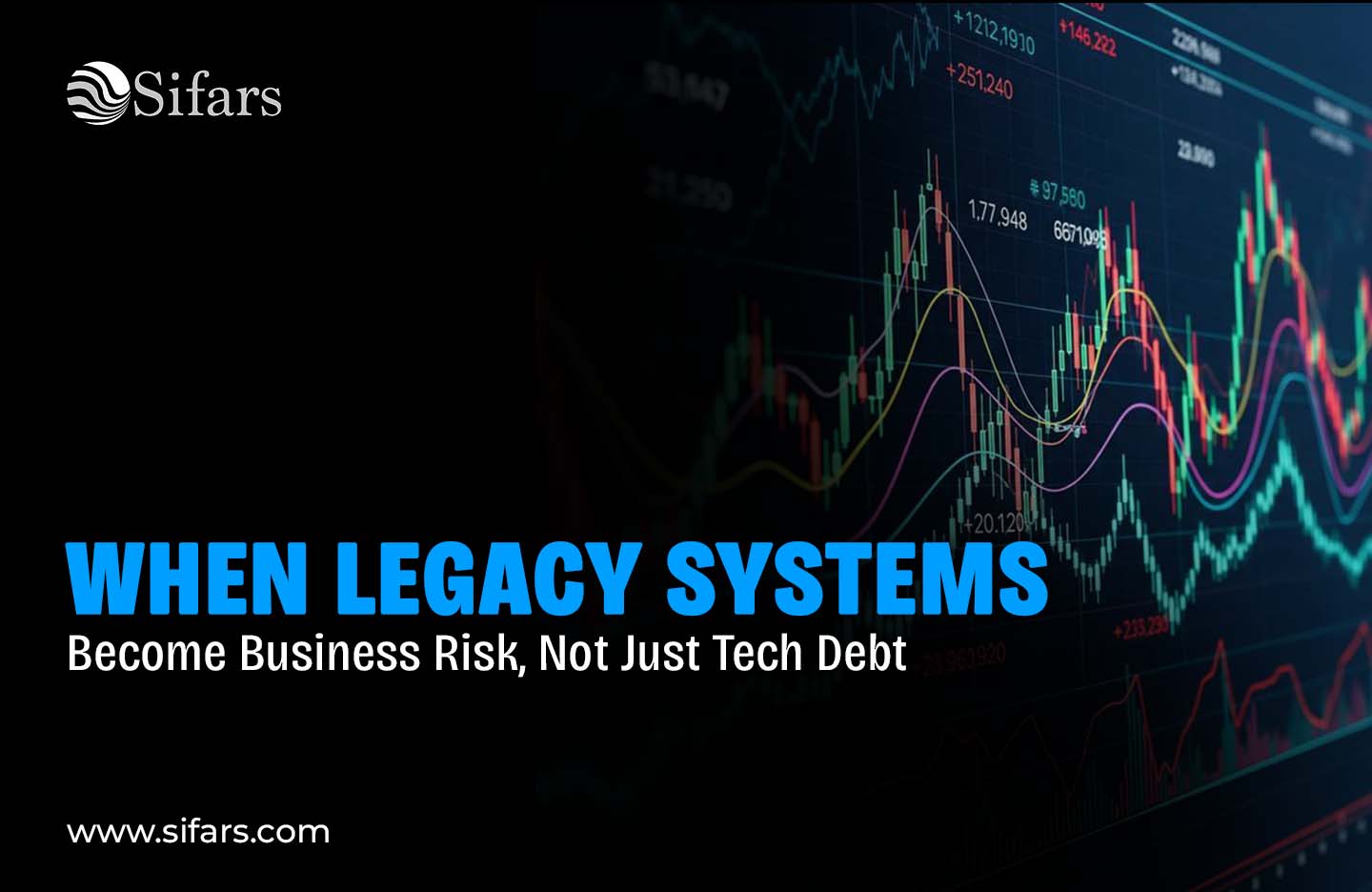
For many organizations, legacy systems are considered a tolerable inconvenience. They may be slow, outdated, and difficult to maintain, but as long as they continue functioning, modernization often gets postponed.
Leaders typically categorize these systems as technical debt—something that can be addressed later.
However, there comes a point when legacy technology stops being a technical concern and becomes a serious legacy systems business risk.
When outdated systems begin affecting revenue, security, compliance, scalability, and customer experience, the issue moves beyond the IT department. It becomes a strategic risk that directly impacts long-term business growth.
Legacy Risk Is Slow, Silent, and Dangerous
Legacy systems rarely fail in obvious ways.
Instead, their impact grows gradually. Systems that once supported business operations slowly become constraints on productivity and innovation.
As organizations expand, these systems struggle to support increasing data volumes, user demands, integrations, and evolving workflows.
Over time:
- small system changes require weeks instead of days
- teams rely on manual workarounds
- operational errors increase
- internal understanding of the system declines
Eventually, technology becomes a fragile dependency rather than a driver of growth.
Operational Performance Begins to Decline
One of the first visible signs of legacy risk is operational slowdown.
Routine activities such as reporting, approvals, onboarding, and data updates start taking longer than necessary.
Product teams delay releasing new features because changes might break fragile systems.
Operations teams spend more time resolving technical issues than improving efficiency.
Leadership receives delayed or incomplete insights, forcing decisions to become reactive instead of strategic.
This is closely connected to the hidden cost of slow internal tools, where outdated systems silently reduce productivity across the organization.
In competitive markets, operational speed is critical. When internal systems slow execution, businesses lose momentum, opportunities, and market share.
Security and Compliance Risks Increase
Legacy platforms are often built on outdated frameworks that were never designed to handle modern cybersecurity threats.
Maintaining security patches, monitoring vulnerabilities, and implementing new protections becomes increasingly difficult.
Compliance challenges also grow.
Regulatory environments evolve rapidly, but legacy systems often lack the flexibility to adapt. As a result, organizations create manual compliance processes on top of outdated systems.
These processes introduce new risks:
- human error in reporting
- delayed compliance checks
- increased exposure to regulatory penalties
At this stage, the cost of a security breach or compliance failure can far exceed the investment required to modernize systems.
Customer Experience Begins to Suffer
Although customers rarely interact with internal systems directly, they experience the consequences.
Outdated infrastructure often leads to:
- slower applications
- inconsistent customer data
- delayed service responses
- limited digital capabilities
As customer expectations continue to rise, businesses operating on legacy systems struggle to deliver fast, reliable, and seamless digital experiences.
Over time, customer satisfaction declines, churn increases, and brand trust erodes.
A backend limitation eventually becomes a visible customer experience problem.
Talent and Innovation Begin to Decline
Modern professionals expect modern tools.
Skilled engineers, analysts, and digital teams often feel frustrated working with outdated technology that limits experimentation and creativity.
Instead of building innovative solutions, teams spend their time maintaining fragile systems.
Innovation becomes risky because even small experiments might destabilize existing infrastructure.
Gradually, organizations develop a culture that avoids change rather than embracing it.
Once innovation slows, regaining momentum becomes extremely difficult.
The Hidden Cost of Maintaining Legacy Systems
Replacing legacy systems often feels expensive and disruptive. As a result, many companies postpone modernization initiatives.
However, the long-term cost of maintaining outdated systems is usually far greater.
Hidden costs include:
- increasing maintenance budgets
- longer system downtime
- expanding support teams
- lost productivity
- missed growth opportunities
Organizations eventually find themselves investing significant resources simply to maintain existing operations.
Turning Legacy Risk into Strategic Opportunity
Modernization does not require rewriting entire systems overnight.
Leading organizations adopt phased modernization strategies that focus on business priorities.
They identify systems that directly affect growth, security, and customer experience.
From there, they:
- modernize critical workflows first
- separate fragile legacy components
- improve data accessibility across systems
- introduce scalable architecture gradually
This approach reduces risk while allowing business operations to continue smoothly.
Many organizations partner with an experienced AI consulting company or adopt modern enterprise software development services to guide this transformation.
Modernization as a Strategic Investment
System modernization is no longer just an IT project. It is a strategic investment in business resilience and growth.
Organizations increasingly rely on advanced custom software development services to rebuild critical systems with scalable architectures.
By working with an experienced AI development company, businesses can also integrate modern data intelligence, automation, and predictive capabilities into their operations.
Modern platforms not only improve stability but also unlock innovation opportunities that legacy systems cannot support.
Conclusion
Legacy systems are more than outdated technology.
Left unaddressed, they quietly evolve into major business risks affecting revenue, security, talent, and customer experience.
Organizations that recognize this early gain a long-term competitive advantage.
By treating modernization as a business strategy rather than a technical upgrade, companies can protect growth, reduce risk, and prepare for the future.
If legacy technology is slowing down your organization or creating operational risk, modernization may be the next step.
Sifars helps enterprises transform fragile legacy environments into reliable, scalable systems that support long-term business success.