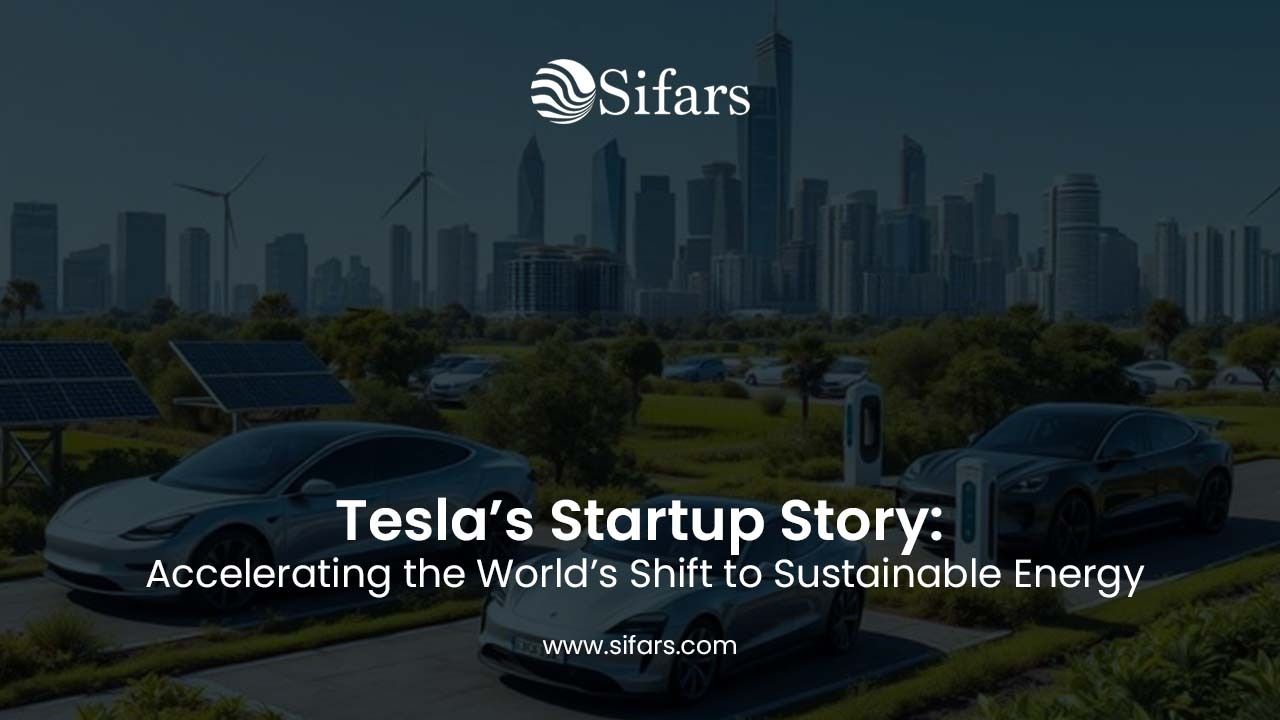
The rise of Tesla is more than just an automotive success story it is a powerful example of how AI in automotive industry is reshaping the future of mobility, manufacturing, and energy.
Tesla didn’t just build electric cars. It built a technology-driven ecosystem powered by data, automation, and artificial intelligence. Today, businesses across industries are learning from Tesla’s approach by partnering with an
AI development company
to implement scalable and intelligent solutions.
The Vision: Beyond Cars to Intelligent Systems
From day one, Tesla’s mission was clear—accelerate the world’s transition to sustainable energy.
However, achieving this required more than hardware innovation. Tesla focused heavily on:
- Software-driven vehicles
- AI-powered decision systems
- Data-centric engineering
This approach positioned Tesla as a leader in AI in automotive industry, where intelligence matters as much as engineering.
Early Challenges and AI-Powered Solutions
When Tesla launched its first Roadster, the market was skeptical:
- Limited battery range
- High costs
- Low consumer trust
To solve this, Tesla introduced AI-driven battery systems.
Smart Battery Management System (BMS)
Tesla used machine learning solutions to:
- Monitor battery health
- Optimize charging cycles
- Reduce degradation
This innovation helped eliminate “range anxiety,” making EVs practical for consumers.
Manufacturing Revolution: AI in Gigafactories
Tesla’s biggest breakthrough came in manufacturing.
Scaling production required rethinking traditional systems. Tesla adopted business automation with AI to build smart factories.
AI Applications in Manufacturing
- Computer vision for defect detection
- Predictive maintenance using ML
- Real-time process optimization
Companies building scalable systems today often rely on
enterprise software solutions
to implement similar automation strategies.
Autonomous Driving: The Power of Data
Tesla’s Autopilot and Full Self-Driving (FSD) systems are among the most advanced AI implementations.
Fleet Learning Model
Every Tesla vehicle collects real-world data:
- Driving patterns
- Road conditions
- User behavior
This data trains AI models continuously, improving performance over time.
This highlights a key lesson:
👉 Data + AI = Long-term competitive advantage
Energy Innovation with AI
Tesla’s impact goes beyond vehicles into energy systems.
Products like Powerwall and Megapack use AI to optimize:
- Energy storage
- Consumption patterns
- Grid distribution
AI Use Cases in Energy
- Predictive energy usage
- Automated power distribution
- Smart grid optimization
This is a perfect example of AI in automotive industry expanding into adjacent sectors.
Overcoming “Production Hell” with Smart Automation
Tesla faced major challenges during Model 3 production.
Initially, over-automation caused delays.
The Solution
Tesla adopted a hybrid approach:
- Human + AI collaboration
- Targeted automation
- Continuous system learning
Modern applications built using
Node.js development company
frameworks also follow similar scalable and adaptive architectures.
Lessons for Startups and Businesses
Tesla’s journey offers a blueprint for innovation.
Key Takeaways
- Start with a strong mission
- Leverage AI for core product improvement
- Use automation for scalability
- Turn data into a strategic asset
- Adopt iterative innovation
Startups exploring scalable growth strategies can learn more from
software development companies for startups
to build AI-driven products.
The Future of AI in Automotive Industry
The future will see deeper integration of AI in:
- Autonomous driving
- Smart manufacturing
- Energy ecosystems
- Connected vehicles
Businesses adopting AI early will lead the next wave of innovation.
Conclusion
Tesla proves that success in modern industries is driven by intelligence, not just engineering.
The role of AI in automotive industry is no longer optional—it is essential.
Companies that integrate AI into their operations can:
- Scale faster
- Reduce costs
- Innovate continuously
Ready to Build AI-Driven Solutions?
At Sifars, we help businesses:
- Implement AI-powered systems
- Automate operations
- Scale efficiently
Whether you’re a startup or an enterprise, our solutions are designed to drive real impact.
Leave a Reply