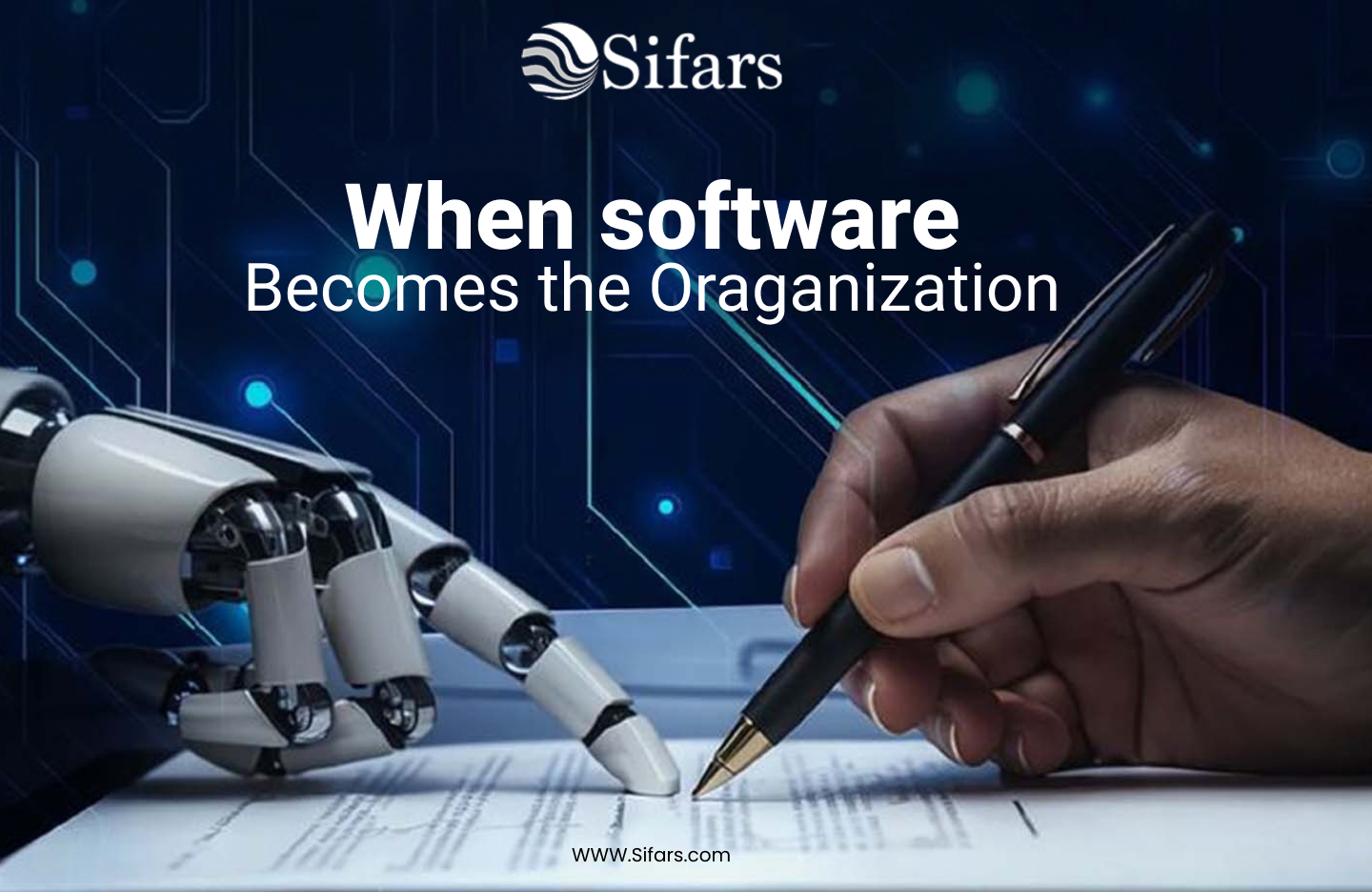
Once upon a time, software played a supporting role inside companies. It handled payroll, stored documents, tracked tickets, and generated reports. Strategy happened in leadership meetings, culture lived in people, and systems quietly supported operations in the background.
That era has ended.
Today software does much more than assist work—it defines how work gets done. In many organizations, the real structure no longer exists only in org charts or policy documents. It exists inside workflows, permissions, automated rules, dashboards, and decision engines.
In subtle but powerful ways, software has become the organization itself. Many businesses now rely on a custom software development company to design systems that align technology with real organizational behavior rather than forcing teams to adapt to rigid tools.
The Invisible Architecture That Shapes Behaviour
Every software system embeds assumptions about how work should happen.
It defines who can approve a request, how long a task can remain pending, what metrics matter, and which activities remain invisible. Over time, these embedded rules shape behavior more consistently than leadership messaging ever could.
For example:
- When approvals require multiple layers, caution becomes the norm.
- When dashboards track performance in real time, urgency becomes habitual.
- When exceptions are difficult to record, teams quietly bypass problems instead of escalating them.
These outcomes do not happen because employees lack initiative. They happen because systems reward compliance and discourage deviation.
Over time, the organization adapts to the logic of its software.
From Human Judgment to System Logic
As organizations grow, many decisions gradually shift from human judgment to system-driven logic. Standardization provides efficiency, predictability, and operational control.
However, something important can be lost.
Decisions that once relied on conversation, context, and experience become constrained by dropdown menus, automated workflows, and validation rules.
Ambiguity is not discussed—it is eliminated.
This works well in stable environments. It becomes risky in rapidly changing environments.
When circumstances evolve but systems remain fixed, organizations continue making decisions based on outdated assumptions. Teams follow workflows even when they clearly no longer make sense.
Efficiency slowly transforms into rigidity.
This is why many companies redesign operational platforms using enterprise software development services to ensure systems remain adaptable rather than restrictive.
Culture Is Embedded in Software
Culture is often described through leadership values, employee behaviour, or mission statements.
But in modern organizations, culture also exists inside software.
It appears in what systems measure.
It appears in what systems reward.
It appears in what systems quietly ignore.
For example:
- When systems measure activity rather than outcomes, employees optimize for busyness rather than impact.
- When risk reporting is optional, optimism replaces realism.
- When feedback loops are slow, learning becomes accidental.
Employees eventually adapt not to company slogans but to the signals embedded in systems.
In this way, software quietly shapes organizational culture.
When Decision Ownership Becomes Unclear
One of the most subtle problems in software-driven organizations is blurred accountability.
When systems automate decisions, ownership can become difficult to trace.
Was a decision made intentionally by leadership?
Was it triggered by a default configuration?
Was it the result of an automated rule?
When outcomes go wrong, organizations sometimes struggle to answer a simple question:
Why did this happen?
Without clear ownership of workflows, automation logic, and system design, accountability becomes diluted.
Many companies now address this challenge by aligning system governance with operational leadership and adopting architectural models discussed in The Missing Layer in AI Strategy: Decision Architecture, where decision ownership is designed into systems from the beginning.
How Software Can Create Organizational Rigidity
Ironically, software introduced to improve agility can sometimes slow organizations down.
Complex workflows become difficult to modify. Teams hesitate to change rules because downstream consequences are unclear. Temporary workarounds slowly become permanent solutions.
Over time, the organization stops evolving—not because people resist change, but because the systems supporting the organization cannot adapt quickly enough.
The company becomes optimized for a previous version of itself.
Designing Organizations Through Software
The solution is not less software. The solution is better design.
Organizations must begin treating software as organizational architecture, not merely technical infrastructure.
This requires asking deeper questions:
- What behaviors do our systems encourage?
- Which decisions have we delegated to machines without clear owners?
- Where have we replaced judgment with convenience?
- How easily can our systems evolve when strategy changes?
High-performing companies treat workflows and decision logic as seriously as they treat strategy.
They audit assumptions embedded inside systems and design them for flexibility instead of only efficiency.
Many organizations moving toward this model build adaptable systems through an enterprise software solutions platform that integrates workflows, decisions, and data into a unified architecture.
Why This Matters Even More in the Age of AI
As AI becomes increasingly integrated into enterprise operations, system design becomes even more important.
AI does not simply execute rules—it learns patterns and reinforces them.
If systems contain flawed assumptions, AI accelerates those flaws.
If systems embed thoughtful decision structures, AI amplifies good judgment.
Trust, transparency, and adaptability do not come automatically from advanced technology.
They emerge from systems that are designed responsibly and evolve continuously.
Final Thought
Organizations rarely lose direction because people stop caring.
More often, systems quietly take control.
When software becomes the organization, competitive advantage no longer comes from having the latest tools. It comes from designing those tools intentionally.
The future will belong to companies that understand one critical truth:
Every workflow, automation rule, and line of code is ultimately a leadership decision.
Connect with Sifars today to explore how thoughtfully designed systems can shape stronger organizations.