Blog

  • The Silent Cash Leaks in you Company and How to Plug Them

    The Silent Cash Leaks in you Company and How to Plug Them

    Reading Time: 3 minutes

    Every business, no matter how successful, has hidden cracks where money quietly slips away. You celebrate growing sales, new clients, or a larger workforce—but somehow, the bottom line doesn’t reflect that growth. These silent cash leaks drain profits and can make a healthy business look like it’s constantly struggling to stay afloat.

    The truth is, many organizations don’t realize just how much they’re losing because inefficiencies are scattered across operations, finance, and customer management. With the right visibility—and in today’s world, that often means AI-powered business analytics and automation—companies can detect these hidden drains and fix them before they become permanent roadblocks to growth.

    Where Do Businesses Lose Money Without Realizing It?

    1. Inefficient Operations

    When processes aren’t optimized, companies end up spending more than necessary on manpower, logistics, or technology. Manual workflows, duplicate tasks, and bottlenecks may not seem expensive individually, but they snowball into significant losses.

    Modern AI workflow automation tools identify repetitive tasks, streamline approvals, and reduce overhead. By improving operational efficiency, companies not only cut costs but also free employees to focus on high-value work.

    2. Poor Pricing Decisions

    Businesses often set pricing once and forget about it. But market conditions, competitor strategies, and demand change constantly. Selling more doesn’t always equal earning more if margins are too thin.

    This is where AI-driven pricing optimization plays a critical role. By analyzing demand, customer behavior, and competition in real-time, businesses can set prices that maximize profitability without alienating customers.

    3. High Customer Acquisition Costs

    Attracting new customers is essential—but when acquisition costs rise unchecked, profits take a hit. Many companies pour money into digital ads without measuring actual returns.

    Instead of chasing volume, predictive analytics for customer lifetime value (CLV) helps focus on the right customers—the ones who stay longer, buy more, and recommend your brand. Pairing CLV insights with AI-powered personalization reduces acquisition costs while increasing retention rates.

    4. Supply Chain Blind Spots

    Inventory mismanagement is one of the biggest sources of silent profit loss. Overstock ties up cash; understock means missed sales. Add unpredictable demand patterns, and businesses can lose millions before realizing what’s happening.

    AI in supply chain forecasting helps companies predict demand, balance stock levels, and reduce wastage. With real-time insights into supplier performance and logistics, businesses save both time and money.

    5. Revenue Leakage in Finance

    Delayed invoicing, overlooked discounts, or inconsistent billing may sound minor, but collectively, they bleed profits. Most companies don’t notice these leaks until audits reveal alarming gaps.

    AI-driven anomaly detection systems continuously scan financial records, spot irregularities, and flag potential revenue leaks instantly—long before they show up in quarterly reviews.

    6. Employee Productivity Gaps

    Hiring more people doesn’t guarantee higher output. Without visibility into performance, companies end up paying for underutilized capacity.

    AI workforce analytics highlight productivity trends, suggest automation opportunities, and guide resource allocation. Instead of ballooning payroll costs, businesses achieve sustainable productivity growth.

    How to Plug the Leaks: A Profit-First Mindset

    Fixing silent leaks isn’t about cutting costs recklessly. It’s about building a profit-first operating model where growth is sustainable and revenue is protected. Here’s how businesses are doing it:

    1. End-to-End Profitability Dashboards – Visibility into every cost center and revenue stream.
    2. Predictive Forecasting – Using AI to anticipate demand, costs, and risks before they impact margins.
    3. Customer Retention Strategies – Prioritizing long-term loyalty over expensive short-term acquisitions.
    4. Smart Resource Allocation – Deploying automation to reduce inefficiencies in HR, finance, and operations.

    Continuous Monitoring – Leveraging AI tools that don’t just fix leaks once, but keep scanning for new ones.

    Case Example: How a Retailer Plugged Its Leaks

    A mid-sized retail chain was growing fast but struggling with shrinking profits. On closer inspection, they found cash leaks in three areas: inventory overstock, high ad spend with low ROI, and frequent billing errors.

    By implementing AI demand forecasting, customer analytics, and automated billing checks, they achieved:

    • 15% reduction in inventory costs
    • 20% improvement in marketing ROI
    • 10% increase in net profitability within a year

    The leaks weren’t obvious—but fixing them transformed the company’s bottom line.

    Every company loses money in ways that aren’t immediately visible. The difference between businesses that stagnate and those that thrive is the ability to detect and plug these silent leaks before they erode profitability.

    With AI-powered analytics, predictive modeling, and process automation, leaders can finally see where the money is going, stop unnecessary losses, and build a business that scales profitably.

    The lesson is simple: sales keep you alive, but plugging leaks makes you sustainable.

    www.sifars.com

  • Why Profits Shrink Even When Sales Go Up

    Why Profits Shrink Even When Sales Go Up

    Reading Time: 3 minutes

    It’s a paradox that frustrates countless business owners: sales are increasing, yet profits keep shrinking. On the surface, revenue growth should equal higher margins. But in reality, the hidden costs of operations, inefficiencies, and customer mismanagement quietly eat away at profitability.

    Many companies don’t notice this gap until it’s too late. By then, customer acquisition costs have skyrocketed, supply chains are tangled, and marketing spend delivers diminishing returns.The good news? With data-driven decision-making and AI-powered business analytics, leaders can uncover the silent profit leaks dragging down performance—and fix them before they spiral out of control.

    The Real Reasons Profits Shrink Despite Rising Sales:

    1. ??‍?Escalating Operational Costs

    Sales growth often means more raw materials, staff, logistics, and infrastructure. If these costs rise faster than revenue, margins shrink.
    Example: An e-commerce company doubles sales but faces surging delivery and warehousing expenses.

    Fix: An e-commerce company doubles sales but faces surging delivery and warehousing expenses.

    2. ??‍?Poor Pricing Strategies

    If prices are not optimized to reflect demand, seasonality, or competitor behavior, businesses may sell more but earn less per unit.
    Fix: Dynamic pricing algorithms powered by machine learning adjust product prices in real time based on demand, inventory, and competition. This prevents underpricing while staying competitive.

    3. ??‍?Rising Customer Acquisition Costs

    Businesses often invest heavily in marketing to fuel sales, but without measuring ROI, acquisition costs eat into profits.
    Fix: Customer lifetime value (CLV) analytics help businesses focus not only on acquiring new buyers but also on retaining profitable ones. AI models segment customers, highlight the most loyal ones, and recommend targeted campaigns for better returns.

    4. ??‍?Inefficient Supply Chain and Inventory Management

    Stockouts lead to missed sales, while overstocking ties up capital. Both scenarios hurt profitability even if sales volumes increase.
    Fix: AI in supply chain optimization helps forecast demand accurately, balance inventory, and reduce wastage. Predictive analytics ensure resources are allocated in sync with market demand.

    5. ??‍?Revenue Leakage from Small Inefficiencies

    Businesses often underestimate small losses: delayed invoicing, unnoticed discounts, or inconsistent billing. Over time, these add up to millions in lost profit.
    Fix: AI-powered anomaly detection systems automatically flag irregularities in billing, payment cycles, or contract terms, ensuring money doesn’t slip through the cracks.

    6. ??‍?Employee Productivity Gaps

    When sales grow, workload rises. If employee productivity doesn’t scale, businesses hire more staff, often without optimizing workflows. This leads to higher costs without proportionate profit growth.
    Fix: AI workforce analytics evaluate productivity trends, recommend task automation, and ensure employees focus on high-value tasks instead of repetitive work.

    Here’s how forward-looking businesses are rethinking their models:

    A mid-sized e-commerce company faced declining repeat sales. After implementing an AI-driven churn prediction model, they identified customers who hadn’t purchased in 60 days. AI triggered automated personalized campaigns offering relevant product bundles. Within 3 months:

    1. Profitability Analytics Dashboards – Real-time visibility into cost centers, margins, and leakage points.

    2. Predictive Forecasting – Smarter demand planning and resource allocation.

    3. Customer-Centric Strategies – Prioritizing long-term loyalty over short-term acquisition.

    4. Automated Reporting & Insights – Cutting decision-making delays with instant financial health updates.

    5. Sustainable Scaling – Investing in automation and AI that reduce costs as sales grow.

    Case in Point: A Manufacturing Firm’s Profit Turnaround

    A mid-sized manufacturing company saw revenue climb 25% annually but profit margins shrink below 5%. After deploying AI-based supply chain forecasting and pricing optimization, they:

    –> Reduced raw material wastage by 18%
    –>Improved pricing margins by 12%
    –> Lifted overall profitability by 9% within one year

    This case highlights that sales growth without efficiency is unsustainable—and that profitability is rooted in operational intelligence.

    Sales Don’t Guarantee Profits
    Business growth without profitability is like filling a leaking bucket. Leaders must recognize that true success lies not just in selling more, but in managing smarter. By using AI for profitability analytics, cost control, customer retention, and supply chain efficiency, companies can stop profits from silently vanishing—even in times of rapid sales growth.

    The bottom line: Growth is exciting. Profits are essential. AI helps you achieve both.

    www.sifars.com

  • Why You’re Losing Repeat Customers Without Realizing It

    Why You’re Losing Repeat Customers Without Realizing It

    Reading Time: 3 minutes

    Every business loves new customers—but the real profit lies in retaining existing ones. Research shows that acquiring a new customer can cost 5–7 times more than keeping a loyal one. Yet many businesses unknowingly lose repeat customers, not because of bad products, but due to subtle issues in customer experience, communication, and personalization.

    In today’s digital-first marketplace, AI-powered customer retention strategies are proving to be the missing link. From predicting churn to automating customer engagement, Artificial Intelligence can help businesses uncover why customers quietly walk away and what can be done to keep them coming back.

    This blog explores the hidden reasons behind customer churn and how AI solutions can help you prevent it.

    The Hidden Reasons You’re Losing Repeat Customers:

    1. ??‍?Lack of Personalization

    Customers expect brands to know them, their preferences, and their buying patterns. If they keep receiving generic offers or irrelevant communication, they feel undervalued.
    Example: An online clothing brand sending the same promotional emails to all customers, instead of recommending items based on browsing and purchase history.

    AI SOLUTION
    –> AI-driven personalization engines analyze customer behavior, purchase history, and browsing trends to deliver tailored recommendations.

    –> Tools like predictive analytics and recommendation systems (similar to what Amazon or Netflix use) ensure customers feel understood and valued.

    2. ??‍?Poor Customer Service Response Times

    When customers face an issue, speed matters. Delayed responses or robotic replies can frustrate loyal buyers and push them to competitors.

    AI SOLUTION
    –> AI-powered chatbots and virtual assistants provide instant responses to FAQs.

    –> Sentiment analysis tools help businesses identify unhappy customers early and escalate cases to human agents.

    –> This hybrid model—AI for speed, humans for empathy—reduces frustration and improves satisfaction.

    3. ??‍?Ignoring Early Signs of Churn

    Customers rarely disappear overnight. They leave digital footprints—reduced engagement, abandoned carts, or lower purchase frequency—before they churn. But without advanced analytics, these signals go unnoticed.

    AI SOLUTION
    –> AI churn prediction models use machine learning to identify patterns that indicate a customer is about to leave.

    –> Businesses can then proactively reach out with offers, personalized messages, or loyalty rewards to win them back.

    4. ??‍?Inconsistent Customer Experience Across Channels

    A customer who interacts with your brand via email, website, and social media expects a seamless experience. Disjointed communication can make them feel like just another number.

    AI SOLUTION
    –> Omnichannel AI platforms unify customer data from all touchpoints, ensuring a consistent brand voice and personalized experience.

    –>Natural Language Processing (NLP) allows AI to understand context across multiple channels, making interactions smoother.

    5. ??‍?Failure to Reward Loyalty

    If repeat customers feel they’re not getting more value than one-time buyers, they lose motivation to stay loyal.

    AI SOLUTION
    –> AI helps design smart loyalty programs by identifying what truly drives each customer’s repeat purchases.

    –>Instead of generic discounts, businesses can offer personalized incentives (e.g., early access to products, tailored bundles, exclusive perks).

    How AI Improves Customer Retention Strategy:

    AI doesn’t just diagnose problems—it helps create a future-proof retention strategy:

    1. ??‍?Customer Segmentation with AI

    Grouping customers based on behaviors, not demographics, for targeted engagement.

    2. ??‍?Predictive Analytics for Repeat Purchases

    Forecasting when customers are likely to buy again and nudging them at the right time.

    3. ??‍?Customer Feedback Analysis with NLP

    Analyzing surveys, reviews, and social mentions to identify hidden pain points.

    4. ??‍?Dynamic Pricing & Offers

    AI models adjust promotions in real-time to maximize retention without eroding margins.

    5. ??‍?Automated Re-engagement Campaigns

    Personalized reminders, recommendations, and offers to win back inactive customers.

    Case Study: How AI Retained 30% More Customers for a Retail Brand

    A mid-sized e-commerce company faced declining repeat sales. After implementing an AI-driven churn prediction model, they identified customers who hadn’t purchased in 60 days. AI triggered automated personalized campaigns offering relevant product bundles. Within 3 months:

    AI SOLUTION
    –> Customer churn dropped by 30%

    –> Repeat purchase rate increased by 22%

    –> Overall customer satisfaction scores improved significantly

    This shows how even small businesses can harness AI retention tools for measurable impact.

    Challenges to Overcome

    While AI provides solutions, businesses must address challenges:

    AI SOLUTION
    –> Data Privacy & Trust: Customers must feel safe sharing data.

    –> Integration with Legacy Systems: AI tools must fit seamlessly with existing CRMs and ERP software.

    –> Human Touch: AI enhances, but does not replace, empathy and relationship-building.

    Stop Losing Customers Silently

    Most businesses don’t lose customers because of one big mistake—they lose them because of small, unnoticed issues that compound over time. By leveraging AI for churn prediction, personalization, customer feedback analysis, and loyalty management, businesses can not only retain customers but also turn them into brand advocates.

    The bottom line: AI doesn’t just help you get new customers—it helps you keep the ones you already have.

    www.sifars.com

  • Why Your Business Feels Like It’s Always in Crisis Mode – And How to Fix It

    Why Your Business Feels Like It’s Always in Crisis Mode – And How to Fix It

    Reading Time: 3 minutes

    If your business feels like it’s constantly putting out fires—missed deadlines, staff conflicts, financial surprises—you’re not alone. Many business owners search for answers by typing things like “why my company is always in chaos” or “how to fix business management problems.” The truth is, operating in crisis mode is a sign of deeper inefficiencies, not inevitable bad luck. By understanding the root causes and leveraging modern solutions like automation in business and AI for operations, companies can shift from reactive survival to proactive growth.

    Why Businesses End Up in Crisis Mode:

    ??‍?Poor Communication and Misaligned Goals

    Without clear channels of communication, teams duplicate work, misunderstand tasks, and miss deadlines. This leads to frustration and a sense of business always in crisis.

    ??‍?Manual Processes That Drain Time

    Paperwork, repetitive reporting, and manual data entry create bottlenecks. These outdated processes increase errors and limit scalability, causing chaos as the business grows.

    ??‍?Lack of Visibility Into Operations

    Many leaders admit: “I don’t know what’s happening in my company until a problem explodes.” Without predictive analytics for business, small issues snowball into crises.

    ??‍?Staff Management Struggles

    Without clear channels of communication, teams duplicate work, misunderstand tasks, and miss deadlines. This leads to frustration and a sense of business always in crisis.

    ??‍?Reactive Leadership

    When businesses rely on short-term firefighting instead of structured planning, they remain stuck in crisis management mode.

    The Consequences of Always Operating in Chaos:

    ??‍?Low Productivity

    Time is wasted fixing mistakes rather than innovating.

    ??‍?High Stress

    Leaders and employees feel trapped in endless emergencies.

    ??‍?Lost Revenue

    Constant crisis handling drains resources that could be spent on growth.

    ??‍?Talent Turnover

    High Stress environments drive away skilled employees

    The longer a company stays in this cycle, the harder it becomes to attract talent, scale, or implement future-ready business strategies.

    How To Break Free from Crisis Mode :

    ??‍?Streamline Processes With Automation

    Invest in automation in business to reduce manual errors and free up employee time. Automated workflows for HR, finance, and operations can cut down on crisis-triggering mistakes.

    ??‍?Adopt Predictive Tools

    Use predictive analytics for business to identify potential issues before they escalate. For example, AI-driven forecasting can help spot financial risks or inventory shortages early.

    ??‍?Improve Staff Management with Data

    AI-driven dashboards give managers real-time insights into workloads, staff performance, and potential burnout risks—helping fix common staff management problems.

    ??‍?Align Team with Digital Transformation

    Implement collaborative platforms and digital transformation for SMEs to ensure teams share information seamlessly. This reduces misunderstandings and improves accountability.

    ??‍?Focus on Leadership Mindset

    Leaders must shift from being reactive firefighters to proactive planners. Building business productivity solutions into everyday workflows fosters stability and growth.

    Case Study: A Business That Broke the Cycle:

    A mid-sized retail company once searched for “how to reduce business stress” because managers were overwhelmed with manual inventory checks and endless staff complaints. By integrating AI for operations and automating stock management, they cut stock-outs by 40%, reduced staff overtime, and reclaimed time for strategy. Within a year, they moved from survival mode to expansion.

    From Crisis to Confidence: Future-Proofing Your Business:

    Every entrepreneur wants to know “how to scale a business” without drowning in constant problems. The answer lies in combining structured leadership with the right tools. Automation in business, predictive analytics, and AI-powered productivity solutions transform firefighting into forward planning.
    Businesses that embrace digital transformation stop living in chaos. Instead of asking, “why is my company always in crisis,” leaders start asking, “what’s next for our growth?”

    Conclusion

    Every entrepreneur wants to know “how to scale a business” without drowning in constant problems. The answer lies in combining structured leadership with the right tools. Automation in business, predictive analytics, and AI-powered productivity solutions transform firefighting into forward planning.
    Businesses that embrace digital transformation stop living in chaos. Instead of asking, “why is my company always in crisis,” leaders start asking, “what’s next for our growth?”

  • Understanding AI Model Drift: Causes, Consequences, and Fixes

    Understanding AI Model Drift: Causes, Consequences, and Fixes

    Reading Time: 2 minutes

    AI models are designed to learn from data and make predictions, recommendations, or classifications. However, over time, their performance can degrade—a phenomenon known as AI model drift. As business environments evolve and data patterns shift, previously accurate models may become less reliable, leading to suboptimal decisions and eroded trust. Understanding the causes, consequences, and remedies for model drift is essential for any organization that relies on machine learning or AI-driven systems.

    What is AI Model Drift?

    Model drift refers to the degradation in a model’s performance over time due to changes in the underlying data distribution. There are two main types:

    1. Data Drift (Covariate Shift): Occurs when the statistical properties of input features change. For example, if a retail model was trained on pre-pandemic purchasing behavior, post-pandemic data may differ significantly.
    2. Concept Drift: Happens when the relationship between input and output variables changes. For example, the factors influencing loan default risk may evolve due to new financial policies or market conditions.

    Causes of Model Drift

    Several factors contribute to model drift:

    • Changing user behavior: Shifts in customer preferences or habits over time.
    • External disruptions: Economic downturns, pandemics, regulatory changes.
    • Data pipeline issues: Inconsistent data collection methods or feature engineering changes.
    • Seasonality and trends: Time-based fluctuations affecting data patterns.
    • Product or service changes: Alterations to offerings that impact user interaction.

    Consequences of Ignoring Model Drift

    Failing to detect and address model drift can have serious repercussions:

    • Declining model accuracy: Predictions become less reliable, affecting business outcomes.
    • Customer dissatisfaction: Poor recommendations or decisions can damage user experience.
    • Compliance risks: In finance or healthcare, drift can lead to regulatory violations.
    • Loss of trust in AI systems: Stakeholders may become wary of relying on automated tools.

    How to Detect Model Drift

    Early detection is key to mitigating the effects of model drift. Common methods include:

    • Performance monitoring: Regularly evaluate metrics like accuracy, precision, recall, or AUC.
    • Data distribution checks: Compare new data distributions to training data.
    • Drift detection algorithms: Use statistical tests (e.g., Kolmogorov-Smirnov test, PSI) or ML tools (e.g., Alibi Detect, Evidently AI).
    • Feedback loops: Collect real-world outcomes to validate model predictions.

    Fixing Model Drift: Strategies and Best Practices 

    Once drift is detected, organizations can take several corrective actions:

    1. Retraining the Model: Periodically retrain the model with recent data to maintain relevance.
    2. Online Learning: Use continuous learning algorithms that adapt in real time.
    3. Feature Engineering Updates: Modify or add features that better capture new data patterns.
    4. Hybrid Models: Combine rule-based systems with AI to handle unexpected shifts.
    5. Model Ensemble Techniques: Use multiple models and switch based on performance.

    Governance and Infrastructure Support

    • Version control: Track changes in data, features, and model versions.
    • Automated pipelines: Implement CI/CD for machine learning (MLOps) to streamline retraining.
    • Audit logs and documentation: Maintain transparency and accountability.

    Conclusion: Embracing Change with Agile AI Systems 

    Model drift is inevitable, but it doesn’t have to be detrimental. With the right monitoring systems, governance practices, and response strategies, enterprises can ensure that their AI models remain accurate, relevant, and trustworthy over time. Understanding AI model drift isn’t just a technical requirement—it’s a strategic necessity for long-term success in any AI-driven organization.

    www.sifars.com

  • What GPT-4o Means for Enterprise AI Adoption

    What GPT-4o Means for Enterprise AI Adoption

    Reading Time: 2 minutes

    The release of GPT-4o (“o” for “omni”) by OpenAI marks a transformative moment in the evolution of artificial intelligence. Designed to seamlessly handle text, audio, image, and video inputs, GPT-4o represents a powerful step toward truly multimodal AI. But beyond the technical marvel, this advancement holds immense implications for enterprise AI adoption. As businesses grapple with digital transformation, GPT-4o offers new capabilities that promise to accelerate automation, improve customer experiences, and enable smarter decision-making.

    A Quick Overview of GPT-4o

    GPT-4o is OpenAI’s most advanced model, combining the intelligence of GPT-4 with real-time, multimodal processing capabilities. Unlike earlier models that required separate APIs for different input types, GPT-4o integrates:

    ??‍?Natural language understanding and generation:

    ??‍?Voice recognition and synthesis:

    ??‍?Image and video comprehension:

    ??‍?Faster response times with reduced latency:

    This unification simplifies enterprise deployment and opens the door to highly interactive, context-aware applications.

    Key Impacts on Enterprise AI Adoption

    1. ??‍?Enhanced Customer Support with Multimodal Interfaces

    Businesses can now deploy GPT-4o-powered virtual agents that handle voice, text, and even images in real time. For instance:

    A customer can speak a query, show a damaged product via image, and receive a coherent, human-like response.
    Enterprises in e-commerce, telecom, and logistics can drastically reduce support costs while boosting satisfaction.

    2. ??‍?Streamlined Operations Through Intelligent Automation:

    GPT-4o’s ability to analyze visual data, interpret spoken commands, and read documents allows it to automate workflows beyond what traditional AI could manage:

    Process invoices with OCR + NLP
    Manage voice-activated reporting dashboards
    Interpret diagrams or hand-written notes

    3. ??‍?Revolutionizing Internal Communication and Collaboration:

    Multimodal AI tools like GPT-4o can assist in meetings by transcribing conversations, generating summaries, or converting rough whiteboard sketches into documents.

    Enterprise communication platforms can integrate GPT-4o for real-time assistance.
    Project managers and analysts benefit from faster data interpretation and insight generation.

    4. ??‍?Democratization of AI Across Departments:

    GPT-4o is designed to be more user-friendly, allowing non-technical teams to harness its power:

    HR can automate candidate screening and employee feedback analysis.
    Marketing can generate content from visual briefs or mood boards.
    – Finance can analyze documents and produce summaries or forecasts on demand.

    5. ??‍?Accelerating AI Innovation at Scale:

    GPT-4o is designed to be more user-friendly, allowing non-technical teams to harness its power:

    GPT-4o simplifies architecture, reducing development time and cost.
    Startups and large enterprises alike can go from idea to prototype in record time.

    Challenges and Considerations for Enterprises

    ??‍?Data Privacy and Security :

    Multimodal AI models require access to a wide range of data types, which raises concerns around confidentiality and compliance. Enterprises must:

    * Implement strict access controls

    • Use encrypted data channels
    • Ensure regulatory compliance (e.g., GDPR, HIPAA)

    ??‍?Cost and Infrastructure Readiness :

     Running advanced models like GPT-4o can be resource-intensive:

    – Cloud infrastructure must be optimized for high-performance computing
    – Enterprises should assess ROI before large-scale implementation

    ??‍?Ethical Use & AI Governance:

    With more powerful AI comes the need for ethical guardrails:

    – Bias mitigation must extend to multimodal data (e.g., visual bias in facial recognition)
    – Clear usage policies and transparent model behavior are critical

    Conclusion

    A New Era for Enterprise AI GPT-4o is more than just a technological upgrade—it’s a leap toward making AI more accessible, intelligent, and practical across industries. For enterprises, this means new possibilities in customer interaction, automation, collaboration, and innovation. The key to success lies in strategic adoption: aligning GPT-4o’s capabilities with business goals, ensuring responsible deployment, and investing in upskilling employees to work alongside intelligent systems.
    As we move into this new era, enterprises that embrace the power of GPT-4o will not only stay competitive—they’ll lead the charge in redefining what AI can achieve in the real world.

  • AI in Finance: Fraud Detection, Credit Scoring & Beyond

    AI in Finance: Fraud Detection, Credit Scoring & Beyond

    Reading Time: 2 minutes

    Artificial Intelligence (AI) is rapidly transforming the financial services industry. From improving operational efficiency to enhancing customer experiences, AI solutions are becoming an integral part of modern finance. Among the most impactful applications are AI for fraud detection, AI-powered credit scoring, and predictive analytics in finance. These innovations are not just solving old problems with new tools—they are redefining the way financial institutions operate.

    AI in Fraud Detection: Staying One Step Ahead:

    Fraud has long been a major challenge for banks, fintech companies, and consumers. Traditional fraud detection systems rely on static rules that often fall short against evolving threats. AI brings a paradigm shift with real-time monitoring, machine learning algorithms, and pattern recognition capabilities.
    Key benefits of AI in fraud detection include:

    Real-World Examples of AI-Enhanced Roles

    ??‍?Real Time Alerts:

    AI systems analyze transactions instantly, flagging suspicious activity before harm is done.

    ??‍?Anamoly Detection:

    By learning from historical data, AI can identify behavior that deviates from a customer’s normal patterns.

    ??‍?Adaptive Learning:

    Fraud tactics evolve, and so do AI systems. They adapt based on new data, improving accuracy over time.

    AI-Powered Credit Scoring: Smarter, Fairer, Faster

    Credit scoring has traditionally relied on narrow datasets such as credit history, income, and loan repayment records. This often disadvantages individuals with thin credit files or unconventional financial backgrounds.

    AI expands the scope of data used, creating more inclusive and accurate scoring models:

    ??‍?Alternative Data Sources:

    AI can analyze rent payments, utility bills, and digital transaction histories.

    ??‍?Behavioral Patterns:

    Machine learning models assess spending behavior, savings habits, and online activity to gauge creditworthiness.

    ??‍?Reduced Bias:

    When properly trained, AI can help reduce human bias in lending decisions.

    Financial institutions benefit from faster loan approvals, improved risk assessment, and access to previously underserved markets.

    Beyond the Basics: Predictive Analytics and Automation

    AI’s role in finance extends far beyond fraud and credit scoring. Predictive analytics and AI-driven automation are revolutionizing risk management, investment strategies, and financial planning.
    Examples include:

    ??‍?Investment Forecasting :

    AI models analyze global data trends to predict market movements.

    ??‍?Robo-Advisors :

    Automated platforms that provide financial advice based on algorithms and client profiles.

    ??‍?Risk Modelling:

    Banks use AI to anticipate loan defaults, portfolio risk, and systemic vulnerabilities.

    ??‍?Customer Insights :

    AI uncovers behavior trends, enabling personalized financial products and services.

    Benefits for Institutions and Consumers Alike

    The implementation of AI in financial services benefits all stakeholders:

    Efficiency: Automation reduces manual processes and operational costs.

    – Accuracy: AI minimizes errors in credit evaluation and fraud detection.

    – Speed: Faster transaction approvals, loan processing, and fraud alerts.

    – Accessibility: Broader access to credit and investment tools for underserved populations.

    Challenges & Considerations

    While the benefits are significant, so are the challenges:

    Data Privacy Concerns: Financial data is sensitive, requiring stringent protection measures.

    – Algorithmic Bias: AI models must be carefully trained to avoid reinforcing existing inequalities.

    – Regulatory Compliance: Financial institutions must ensure AI systems comply with legal standards and transparency norms.

    A successful AI integration strategy requires a combination of ethical data practices, ongoing model validation, and human oversight.

    Conclusion: A New Era for Financial Services

    AI is not just a buzzword in finance—it’s a catalyst for meaningful change. Whether it’s enhancing fraud prevention, redefining credit scoring, or powering predictive analytics, AI is making financial systems smarter, safer, and more inclusive. As financial institutions continue to adopt AI technologies, they unlock new efficiencies and build trust in a rapidly evolving digital economy.

  • The Future of Work: How AI Is Reshaping Roles, Not Replacing Them

    The Future of Work: How AI Is Reshaping Roles, Not Replacing Them

    Reading Time: 3 minutes

    The rise of Artificial Intelligence (AI) is often accompanied by concerns about job loss, automation, and redundancy. Headlines sensationalize fears that machines will replace humans in every sector, creating a narrative that fuels anxiety. However, the reality is far more nuanced. AI is not here to replace us; it is here to augment our abilities, transform how we work, and open new frontiers of productivity and creativity. The future of work is not about man versus machine—it’s about collaboration between the two.

    The Automation Myth:

    What AI Really Does AI is exceptional at handling repetitive, rule-based, and data heavy tasks. It thrives in environments where speed, accuracy, and consistency are paramount. For instance, AI can quickly process vast amounts of data for customer insights, automate quality checks in manufacturing, and even assist doctors in diagnosing diseases with greater precision. But AI lacks the emotional intelligence, creativity, strategic thinking, and ethical judgment that humans bring to the table. Rather than erasing jobs, AI is reshaping them. It removes the tedious and time consuming tasks, enabling professionals to focus on higher-value work that requires human insight and decision-making.

    Real-World Examples of AI-Enhanced Roles

    1. ??‍?Customer Service:

    AI-powered chatbots handle common customer queries, but human agents are still essential for resolving complex issues and offering empathetic support.

    2. ??‍?Healthcare Services:

    AI assists radiologists by highlighting anomalies in scans, but the final diagnosis and patient communication rely on doctors.

    3. ??‍?Finance:

    Algorithms flag suspicious transactions or predict market trends, but human analysts interpret these insights and make strategic decisions.

    4. ??‍?Marketing:

    AI tools can optimize ad spend or segment customer data, while marketers focus on messaging, creativity, and brand positioning.

    New Roles Emerging from AI Integration

    With AI integration, we’re witnessing the birth of entirely new roles and career paths:

    ??‍?AI Trainers:

    Professionals who teach AI systems how to interpret human input correctly.

    ??‍?Prompt Engineers:

    Experts who craft precise prompts to get desired outputs from generative AI
    models.

    ??‍?Data Annotators:

    Individuals responsible for tagging and labeling data that trains AI.

    ??‍?Ethical AI Specialists :

    Ensuring that AI is used responsibly and without bias.

    ??‍?AI Product Managers :

    Ensuring that AI is used responsibly and without bias.

    These roles didn’t exist a decade ago, showcasing how AI is creating more opportunities than it is eliminating.

    Upskilling and Reskilling: The Key to an AI-Ready Workforce

    To thrive in this AI-powered future, businesses and individuals must embrace a culture of continuous learning. Upskilling and reskilling are no longer optional; they are essential.
    Key areas to focus on include:

    ??‍?Digital Literacy :

    Understanding how AI works and where it fits in your industry.

    ??‍?Data Analytics :

    Learning to interpret data for better decision-making.

    ??‍?Soft Skills :

    Communication, empathy, and critical thinking remain irreplaceable.

    ??‍?AI Tools Proficiency :

    Becoming comfortable with AI platforms relevant to your role (e.g., ChatGPT, Tableau, TensorFlow).

    Organizations investing in employee training not only future-proof their workforce but also attract top talent by offering growth opportunities.

    The Human-AI Collaboration Model

    The most successful businesses of the future will be those that master human-AI collaboration. Consider it a partnership: AI brings speed, scale, and data-driven insights, while humans bring context, creativity, and emotional understanding.
    This collaborative model leads to better outcomes. For example:

    ??‍? In customer experience, combining AI chatbots with live agents improves resolution time and satisfaction.

    ??‍? In product design, AI analyzes trends while designers focus on user experience and aesthetics.

    ??‍? In hiring, AI screens resumes, but human recruiters assess cultural fit.

    Challenges & Considerations

    Despite the benefits, integrating AI into the workplace isn’t without challenges. Key concerns include:

    Bias in AI algorithms: If not properly managed, AI can perpetuate existing inequalities.

    – Job displacement fears: Employees may resist AI adoption due to uncertainty.

    – Data privacy: Increased data usage calls for stricter data protection policies.

    These issues require transparent communication, ethical guidelines, and responsible AI development practices.

    Conclusion : A Co-Evolution of Technology & Talent

    AI is not a job killer; it’s a job shaper. It is catalyzing a transformation in how work is done, prompting businesses to rethink roles, processes, and required skills. The future of work is a co-evolution of technology and talent, where humans and machines complement each other to unlock new levels of efficiency and innovation.
    Companies that embrace this shift, invest in upskilling, and foster a culture of adaptability will not just survive—they will lead. The question isn’t whether AI will change the future of work. It already is. The real question is: Are we ready to evolve with it?

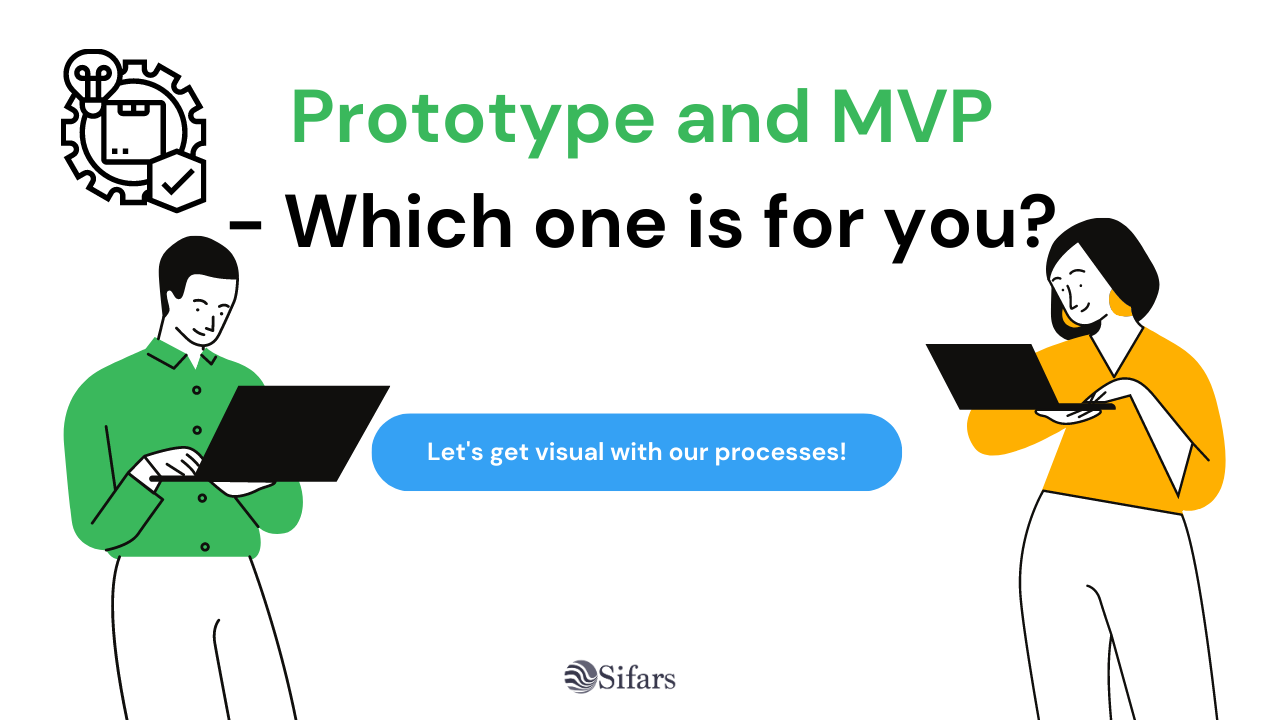
  • Prototype and MVP- Which one is for you?

    Prototype and MVP- Which one is for you?

    Reading Time: 4 minutes

    Before we can make a comparison- Prototype and MVP, let’s understand them individually.

    What is a Prototype?

    The prototype is just like a script for the movie. It showcases the features as an outline of a scene showcases its best dialogues and scenes. Therefore, a Prototype is a smaller version or representation of the idea that the app rests upon. It helps you get feedback from the investors, and project stakeholders. It primarily gives a fair indication of the project.

    Types of Prototypes

    Prototypes may vary based on their fidelity.

    Low level
    These are the low-fidelity prototypes and are as simple and easy as a hand-drawn sketch. It is a visual representation of a paper wireframe.

    High Level
    High-fidelity prototypes on the contrary are clickable and truly exhibit all the qualities of the real product. They give you an experience that will be similar to the actual look and feel of the key software product. Also, many hi-fi prototypes make use of the early code.

    Key Prototyping Benefits

    ??‍?The cost factor

    Cost being an important resource, it must be used efficiently. The prototypes are the replica version of the actual app and therefore may not require as much time to be developed

    ??‍?Feedback

    Prototypes can help one get a better picture and feedback. As they have a little gestation period, their testing becomes easy. As such designers and developers get quality feedback on the same. On the other hand, the complaints if any can be addressed in the very early stages thus making it worthy in the future.

    ??‍?Easy to adjust.

    As we all know, understand that prototypes are very simple and flexible. They are easy to adjust and therefore it is easy to make the changes. It has become easy to test out new ideas and helps in the comparison of options. So as we study

    ??‍?Low-risk association

    As they are the simpler versions, the risk association is also very low. There is no guilt in terms of financial resources and development time. As such they are a good option for startups who have a new idea and are doubtful of its success. It is imperative to see the success of the prototype before disposing of all the resources in full-scale development.

    ??‍?Fundraising

    Fundraising may be difficult in case you are not able to give your best in the idea presentation. In such cases, prototypes act as an easy option as they help in tangible representation of the ideas and can help raise funds.

    What is an MVP?

    MVP(Minimum Viable Product) is just like a trailer for the movie. It showcases the features as a trailer showcases its best dialogues and scenes. Therefore MVP is a simple visual representation of the idea that the app rests upon. It helps you get feedback from the critics, project stakeholders, or end users. It primarily gives a fair indication of the project success figures.
    As it is the simplified version of the future product, it reflects the true picture of the app.
    It is essentially the bare-bone software with all the functionality enough to represent a fair idea. It is like a live test taken on a broader audience. Not only this, but It may be really exciting to see the response and aim for early payback.

    As MVP runs successfully in the market, One can opt for the full-featured app by slowly integrating features into it. The basic difference between the Prototype and MVP is that while a prototype is just a script and model of the actual product, MVP is a market-ready app that represents the functionalities of the real product.

    Key MVP Benefits over Prototype

    ??‍?Concept validation.

    What’s better than seeing your ideas turn into reality? The realistic representation provides insight into the main product. The practical insights validate the ideas and assumptions on which theta is based.

    ??‍?Real user feedback.

    Showcasing the prototype with the idea representation is a narrow concept. It can be shown only to a limited number of people like investors, stakeholders, and investors. On the contrary, MVP helps you represent the idea to a larger audience. Your app is ready and free to be used by users. The more the users, the more feedback we can expect. Further, the larger the feedback larger the insight figures. Thus, helping to find out the pain points and make necessary adjustments before the final launch.

    ??‍?User acquisition.

    Just as songs can help you call an audience for the movie, MVPs help you attract customers and early adopters. They are the ones that actually can help you create the necessary buzz for the product.

    ??‍?Revenue

    MVP helps you reap paybacks. Paybacks act as real motivators and therefore lead to lowering risks and inviting fresh income streams into the accounts.

    What should I Opt for? Prototype and MVP

    The battle of Prototype and MVP is to an extent a personal choice problem. It primarily must be based on the premise of the phase of the software development cycle. If you are floating in the early stages and less confident about the idea yourself and are still struggling with the resources at hand, go for Prototype. The prototype here will help you refine the idea and test early designs. Later on, as you get the feedback and support of investors, go in for the MVP for the same.

    However, if you are ready to bet on your idea and feel the kick to take the challenge in the real world, go in for MVP. MVP will help you get a better picture and thus help you launch the app in a better way.

    Further, If you need any type of professional advice or seasoned technological expertise to streamline the early stages of your project’s growth, don’t hesitate to reach out to Sifars.

  • The Future of Web3 – The Metaverse

    The Future of Web3 – The Metaverse

    Reading Time: 5 minutes

    The Metaverse – Since evolution, man has to find solutions to fulfill his needs. The unlimited wants and desires are being fulfilled by understanding the needs and making necessary alterations. The world we live in today is one of the beautiful fantasies that one might have imagined. Virtual reality is mesmerizing. The new shades and doors of augmented reality seem like a part of some sci-fiction movie. Metaverse is the imagination that comes true. People are now witnessing a new way of interacting with the environment via digital tools.

    Technological development is perhaps making the real-life witness an episode of progress. We are the lucky ones looking at the change happen. just like a new round in the video game, where the new background, new graphics, and new challenges make us awestruck. Metaverse is making us look at the new version of life standing at a platform from where the views are happening. We still need some time to know whether our lives are going to change as per the metaverse or if it will remain in the current gaming style only.

    Will Metaverse change our way of living?

    Metaverse will certainly, play the role of superpower that a person acquires in his game round. Not only, it will provide a new way of communication and interaction with the outside world but, will also give a new face,( just as a player gets when he gets the power.)

    This transition will be surreal. The gaming experience of actual reality in the virtual environment will be captivating. 

    Where is the evidence?

    Metaverse has shown its presence in the following:

    VR technology

    Metaverse has given birth to VR. VR / AR devices represent the experiences of virtual possibilities. VR technology is helping us interact with different subjects and the results are beautiful. But, it is still in its inception stage. The next move is still not visible. There are still some technological limitations that need to be solved.

    Blockchain technology

    Blockchain is also one of the gifts of the Metaverse. It lies on the principle of transaction transparency. The digital economy is experiencing the change. The end applications are still to be discovered. We still need to see the next phase of development where generations will meet together.

    We believe that is something really big, not a short-term gig for sure. The excitement is making things move, showing its different side of the new world. The hype is for real and not temporary. New technology always brings along a new share of happenings. Metaverse will bring in something very big for sure. Crypto is certainly one of the examples that the new world is already experiencing.

     Is metaverse purely a short-term hype, or is this something with much bigger potential?

    Metaverse can be a much-needed trigger to change the way personal data is stored and used.

    We all know that tech giants are using are information to help create customised content for us. Metaverse is one of the finest creations of these tech giants. This is where WEb3 technology is helping us to address the privacy and data protection problems. Today Web 3 is the sure-shot alternative to solving the issue of data leakage and making the best use of data experiences that are resistant to censorship.

    We all are aware that Metaverse is a uniform collection center of various technological modern solutions wherein DLT (Distributed Ledger Technology) systems play a major role.

    The unconscious probing of the audience for the arrival of a new technological paradigm.

    They are readily inviting web3.

    Web3.0 Metaverse

    On the contrary, Web 2.0 was always there as a personal assistant helping retrieve the passwords and pins that use the personal data of the users. Certainly, we will see a parallel universe in the evolution of Web 3.0.

    As of today, the Metaverse is the best example exhibiting the properties of Web3 and showing the world of possibilities to people. Therefore in the future Web3 will be one of the synonyms for MetaVerse, and we can bet that the number of users will eventually rise in the coming years. The existing MetaVerse industry is on the principles of Web3, and the best examples have been given by Meta and Microsoft.

    Diving into the world of possibilities with the MetaVerse

    Scalability is the essence of web development. Metaverse certainly has the potential to excel in the aspect of scalability. The virtual world is a fantasy and we are all ready to adopt the new face of the web. VR technology is going to show us a new phase of the web wherein advanced functionality.

    In the coming years, meta verse will enjoy the crown sitting at the highest throne in the history of the web. It will become a place where people will not hesitate to spend half of their time. The metaverse ecosystem is beautiful and diverse. We just need the right tools and devices to reach the epitome of reality 

    Today, virtual reality is going through various hardships as it has to face a myriad of bottlenecks that are affecting the pace of advancement. One pof the challenge that is affecting the audience is the cost factor. The VR designs and headsets have been priced at a cost that is significantly on the higher side. But if we see the facts and data figures today, we can see a significant drop in the same. On the other hand, the content available to the audience is also becoming more beautiful, colorful, and realistic giving a scenic pleasure that is interactive and mesmerizing.

    Snapshot- Metaverse is a fundamental element of the future of Web 3

    In the last two years, as the world was suffering from the pandemic, the web got a new bar of excellence. It proved that the future is all about Meta. The heavy investment from big tech companies and the influx of startups in the Meta sector is big evidence supporting the statement. As of today, as we stand in mid-2023, we all have understood the potential of the same. Metaverse has a few bottlenecks that need to be addressed in the wake of development. The metaverse future is certainly promising, touching our lives and showing the world of possibilities.