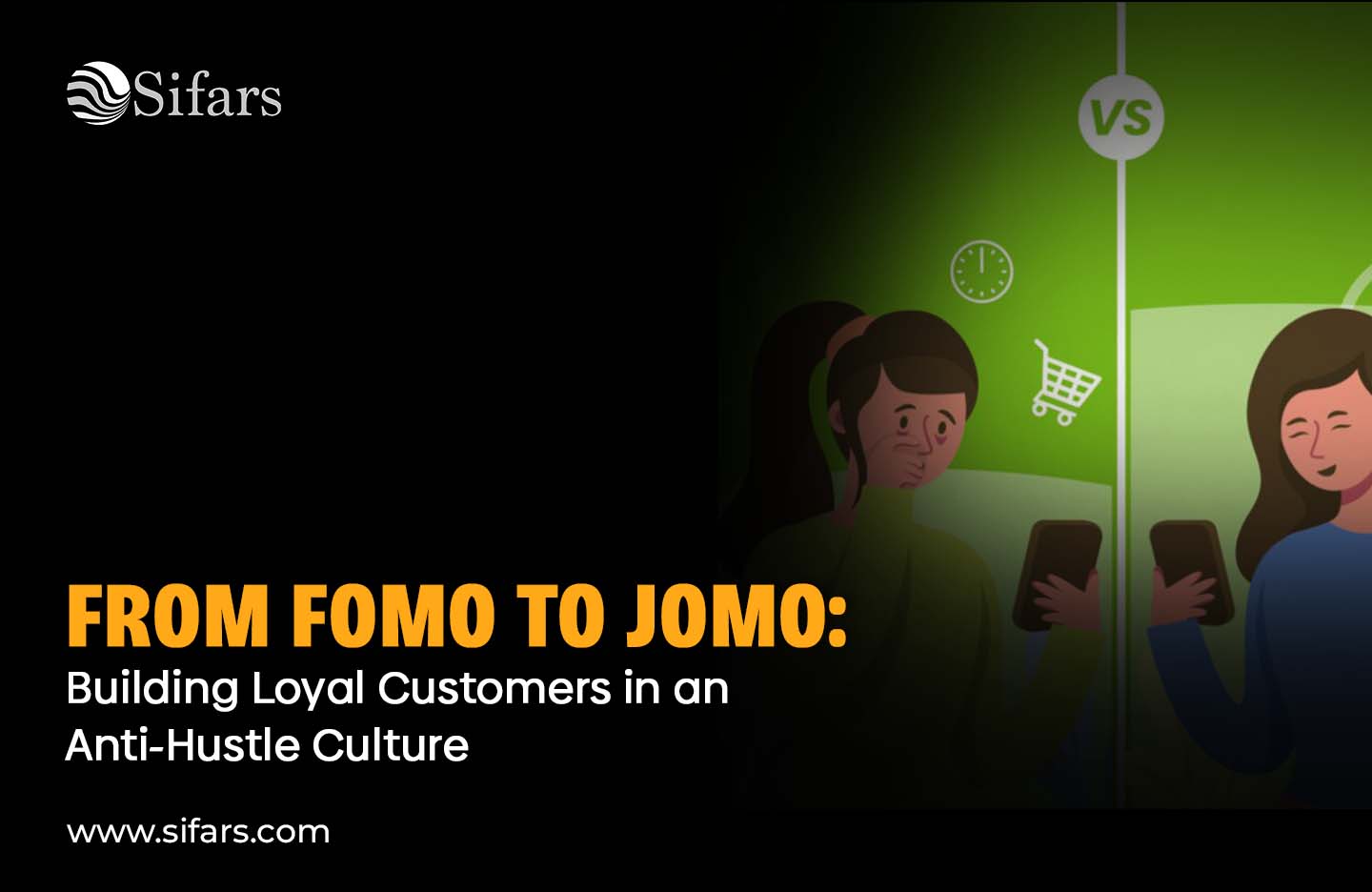
For years, marketers relied heavily on FOMO (Fear of Missing Out) to drive customer action.
Messages like:
- “Limited time offer”
- “Only 2 seats left”
- “Don’t miss this deal”
created urgency and pushed customers to act quickly.
For a long time, this strategy worked.
But today’s digital environment is changing. Customers are experiencing notification fatigue, information overload, and increasing burnout from constant pressure to keep up.
As a result, a new emotional mindset is emerging JOMO, the Joy of Missing Out.
The JOMO marketing strategy focuses on helping customers feel calm, confident, and in control of their decisions rather than pressured to act quickly.
Brands that succeed in 2025 are not those that push harder.
They are the ones that build trust, respect attention, and create meaningful customer relationships.
1. Why FOMO Marketing Is Losing Its Power
FOMO marketing once acted as a powerful conversion tool.
However, today’s consumers are far more aware of marketing tactics.
Modern audiences are:
- overwhelmed by constant notifications
- experiencing digital burnout
- skeptical of urgency-based messaging
- increasingly selective about where they invest attention
Instead of reacting quickly, many consumers now disengage when they feel pressured.
FOMO messaging increasingly creates:
❌ anxiety
❌ skepticism
❌ lower engagement
Today’s customers do not want to chase brands.
They want the freedom to make thoughtful decisions.
2. Understanding the Rise of JOMO
JOMO represents the joy of making intentional choices without pressure.
Instead of pushing urgency, JOMO-driven brands focus on creating calm, trustworthy experiences.
Customers increasingly respond to brands that support:
✔ balanced digital habits
✔ mindful consumption
✔ thoughtful decision-making
✔ authentic experiences
This shift is particularly strong among:
- Gen Z consumers who prioritize mental wellness
- Millennials who are moving away from hustle culture
- working professionals experiencing burnout
- health-conscious audiences seeking slower lifestyles
JOMO marketing does not pressure customers.
It protects their time and mental space.
3. Why JOMO Builds Stronger Customer Loyalty
While FOMO can generate short-term spikes in sales, JOMO builds long-term loyalty.
This happens because JOMO marketing focuses on emotional trust.
Successful brands prioritize:
Transparency
Clear pricing and honest communication build confidence.
Trust-based messaging
Customers are not manipulated with artificial urgency.
Value-driven storytelling
Brands focus on how they help customers rather than pushing them to buy.
Respect for customer time
Clean user experiences and thoughtful messaging reduce digital noise.
Customers who feel respected tend to stay longer and return more often.
4. How JOMO-Driven Brands Operate Differently
Brands that embrace JOMO marketing focus on guiding customers rather than pressuring them.
Simplicity over complexity
They reduce product clutter, simplify websites, and make decisions easier.
Clarity over urgency
Messaging focuses on explaining value instead of pushing limited-time offers.
Celebrating slower, meaningful wins
Marketing highlights thoughtful outcomes rather than constant productivity.
Education over persuasion
Brands invest in helpful content and expertise rather than aggressive promotion.
Calm digital environments
Design choices emphasize soft colors, minimal distractions, and intuitive navigation.
Encouraging mindful purchasing
Customers are encouraged to buy what they genuinely need.
Over time, this builds stronger lifetime value.
5. Industries Where JOMO Marketing Is Growing Fast
Several industries are already adopting the JOMO marketing approach.
Wellness and lifestyle brands
Consumers increasingly prioritize mental health and calm experiences.
Productivity and SaaS tools
Tools that promote thoughtful work rather than constant hustle are gaining popularity.
EdTech platforms
Learning experiences are shifting toward sustainable engagement instead of burnout.
FinTech platforms
Financial products are encouraging calm, informed decisions rather than impulsive investing.
Healthcare communication
Medical messaging increasingly focuses on reassurance and trust.
These shifts align with broader trends such as how AI is transforming traditional workflows across industries, where technology enables smoother, less stressful experiences for customers.
6. Real Examples of JOMO Marketing
Several well-known brands already embody JOMO principles.
- Calm App — “Do Nothing for 10 Minutes” campaign
- Apple — minimal, focused product launches
- Airbnb — “Live Anywhere” lifestyle messaging
- Patagonia — “Buy Less, Demand More” philosophy
- Notion — productivity tools built around calm organization
These brands avoid urgency-based messaging.
Instead, they create space for thoughtful decisions.
Ironically, this approach often increases conversions.
7. A Simple Framework for Moving from FOMO to JOMO
Brands transitioning to JOMO marketing can follow a simple shift in approach.
| Traditional FOMO | JOMO Approach |
|---|---|
| Scarcity messaging | Value-based messaging |
| Aggressive CTAs | Permission-based CTAs |
| Loud visual design | Calm and minimal interfaces |
| Pressure-driven advertising | Trust-based education |
| Complex funnels | Smooth customer journeys |
The focus moves away from urgency and toward clarity.
8. Calm Customers Become Loyal Customers
Customers who feel calm and respected tend to behave differently.
They:
read more carefully
trust brands more deeply
convert with greater confidence
stay loyal longer
advocate for brands naturally
In an overstimulated digital world, peace of mind becomes a powerful competitive advantage.
Conclusion
The era of hustle-driven marketing is fading.
Consumers are increasingly choosing brands that respect their attention, time, and mental well-being.
The shift from FOMO to JOMO represents a deeper cultural change in how people interact with brands.
Companies that embrace the JOMO marketing strategy will build stronger relationships, improve retention, and earn lasting trust.
In a noisy digital landscape, the brands that succeed will not be the loudest.
They will be the calmest.
Organizations that combine thoughtful marketing with efficient digital systems often built through custom software development services and intelligent platforms from an AI development company will be best positioned to support this new customer mindset.
Sifars helps businesses design digital platforms and customer experiences that prioritize clarity, trust, and long-term engagement in an evolving marketplace.
Leave a Reply