Category: Uncategorized

  • AI in Education: Reshaping the Way Americans Learn and Teach

    AI in Education: Reshaping the Way Americans Learn and Teach

    Reading Time: 3 minutes

    Artificial Intelligence is transforming education by making learning more personalized, efficient, and accessible. From adaptive learning platforms to AI-powered assistants, technology is helping both students and educators achieve better outcomes.

    Institutions and edtech platforms working with an AI development company are increasingly implementing intelligent systems that enhance the learning experience and improve operational efficiency.

    How AI Is Transforming Education

    Personalized Learning

    AI-powered tools like DreamBox Learning and Prodigy Math adjust lessons in real time based on student performance.

    • Adapts difficulty levels
    • Tracks individual progress
    • Provides tailored content

    These systems, often built using advanced algorithms from a machine learning development company, ensure that each student learns at their own pace.

    Efficiency for Teachers

    AI reduces administrative workload by automating repetitive tasks.

    Tools like Gradescope can:

    • Automatically grade assignments
    • Provide instant feedback
    • Reduce manual effort

    This allows teachers to focus more on teaching rather than administrative work.

    Accessibility and Inclusion

    AI helps make education accessible to:

    • Students with disabilities
    • Remote learners
    • Under-resourced communities

    These tools ensure inclusive learning experiences for all.

    Immersive Learning with AR & VR

    AI combined with AR/VR enables:

    • Virtual science experiments
    • Historical site exploration
    • Interactive simulations

    These immersive experiences make learning more engaging and effective.

    Real-Time Feedback

    AI systems continuously monitor performance and provide:

    • Instant feedback
    • Personalized recommendations
    • Targeted learning resources

    This helps students improve faster and stay on track.

    Core AI Technologies in Education

    Machine Learning for Personalized Learning

    Machine learning analyzes student behavior and performance to create customized learning paths.

    It helps:

    • Identify weak areas
    • Recommend improvements
    • Optimize learning speed

    Natural Language Processing (NLP)

    NLP enhances communication and writing skills by:

    • Detecting grammar errors
    • Suggesting improvements
    • Structuring ideas

    AI-powered assistants developed by an AI chatbot development company are also used to provide instant academic support.

    Computer Vision in AR/VR

    Computer vision powers immersive learning experiences through:

    • Visual simulations
    • Interactive models
    • Real-time feedback

    This makes complex subjects easier to understand.

    AI for Goal-Oriented Learning

    Real-Time Curriculum Adjustment

    AI adapts learning paths dynamically.

    If a student struggles with a concept, the system:

    • Provides additional resources
    • Adjusts difficulty
    • Offers alternative explanations

    Predictive Analytics for Student Support

    AI can identify struggling students early by analyzing:

    • Engagement levels
    • Assignment completion
    • Error patterns

    This allows teachers to intervene proactively.

    AI Virtual Assistants

    AI-powered assistants provide 24/7 support by:

    • Answering questions
    • Explaining concepts
    • Assisting with homework

    These systems improve accessibility while reducing teacher workload.

    Challenges and Ethical Considerations

    Despite its advantages, AI in education comes with challenges:

    Data Privacy & Security

    AI systems collect large amounts of student data, raising concerns about privacy and protection.

    Digital Divide

    Not all students have equal access to AI-powered tools and infrastructure.

    Human Connection

    AI should support teachers not replace the human element of education.

    Responsible implementation is key to maximizing benefits while minimizing risks.

    The Future of AI in Education

    AI is reshaping education by:

    • Making learning personalized
    • Improving accessibility
    • Enhancing teaching efficiency

    However, the future of education depends on balancing technology with human interaction.

    Organizations exploring advanced education technologies often partner with leading
    software development companies in US
    to build scalable AI-powered learning platforms.

    AI-driven solutions powered by AI automation services will continue to expand access and improve outcomes across the education sector.

    Conclusion

    AI is not just changing tools it’s transforming how we learn.

    By combining personalization, automation, and accessibility, AI is creating a more inclusive and effective education system.

    However, success depends on using AI responsibly, ensuring it enhances not replaces the human experience in learning.

    Ready to Transform Education with AI?

    At Sifars, we help organizations build:

    • AI-powered learning platforms
    • Intelligent automation systems
    • Scalable digital solutions

    Our goal is to create smarter, more accessible, and future-ready education systems.

  • Impossible Foods: How AI and Science Cooked Up a Mainstream Revolution

    Impossible Foods: How AI and Science Cooked Up a Mainstream Revolution

    Reading Time: 3 minutes

    The global food system is undergoing a major transformation. What was once a niche category plant-based food has now become a mainstream movement. At the center of this shift is Impossible Foods, a company that didn’t just create a product but redefined how innovation works.

    Their approach wasn’t based on traditional food development it was rooted in AI solutions for businesses, data science, and molecular research.

    Organizations today, especially those working with an AI development company, are adopting similar data-first strategies to solve complex business challenges and create entirely new markets.

    The Core Challenge: Hacking the “Meaty” Experience

    The biggest challenge for plant-based food has always been replicating the real meat experience:

    • Taste
    • Texture
    • Aroma
    • Visual appeal

    Impossible Foods approached this scientifically by asking:

    👉 “What makes meat, meat?”

    This led to the discovery of heme, the key molecule responsible for meat’s flavor and behavior.

    Using AI consulting services and computational biology, they analyzed thousands of plant compounds to identify the perfect substitute.

    This is a classic example of how businesses can use data to solve problems that seem impossible at first glance.

    The AI-Driven Product Formula

    Molecular Data Analysis

    Impossible Foods used advanced algorithms to scan and analyze massive datasets of plant-based compounds.

    This type of work is often handled by a machine learning development company, where models identify patterns and accelerate discoveries that would otherwise take years.

    Precision Fermentation

    Once the right molecule was identified, the next challenge was scaling production.

    They used AI-driven biotechnology processes to optimize fermentation, ensuring:

    • Cost efficiency
    • Scalability
    • Consistent quality

    This mirrors how companies use backend systems developed by a
    python development company
    to build scalable and data-driven applications.

    Sensory Optimization

    Impossible Foods continuously improves its product using:

    • Consumer feedback
    • Taste testing data
    • Chemical analysis

    AI models process this data to refine taste and texture, enabling faster product iterations.

    Scaling the Impossible with AI

    Innovation alone is not enough scalability is key.

    Impossible Foods leveraged business automation with AI to move from lab innovation to global production.

    Predictive Quality Control

    AI systems monitor:

    • Texture
    • Color
    • Consistency

    in real-time using sensors and computer vision.

    Supply Chain Optimization

    Managing global supply chains requires intelligent systems.

    AI analyzes:

    • Weather patterns
    • Demand fluctuations
    • Logistics data

    This ensures efficient sourcing and reduced waste.

    Advanced analytics platforms, similar to those offered by a
    data services company,
    help businesses turn raw data into actionable insights.

    Process Optimization

    AI continuously adjusts manufacturing variables like:

    • Temperature
    • Pressure
    • Moisture

    to ensure product consistency at scale.

    Market Penetration Through Data Intelligence

    Impossible Foods didn’t just innovate they understood their customers deeply.

    Using AI solutions for businesses, they analyzed:

    • Customer feedback
    • Social media sentiment
    • Regional preferences

    NLP-Driven Insights

    Natural Language Processing (NLP) helps identify:

    • Product issues
    • Consumer preferences
    • Emerging trends

    This allowed them to target flexitarians (non-veg consumers) instead of just vegans.

    Strategic Expansion

    AI helped them:

    • Optimize partnerships (e.g., fast-food chains)
    • Adjust pricing strategies
    • Localize products for different markets

    Businesses aiming to build similar scalable systems often explore
    software development companies in US
    to develop intelligent, data-driven platforms.

    The Real Lesson: Turning “Impossible” into Data

    Impossible Foods proves that:

    👉 Every complex problem is a data problem

    Whether it’s:

    • Product innovation
    • Customer understanding
    • Operational scaling

    AI can unlock solutions that traditional methods cannot.

    The Sifars Perspective

    At Sifars, we apply the same principles across industries:

    • Finance
    • Healthcare
    • Logistics
    • Manufacturing

    Through AI consulting services, we help businesses:

    • Identify key growth drivers
    • Automate operations
    • Build scalable systems

    Our goal is to help companies find their own version of the “heme factor” the single insight that changes everything.

    Conclusion

    Impossible Foods didn’t just build a better burger they built a new way of innovating.

    By combining:

    • Artificial Intelligence
    • Data science
    • Automation

    they transformed an entire industry.

    The same approach can be applied to any business.

    Ready to Build Your Own “Impossible” Solution?

    The future belongs to companies that can turn complexity into clarity using AI.

    At Sifars, we help you:

    • Solve complex business problems
    • Build intelligent systems
    • Scale with confidence
  • AI as Your Co-Founder: Partnering with Tech to Build Smarter Companies

    AI as Your Co-Founder: Partnering with Tech to Build Smarter Companies

    Reading Time: 2 minutes

    In today’s fast-evolving digital economy, the concept of AI as a co-founder is redefining how businesses are built and scaled. Instead of relying solely on human decision-making, companies are now leveraging AI solutions and artificial intelligence services to drive growth, efficiency, and innovation.

    AI is no longer just a tool it’s becoming a strategic partner that helps businesses automate operations, analyze data, and make smarter decisions.

    Why Think of AI as a Co-Founder?

    A great co-founder contributes to strategy, execution, and growth. AI brings the same value at scale.

    Key Benefits

    • Strategic Alignment: Data-driven insights improve decision-making
    • Efficiency: Tasks automated using business automation with AI
    • Risk Reduction: Predictive analytics identifies potential risks
    • Scalability: AI systems grow without limitations

    By treating AI as a partner, businesses unlock new opportunities for innovation.

    AI in Business: The New Competitive Edge

    AI-Powered Decision Making

    Businesses using AI for businesses gain:

    • Faster insights
    • Better forecasting
    • Improved customer experience

    AI enables companies to move from reactive decisions to proactive strategies.

    Real-World Impact

    Companies across industries are already benefiting:

    • Personalized customer experiences
    • Automated workflows
    • Intelligent pricing systems

    These outcomes are powered by advanced AI solutions.

    Automating Operations: AI as the Execution Partner

    Entrepreneurs often get stuck in repetitive work. AI solves this problem through automation.

    Key Areas of Automation

    • Customer support
    • Marketing campaigns
    • Financial operations
    • Inventory management

    This is where
    business automation with AI
    plays a critical role in improving efficiency.

    AI as a Strategic Advisor

    AI doesn’t just execute it guides.

    How AI Supports Decision-Making

    • Predictive analytics for forecasting
    • Customer sentiment analysis
    • Scenario-based planning

    With the help of
    AI consulting,
    businesses can transform raw data into actionable insights.

    The Role of AI Consulting

    Implementing AI requires a clear strategy.

    Why AI Consulting Matters

    • Align AI with business goals
    • Ensure smooth integration
    • Optimize performance
    • Track ROI effectively

    Businesses can leverage
    AI consulting
    to build scalable and future-ready systems.

    Building Smarter Companies with AI

    Step-by-Step Approach

    1. Identify Repetitive Tasks
    Focus on areas where automation can save time

    2. Prepare Data
    Clean and structured data improves AI accuracy

    3. Start Small
    Implement AI in one function first

    4. Scale Gradually
    Expand across departments

    5. Optimize Continuously
    Refine models for better performance

    Businesses can enhance decision-making using
    artificial intelligence services
    powered by analytics.

    Real Business Outcomes

    AI adoption delivers measurable results:

    • Reduced operational costs
    • Faster decision-making
    • Improved customer engagement
    • Increased scalability

    These benefits make AI a true business partner not just a tool.

    Challenges in AI Adoption

    Common Issues

    • High initial cost
    • Lack of expertise
    • Integration complexity

    These challenges can be solved through structured
    AI consulting
    and strategic planning.

    The Future: AI + Entrepreneurship

    The next generation of businesses will be built differently:

    • AI-driven strategy
    • Automated operations
    • Data-first decision-making

    The concept of AI as a co-founder will become standard for startups and enterprises alike.

    Actionable Insights for Businesses

    Automate repetitive processes
    Use predictive analytics for decisions
    Invest in scalable AI systems
    Partner with AI experts
    Continuously optimize workflows

    Learn more in
    AI for startups.

    Conclusion

    The idea of AI as a co-founder is no longer futuristic it’s already transforming how businesses operate.

    By leveraging:

    • AI solutions
    • AI consulting
    • business automation with AI
    • artificial intelligence services

    companies can build smarter, faster, and more resilient organizations.

    Ready to Build with AI?

    At Sifars, we help businesses:

    • Develop intelligent systems
    • Automate operations
    • Scale efficiently with AI

    Turn AI into your growth partner and future-proof your business.

  • The Role of AI in Boosting American Tech Giants’ Global Dominance

    The Role of AI in Boosting American Tech Giants’ Global Dominance

    Reading Time: 2 minutes

    The rise of AI in American tech companies has redefined global competition. Industry leaders like Google, Amazon, Microsoft, Apple, and Meta are not just technology providers they are AI-driven ecosystems powered by advanced AI solutions and artificial intelligence services.

    From automation to personalization, AI is the backbone behind their global success.

    Why AI Became the Core of Tech Giants

    Data-Driven Decision Making

    These companies leverage massive datasets to:

    • Predict user behavior
    • Personalize experiences
    • Optimize operations

    With AI for businesses, data becomes a strategic asset.

    Business Automation with AI

    Automation allows companies to:

    • Reduce operational costs
    • Improve efficiency
    • Scale faster

    Businesses can adopt similar strategies using
    AI solutions

    Continuous Innovation

    Tech giants invest heavily in AI research, enabling:

    • Faster product development
    • Advanced machine learning models
    • Competitive advantage

    Case Studies of AI in Action

    Google: AI as the Intelligence Engine

    • Search optimization
    • Natural language processing
    • AI-powered cloud services

    Amazon: AI in Commerce & Logistics

    • Personalized recommendations
    • Predictive delivery systems
    • Smart assistants

    Microsoft: Enterprise AI Leadership

    • AI-powered productivity tools
    • Cloud-based AI services
    • Business automation platforms

    Apple: AI for User Experience

    • Facial recognition
    • Health monitoring
    • Voice assistants

    Meta: AI in Social Platforms

    • Content moderation
    • Ad targeting
    • AI-driven engagement

    How AI Drives Global Expansion

    Breaking Language Barriers

    AI enables companies to expand globally with:

    • Real-time translation
    • Multilingual platforms

    Scalable Systems

    AI-powered infrastructure supports global growth.

    Businesses can build scalable platforms with
    AI solutions

    Predictive Market Insights

    AI helps companies:

    • Forecast demand
    • Optimize supply chains
    • Adapt to market trends

    Lessons for Businesses

    Start with Your Data

    You don’t need massive datasets start small and scale.

    Automate Processes

    Use business automation with AI to improve efficiency.

    Focus on Customer Experience

    AI-driven personalization improves engagement and retention.

    Build Scalable Systems

    Modern businesses require flexible and scalable technology stacks supported by
    artificial intelligence services

    Risks of Ignoring AI

    Businesses that avoid AI face:

    • Lower efficiency
    • Poor customer experience
    • Competitive disadvantage

    AI adoption is no longer optional it’s essential.

    How Sifars Helps Businesses Compete

    At Sifars, we help companies:

    • Implement AI solutions
    • Enable business automation with AI
    • Deliver scalable artificial intelligence services

    Our goal is to help businesses compete with industry leaders using smart AI strategies.

    The Future is AI-Driven

    The success of AI in American tech companies proves that:

    • AI drives innovation
    • Automation drives efficiency
    • Data drives decisions

    Businesses that adopt AI today will lead tomorrow.

    Ready to Scale with AI?

    Sifars helps businesses transform operations with:

    • AI consulting
    • Custom AI solutions
    • Automation strategies

    Take the next step toward AI-powered growth.

  • How AI Is Powering the Next Wave of American Startups

    How AI Is Powering the Next Wave of American Startups

    Reading Time: 4 minutes

    A New Era for Startups in America

    The American startup ecosystem has always been at the forefront of innovation—whether in Silicon Valley or emerging hubs like Austin, Miami, and Denver. But today, one force is accelerating growth more than any other: artificial intelligence (AI).

    AI solutions are no longer limited to tech giants. Startups across industries—healthcare, fintech, retail, logistics, and even creative sectors—are embedding AI at their core. From business automation with AI to AI consulting services, these technologies are redefining how early-stage companies launch, scale, and compete globally.

    In this blog, we’ll explore how AI is shaping the future of American startups, highlight real-world applications, and uncover why businesses that integrate AI early gain an unbeatable edge.

    1. Why AI and Startups Are a Perfect Match

    Startups thrive on agility, speed, and the ability to disrupt markets. AI aligns perfectly with these needs.

    • Scalability: AI systems can grow with the business, automating processes and adapting to changing customer demands.
    • Efficiency: AI reduces manual workloads, enabling lean teams to achieve more with fewer resources.
    • Insights: AI-driven analytics give startups data-backed decision-making power previously reserved for large enterprises.
    • Personalization: From fintech to healthcare, startups can deliver hyper-personalized experiences that differentiate them in crowded markets.

    In short, startups using AI for businesses can move faster, smarter, and with greater precision.

    2. The Startup Boom: Why AI Is Driving It in the U.S.

    The U.S. startup scene is buzzing, with record funding flowing into AI-first companies. According to PitchBook, AI startups in the U.S. attracted over $50 billion in venture capital in 2023, accounting for nearly one-third of total startup funding.

    Key reasons include:

    • VC Appetite for AI: Investors view AI as the most transformative technology since the internet.
    • Lower Barriers to Entry: Open-source AI models and cloud-based artificial intelligence services have made it easier for startups to adopt AI.
    • Government and Policy Support: The U.S. government’s AI initiatives, such as the National AI Initiative Act, are boosting innovation.
    • Corporate Adoption: Enterprises are actively partnering with AI startups to solve niche problems, creating ready markets for new entrants.

    3. Core Areas Where Startups Are Using AI

    3.1 Business Automation with AI

    Startups can’t afford inefficiencies. AI helps by:

    • Automating customer support with conversational AI and chatbots.
    • Streamlining HR processes like recruitment and onboarding.
    • Enhancing supply chain management through predictive analytics.

    3.2 Product Development and Innovation

    AI enables startups to build smarter products faster:

    • FinTech startups use AI algorithms for fraud detection and credit scoring.
    • HealthTech startups leverage AI for diagnostics, treatment personalization, and clinical trial optimization.
    • Retail startups deploy AI for recommendation engines and demand forecasting.

    3.3 AI-Powered Marketing

    AI consulting services help startups optimize campaigns:

    • Predictive analytics for customer acquisition.
    • Natural language processing for content personalization.
    • Sentiment analysis to monitor brand reputation.

    3.4 Data Security and Risk Management

    Startups in finance and healthcare rely on AI for compliance, fraud prevention, and identity verification. AI-driven security platforms can detect anomalies in real-time, protecting sensitive data.

    4. Real-World Examples of AI in U.S. Startups

    • Jasper AI (Texas): A content automation startup using AI to help businesses create marketing copy. It reached unicorn status in record time.
    • Viz.ai (San Francisco): A health-tech startup using AI to detect strokes in medical imaging, reducing diagnosis time.
    • Brex (California): A fintech startup leveraging AI for real-time financial insights and automated expense management.
    • PathAI (Boston): Uses AI for pathology image analysis, transforming diagnostics and research.

    These startups demonstrate how AI solutions are not just enabling efficiency—they’re defining entirely new markets.

    5. The Investor Perspective: Why AI Startups Attract Funding

    Venture capitalists love AI-first startups because:

    • They scale faster due to automation.
    • AI creates strong data-driven competitive moats.
    • Startups can pivot quickly using AI insights.
    • Monetization opportunities are vast—subscription models, SaaS, API integrations, etc.

    In fact, AI-first startups grow 2.5x faster than non-AI counterparts, according to a McKinsey study.

    6. Overcoming Challenges of AI Adoption for Startups

    While the opportunities are immense, challenges remain:

    • High Initial Costs: AI development and integration require capital.
    • Talent Shortage: AI engineers and data scientists are in high demand.
    • Data Privacy Concerns: Navigating compliance frameworks like GDPR and CCPA is critical.
    • Scaling AI: Moving from proof-of-concept to full-scale deployment can be complex.

    This is where AI consulting firms like Sifars play a vital role—helping startups design, deploy, and optimize AI solutions without unnecessary delays or costs.

    7. Actionable Insights: How Startups Can Leverage AI Effectively

    1. Start Small, Scale Fast
      Begin with specific use cases—chatbots, automation, or predictive analytics—then expand.
    2. Leverage Cloud and Pre-Built Models
      Tools from AWS, Microsoft Azure, and Google Cloud make AI adoption more affordable.
    3. Partner with AI Experts
      Collaborating with AI consulting services ensures startups avoid costly mistakes.
    4. Focus on Data Quality
      Clean, structured, and secure data is the foundation of AI success.
    5. Stay Agile
      Regularly update AI models to reflect changing market and customer behavior.

    8. The Future: What AI Means for the Next Wave of Startups

    AI isn’t just a tool—it’s the foundation of the next generation of startups. The coming years will see:

    • AI-driven unicorns dominating fintech, healthcare, and sustainability.
    • AI democratization, where small businesses access enterprise-grade AI services affordably.
    • Convergence of AI with Web3, IoT, and Quantum Computing, opening new business models.

    For American startups, adopting AI today means being positioned to lead tomorrow.

    Why Now Is the Time to Act

    AI is not just powering the next wave of American startups—it is the wave. Whether it’s automating workflows, personalizing customer experiences, or unlocking new market opportunities, AI is at the center of entrepreneurial success stories.

    Startups that integrate AI early will not only survive but thrive in this hyper-competitive ecosystem.

    At Sifars, we specialize in AI solutions, business automation with AI, and AI consulting services tailored for startups and enterprises alike. If you’re building a startup or scaling your business, now is the perfect time to harness AI to fuel your growth.

    Ready to explore how AI can power your startup? Connect with Sifars today.

    www.sifars.com

  • Angular and React- Features and Comparison

    Angular and React- Features and Comparison

    Reading Time: 3 minutes

    Angular and React-Features and Comparison–Web development has been changing at a fast pace. Many front-end frameworks have been ruling the technology world with the latest trends and techniques increasing.

    There are a plethora of options to choose from amongst the javascript platforms like Angular, Vue js, and React that can make your front look spectacular. The ultimate deciding factors as to which framework would best suit your requirements depend on the project you finally want to launch. The trends and technology seem to make your decision biased, but you must take the right decision before you choose the one.

    In this article, we will analyze the features of both Angular and React to come to a detailed comparison between the ruling frontend frameworks. Let’s do it.

    React

    React is a javascript framework that helps you make user interfaces with reusable Ui components. Also, React promises a flexible and performance-based solution by using server-side rendering. Further, React offers solutions that promise seamless UX and UI.

    React offers scalability and usability as it helps in making the best possible use of reusable components. Certainly, React is a product of Facebook and it exhibits the best properties of building fast and scalable apps. 

    Advantages of React js

    1. React offers easy debugging and hence is a favorite to the developers
    2. React uses reusable components and therefore makes fast and scalable products.
    3. Also, it helps in the easy migration of apps into React.
    4. It provides faster updates with both serverside and front-end endless support
    5. It has extensive libraries that offer efficiency with performance.

    Angular 

    Angular is a client-side framework for developing high-performance, speed-efficient, and scalable web apps and mobile applications. The latest version of Angular 13 promises enterprise-ready web app development solutions that promise reliability.

    Angular is a product of Google that provides the best MVC (Model View Controller) technique in such a way that it divides the work into logical pieces while speeding up the webpage loading time.

    Advantages of Angular js

    1. Angular provides clean code and comes witha dependency injection
    2. Further, Angular comes with a wide range of libraries that make it preferable for developers
    3. It provides a single routing option and hence makes use of interactive UIs and data binding techniques.
    4. Angular helps synchronize the data between the model, view, and controller.
    Basis Angular React
    A product by Google Facebook
    Released in  2009 2013
    Composed in Typescript Javascript
    concept Works with Real DOM, client-side rendering Works with Virtual DomServer side rendering
    Data binding Two way data binding One way data binding
    Learning curve Steep moderate
    Best suited Highly interactive web apps  Large apps with variable data
    Dependency injection Fully supported Not supported
    DOM Real  Virtual
    Apps supported IBM, Paypal, Upwork Facebook, Walmart, Instagram
    Detailed comparison

    Let’s dig into deeper

    1. Popularity

    As the data speaks out of Google trends, react wins the race as the most popular in terms of searches. Also, React grabs the position of the most widely used web framework by developers worldwide.

    Angular on the other hand has also a good majority of developers as it focuses on high-speed apps that are trending today. Also, it offers many ready-made easy-to-use solutions.

    2. Data binding

    Angular makes use of two-way data binding, wherein any change in interface elements leads to a change in model components also.

    React on the other hand uses one-way data binding as it renders modifications in its interface model only as the model state is updated first. It must be taken into fact that data flow is unidirectional by giving more control to react js developers over web applications

    3. Components

    The app structure of Angular apps is fixed and complex. It enables the developers with an easy application as it provides the code into individual files making it easier to use templates and codebases. It makes use of components like Model, View, and controller.

    React on the other hand has a fixed well structured codebase that doesn’t require any particular fixed formatting. The component tree makes it organized logically. It makes components declarations declarative by making use of functional programming.

    4. Performance

     As virtual Dom trees help to lower the loading time speeding up the performance for React making it more performance-oriented than Angular. Also, it reduces workload as the data binding process in React is unidirectional.

     On the other hand performance in angular is proportional to the bidirectional data binding process. This may lead to hindering the performance of Angular due to its looping.

    Angular and React

    Both Angular and React exhibit the best properties of frontend framework but React grabs a better position as it promises performance with optimization and has a huge back from developers all around the world.

    Also react supports Virtual Dom and hence enables the developers to switch to different versions without any difficulties. It has an easy installation process and is much simpler than Angular.

    React also wins the charts with its less development time and robust solutions that eliminate errors. In a nutshell, React with its stupendous features is adored around the world by developers as it provides the best functionalities and features on any web app. Still, in doubt, contact our expert react js developers to help you choose the one best suited to your needs.

  • What is Metaverse ? 4 Pro tips to get ready for the Metaverse

    What is Metaverse ? 4 Pro tips to get ready for the Metaverse

    Reading Time: 3 minutes

    What is Metaverse? Metaverse is an amalgamation of various trending and advanced technologies like AR/VR, AI, 3D reconstruction, and more. It is an acquaintance with the new technology space that would eventually give you a new outlook on working with daily chores and making routine work easy.

    The world is buzzing with the word ‘Meta’. The futuristic concept is now the new reality. Meta verse is no longer an advanced technological concept. It is the present. It is the new reality in the technological universe. You can’t just ignore its strong presence in the world. Meta verse is truly omnipresent. 

    The term metaverse was first used in the year 1992 Sci-fi Novel “Snow Crash” by Neal Stephenson. Today in 2023 we can bet on its presence and importance in all varied industries. Its exceptional features and capabilities have a realm of intelligence that has the capacity to revolutionalize the gravity of the unachievable.

    The first takers on Metaverse

    Big industrial and technical giants like Roblox, Nike, and Adidas have already made their debut in Metaverse for achieving their marketing functions. The beautiful and mesmerizing TVCs give new insights into the world of new advancements. Virtual interactions with meta are trending and making people go awed by their abilities.

    This article will focus on the various ways that will tell you how to enter the Metaverse and make profits. 

    How to enter the Metaverse and make profits?

    Businesses study the business environment to analyze the new happening in the universe. They vigilantly observe the strength and weaknesses that give them the chance to shine bright with effective utilization of resources. Looking at the present trends it will take a mere span of 5-7 years for Metaverse to become the mainstream. Virtual reality is trending and the evolution of the new world is now not far away. 

    The 3d virtual space is now becoming the new foundation for businesses. The new stepping stones are being included in the form of experts and technological equipment. Here are a few factors that advocate the new technological universe of the metaverse.

    Choosing the Right Platform

    Similarly, Fortnite has also become a popular venue where people can attend virtual concerts by prominent celebrities like Travis Scott and Ariana Grande. You can choose the best platform that will help your business scale better in the Metaverse industry. 

    Take a name of industry and you can find the possibilities of the new arena technological advancement in the mainstream verticals. NFTs, cryptocurrencies, and Gaming are the few industries that have already taken the gear of virtual space with meta. Today, Roblox has over 47 Million active users that are witnessing the change in the Meta world. 

    Enhance Your Online Presence

    Your online presence plays a vital role if you want to be a player in the game of Metaverse. Your online existence will become the catalyst for making the best out of the new genre of meta. The ocean of metaverse is divine and the seabed will certainly have some treasures worth it. So make sure you outshine and make your place in the online segment through social media, websites, and e-commerce. The platform can give you a plethora of opportunities only if you dive in with your swimsuit of an online presence. 

    Choose the Right Target Audience

    Metaverse will make the world see the new version of virtual reality. If you are making use of metaverse to showcase your business and wish to align it to your business vision, you must choose your target audience. Your target audience will eventually help you decide the realm of meta to choose, will define your reach, and will help your e-commerce business to boost. For example, Nike’s TVC with meta verse makes you spellbound and is a perfect material to target the audience in the age bracket of 15- 35.

    What is the actual concept of the metaverse?

    Certainly, it works on the principle of making your users and audience engage and interact. The visual concepts promise an unparallel experience that makes you bet on the world of reality. You cannot escape the captivating effects it leaves that can place your product or service on the horizon of a spectacular arena.

    Your concepts can then actually make the customers come back and spend their limited resources to enjoy the view of the metaverse. This will in turn lead to retention and undoubtedly aim for new customers too. 

    Final Words

    Things always seem greener on the other side. As we spend time welcoming new beginnings in the technological universe, we cannot ignore the possibilities of its adverse effects. The future is meta, that is slowly evolving out, but remember not to forget the roots. The traditional methods never go wrong. Change is necessary but may invite problems too. The horizon of reality and virtual is slowly appearing in the real world. Contact our Web developers to make you ready and make the necessary accommodations to get yourself a safe flight in the land of meta. 

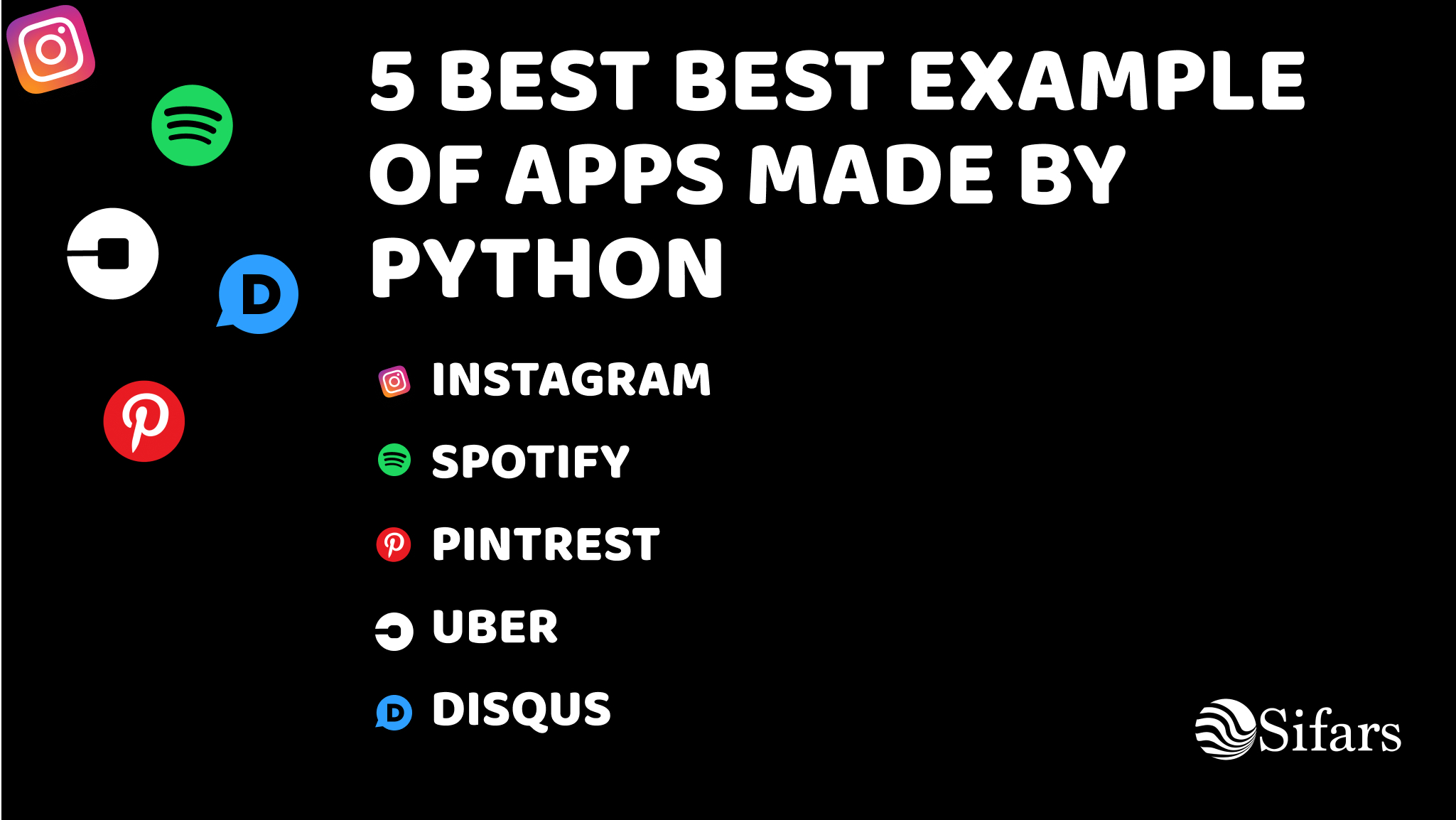
  • 5 Best Examples of Apps Made With Python

    5 Best Examples of Apps Made With Python

    Reading Time: 3 minutes

    Websites and web applications have become one of the biggest trends in the digital world. Businesses are increasingly shifting toward web apps because they offer smooth functionality, better performance, and a clean user experience.

    Among the many programming languages available today, Python has proven to be one of the most powerful and versatile technologies for web development. Python provides a wide range of libraries and frameworks that enable developers to build scalable and feature-rich applications.

    It is also an open-source language supported by a large developer community. Because of its flexibility and efficiency, many popular platforms rely on Python for their backend systems.

    Companies often work with a python developers or a software development company for startups to build scalable digital products using Python and Django frameworks.

    Below are some of the most popular apps built with Python.

    5 Best Examples of Apps Made With Python

    Instagram

    Instagram is one of the most popular social media platforms in the world. Initially, it was created as a simple photo-sharing application that allowed users to capture images and apply filters before sharing them.

    Over time, Instagram evolved into a massive social networking platform with features such as:

    • Stories
    • Reels
    • Messaging
    • Business marketing tools

    Today Instagram has hundreds of millions of active users daily. Python plays a major role in managing its scalability and backend infrastructure.

    Many companies use AI development company services to build modern applications inspired by large platforms like Instagram.

    Pinterest

    Pinterest became extremely popular as a visual discovery platform where users can find and save creative ideas.

    The platform allows users to bookmark and organize images related to topics such as:

    • Fashion
    • Home design
    • Food
    • Travel
    • Business ideas

    Pinterest uses Python and the Django framework to manage its large content database and deliver a smooth user experience.

    Python helps the platform handle millions of users and huge volumes of visual data efficiently.

    Disqus

    Disqus is one of the most widely used commenting platforms on the internet. It allows websites and blogs to add interactive comment sections where users can share opinions and participate in discussions.

    Disqus offers features such as:

    • Multiple login options
    • Cross-site notifications
    • Moderation tools
    • Community engagement features

    The platform uses Python and Django to build scalable web infrastructure capable of handling millions of interactions every month.

    Businesses planning to build discussion platforms or community websites often work with a custom web application development services provider to build similar systems.

    Spotify

    Spotify is the world’s leading music streaming platform and serves millions of users globally.

    The platform allows users to:

    • Stream music instantly
    • Discover new artists
    • Create playlists
    • Receive personalized recommendations

    Python plays a key role in Spotify’s backend architecture, especially in areas such as:

    • Data analysis
    • Recommendation algorithms
    • Backend services

    Its ability to process large data sets quickly makes Python ideal for applications like Spotify that require advanced analytics and scalability.

    Uber

    Uber is a globally recognized ride-hailing and delivery platform operating in thousands of cities worldwide.

    The platform manages complex operations such as:

    • Ride booking
    • Route optimization
    • Payment processing
    • Real-time driver tracking

    Python helps Uber handle large volumes of data and perform complex calculations efficiently.

    Its scalability and performance allow Uber to manage millions of rides and transactions daily.

    Many startups building transportation or delivery platforms rely on software development company for startups services to create scalable solutions similar to Uber.

    The Portfolio Speaks for Itself

    The success of these platforms clearly demonstrates the power of Python as a programming language.

    In its early days, Python was mostly used by startups because it was simple and cost-effective. However, as companies began to realize its scalability and flexibility, it quickly became one of the most widely used programming languages in the world.

    Today Python is used across industries for:

    • Web development
    • Artificial intelligence
    • Data analytics
    • Automation
    • Software development

    Many businesses partner with an experienced AI development company or development team to build powerful digital products using Python.

    Python continues to grow in popularity and is considered one of the most promising technologies for developers and businesses alike.

    If you have an idea for a web application or digital platform, working with a professional development team can help bring your concept to life.