Category: Uncategorized

  • How UX Precision Increases Enterprise Productivity

    How UX Precision Increases Enterprise Productivity

    Reading Time: 3 minutes

    In large organizations, productivity challenges rarely come from a lack of talent or effort.

    Instead, they emerge from operational friction—systems that are difficult to use, workflows that do not match how teams actually operate, and interfaces that force employees to think about the tools rather than the work itself.

    This is where UX precision enterprise productivity becomes a powerful driver of efficiency.

    User experience design is no longer limited to how applications look or how customers interact with digital products.

    Within enterprises, precise UX design directly influences speed, accuracy, adoption, and overall operational efficiency.

    What UX Precision Means in Enterprise Systems

    UX precision focuses on designing systems that align closely with how users actually work.

    This includes understanding:

    • how users think and process information
    • how workflows move across teams and systems
    • when decisions need to be made
    • where common errors occur
    • what information users need at specific moments

    UX precision is not about adding more features or visual elements.

    Instead, it removes ambiguity, reduces cognitive load, and guides users through complex tasks in the simplest way possible.

    In enterprise software, clarity and precision matter far more than creativity.

    The Hidden Productivity Loss Caused by Poor UX

    When internal enterprise tools are poorly designed, productivity losses accumulate quickly.

    Employees spend time navigating confusing interfaces instead of completing meaningful work.

    Common problems include:

    • difficulty locating key information
    • unclear actions or workflows
    • repetitive manual inputs
    • inconsistent system responses

    These issues lead to:

    • increased operational errors
    • slower task completion
    • delayed decision-making
    • reduced adoption of internal systems

    Individually, these inefficiencies may seem small.

    However, at enterprise scale they can result in thousands of lost work hours every month.

    This challenge is closely related to the hidden cost of slow internal tools on enterprise growth, where poorly designed systems silently reduce productivity across departments.

    How UX Precision Improves Enterprise Productivity

    Faster Task Completion

    Precise UX removes unnecessary steps from workflows.

    Clear navigation, intuitive layouts, and context-sensitive actions allow employees to complete tasks quickly without stopping to interpret the system.

    Reducing time per task increases overall throughput across teams.

    Fewer Errors and Less Rework

    Effective UX guides users through tasks while preventing common mistakes.

    Clear validation rules, structured workflows, and helpful feedback reduce operational errors.

    This prevents costly rework, approval loops, and downstream problems especially in finance, operations, and compliance-heavy environments.

    Higher System Adoption

    Even the most advanced enterprise systems fail when employees struggle to use them effectively.

    UX precision improves comfort and trust in internal tools.

    When systems feel intuitive, employees adopt them faster and rely on them consistently.

    Reduced Training and Support Costs

    Enterprise tools with strong UX require significantly less onboarding.

    Employees learn through direct interaction instead of relying on documentation or long training sessions.

    This reduces the number of support requests and saves internal resources.

    Faster and Better Decision-Making

    Precise UX ensures that decision-makers see the right information at the right time.

    Dashboards, alerts, and reports are structured around real decision needs rather than raw data.

    This clarity helps leaders evaluate situations quickly and act with confidence.

    In many organizations, poor system design contributes to automation vs operational efficiency in enterprises, where automated tools fail to improve productivity because workflows remain confusing.

    UX precision helps close this gap.

    UX Precision in Complex Enterprise Environments

    Enterprise platforms often handle:

    • multiple user roles and permissions
    • long and interconnected workflows
    • strict regulatory requirements
    • large and complex datasets

    UX precision ensures that each user sees only the information relevant to their role.

    Role-based interfaces reduce complexity while maintaining system functionality.

    This approach keeps even highly complex enterprise platforms usable at scale.

    Why UX Precision Matters Even More with AI

    As artificial intelligence becomes integrated into enterprise workflows, UX precision becomes even more important.

    AI systems generate insights, predictions, and recommendations.

    However, if users cannot understand or trust these outputs, the technology fails to deliver value.

    Effective UX ensures:

    • clear explanation of AI recommendations
    • transparent actions and system behavior
    • intuitive interactions with AI-powered tools

    Organizations often work with an experienced AI consulting company or implement modern enterprise software development services to integrate AI systems into workflows with clear, user-friendly interfaces.

    Similarly, platforms developed through custom software development services and advanced solutions from an AI development company help businesses combine intelligent automation with intuitive UX.

    Productivity Is Ultimately a Design Outcome

    Enterprise productivity is not only an operational challenge it is also a design challenge.

    When systems are built with UX precision, organizations experience:

    • faster execution across teams
    • fewer operational errors
    • improved employee satisfaction
    • smoother scaling of internal processes

    Instead of struggling with tools, employees can focus on meaningful work that drives business results.

    Conclusion

    Enterprises do not necessarily need more software.

    They need better-designed software.

    UX precision transforms enterprise tools from obstacles into enablers of productivity.

    By designing systems that align with how people actually work, organizations can improve performance across teams, workflows, and decisions.

    At Sifars, we build enterprise systems where UX precision drives real operational outcomes not just better interfaces, but stronger business results.

    If you want to improve productivity through smarter UX and system design, Sifars can help you build systems that support both speed and scalability.

  • How Tech Debt Kills Growth and Steps to Recover

    How Tech Debt Kills Growth and Steps to Recover

    Reading Time: 4 minutes

    Technical debt is a challenge that almost every growing company eventually faces. Unlike financial debt, however, it does not appear on balance sheets or revenue reports.

    At first, it rarely seems dangerous.

    A quick workaround to meet a deadline.
    A new feature built on top of old code.
    A legacy system kept alive because “it still works.”

    Over time, these decisions accumulate. What begins as a small compromise slowly grows into a structural problem that slows innovation, increases costs, and ultimately limits growth.

    In today’s digital economy, companies rarely fail because they lack ideas.

    They fail because their technology cannot support those ideas.

    Understanding the relationship between tech debt business growth is essential for organizations that want to scale sustainably.

    What Technical Debt Is and Why It Grows Quickly

    Technical debt refers to the long-term cost of prioritizing speed over maintainability when building software systems.

    It can include:

    • outdated frameworks and legacy infrastructure
    • poorly documented codebases
    • tightly coupled systems and fragile integrations
    • manual processes replacing automated workflows
    • technology stacks that no longer fit business needs

    These shortcuts often make sense in early growth stages. However, as organizations expand, the complexity increases.

    New teams build on top of old systems. Integrations become fragile. Changes take longer than expected.

    Eventually, the technology that once accelerated growth begins to slow it down.

    How Tech Debt Gradually Kills Growth

    Technical debt rarely causes immediate system failure. Instead, it slowly erodes operational efficiency and innovation.

    Product Innovation Slows Down

    Engineering teams spend more time fixing issues than building new capabilities.

    Even simple changes require extensive testing and rework.

    Release cycles that once took days begin taking weeks or months.

    Operational Costs Quietly Increase

    Legacy systems require constant maintenance.

    Manual processes require additional staff to manage workflows that should be automated.

    Infrastructure costs increase while system performance remains stagnant.

    Customer Experience Declines

    Slow applications, inconsistent data, and unreliable systems eventually impact customers.

    Users experience delays and errors.

    Conversion rates drop, churn increases, and trust in the brand weakens.

    Talent Retention Becomes Difficult

    Highly skilled engineers prefer working with modern technology stacks.

    When teams spend most of their time maintaining outdated systems instead of solving meaningful problems, frustration grows.

    Eventually, burnout increases and top talent leaves.

    Scaling Becomes Risky

    As transaction volumes, users, and data increase, systems built on fragile architecture begin to fail.

    Technology becomes the bottleneck rather than the enabler of growth.

    This situation is closely related to when legacy systems become business risk, where outdated infrastructure directly threatens operational stability.

    The Cost of Ignoring Technical Debt

    Companies that delay addressing tech debt often pay a hidden but significant price.

    Growth opportunities are missed because systems cannot adapt quickly.

    Competitors move faster with modern infrastructure.

    Digital transformation initiatives stall because foundational systems cannot support new capabilities.

    Industry research suggests that organizations spend up to 40% of their IT budgets maintaining legacy systems.

    This budget could otherwise fund innovation, AI initiatives, or improved customer experiences.

    The longer technical debt remains unresolved, the more expensive it becomes to fix.

    How to Recover from Tech Debt Without Disrupting Growth

    Fixing technical debt does not require rebuilding everything from scratch.

    Successful organizations take a structured and incremental approach.

    Audit Systems from a Business Perspective

    Start by identifying systems that directly impact revenue, customer experience, and operational performance.

    Not all technical debt needs to be solved immediately. Focus first on the systems that limit growth.

    Modernize Systems Gradually

    Instead of large-scale rewrites, organizations break monolithic systems into smaller, independent services.

    APIs replace fragile integrations.

    Incremental modernization reduces risk while continuously improving system stability.

    Introduce Automation Where It Matters

    Manual workflows often accumulate around outdated systems.

    Automating testing, deployment, reporting, and operational processes improves efficiency and reduces errors.

    Invest in Scalable Architecture

    Modern infrastructure enables sustainable growth.

    Cloud-native platforms, microservices architecture, and advanced data systems allow businesses to scale without constant rework.

    Treat Tech Debt as an Ongoing Strategy

    Technical debt management should not be a one-time cleanup effort.

    Refactoring and system improvements should be integrated into long-term technology strategy.

    Organizations often work with an experienced AI consulting company or adopt modern enterprise software development services to redesign system architecture while maintaining operational continuity.

    Similarly, platforms built through custom software development services and advanced solutions from an AI development company help businesses integrate automation, scalable infrastructure, and intelligent data systems.

    These improvements not only reduce technical debt but also improve operational speed and reliability.

    How Sifars Helps Businesses Recover from Tech Debt

    At Sifars, we help growing organizations simplify complex systems and rebuild them for scalability—without interrupting daily operations.

    Our teams support businesses with:

    • legacy system modernization
    • cloud-native and microservices architecture
    • unified data platforms
    • automation and AI-driven efficiency improvements
    • secure and scalable digital infrastructure

    Instead of just fixing technical issues, we help organizations create systems that support innovation, long-term growth, and operational clarity.

    This approach also addresses the hidden cost of slow internal tools on enterprise growth, where outdated platforms silently limit productivity.

    Conclusion

    Technical debt is not only a software challenge it is a business growth problem.

    Organizations that treat technology as a growth engine rather than a maintenance burden scale faster, innovate more confidently, and compete more effectively.

    The good news is that technical debt can be managed and reduced with the right strategy.

    Companies that address it early gain a significant competitive advantage.

    If your systems are slowing innovation or limiting scalability, it may be time to rethink your technology foundation.

    Sifars helps organizations modernize systems, eliminate technical debt, and build platforms that support long-term growth and innovation.

  • How Finance Teams Are Using AI for Compliance, Reporting & Workflow Accuracy

    How Finance Teams Are Using AI for Compliance, Reporting & Workflow Accuracy

    Reading Time: 4 minutes

    Finance teams have always operated under intense pressure. Tight reporting deadlines, complex regulatory requirements, endless reconciliation cycles, and zero tolerance for errors define daily financial operations.

    Over the past few years, artificial intelligence has started transforming how finance teams manage compliance, reporting, workflow accuracy, and strategic decision-making.

    As regulations grow stricter and financial data becomes more complex, AI in finance compliance reporting is helping teams shift from reactive firefighting to proactive, accurate, and highly efficient operations.

    Here’s how AI is reshaping financial workflows.

    1. AI Makes Compliance Faster and More Reliable

    Compliance is one of the most resource-intensive responsibilities for finance departments. Regulations change frequently, documentation requirements are extensive, and penalties for mistakes can be severe.

    AI helps finance teams manage these challenges more effectively.

    Automated policy monitoring

    AI systems can analyze regulatory updates, compare them with internal policies, and identify compliance gaps almost instantly.

    Transaction monitoring

    Machine learning models analyze transaction patterns and flag anomalies that may indicate fraud, compliance violations, or operational risks.

    Audit-ready documentation

    AI tools automatically maintain audit trails, including logs, timestamps, document versions, and approval histories.

    Reduced human error

    Automated validation rules ensure financial compliance checks are applied consistently rather than relying on manual interpretation.

    The result is faster compliance cycles and significantly fewer audit issues.

    Organizations often implement these systems with the support of an experienced AI consulting company that can align regulatory workflows with intelligent automation.

    2. Financial Reporting Moves from Hours to Minutes

    Financial reporting traditionally requires significant manual effort.

    Teams reconcile data sources, compile reports, prepare management summaries, and verify numbers repeatedly before presenting results.

    AI dramatically accelerates these processes.

    Automated MIS report generation

    AI systems collect financial data from multiple sources and automatically generate structured reports on daily, weekly, or monthly schedules.

    Real-time anomaly detection

    Instead of identifying discrepancies at month-end, AI detects unusual financial patterns immediately.

    Narrative report generation

    Modern AI tools can automatically generate written summaries explaining financial changes, including:

    • reasons behind cost fluctuations
    • drivers of revenue shifts
    • emerging financial risks or trends

    This reduces hours of manual analysis while improving reporting clarity for leadership.

    3. AI Improves Workflow Accuracy

    Accuracy is critical in financial operations. However, repetitive tasks increase the risk of human error.

    AI significantly improves workflow accuracy by automating key financial processes.

    Automated reconciliation

    AI-driven matching systems reconcile bank records, ledgers, vendor accounts, and payment systems up to 70–80% faster.

    Intelligent invoice processing

    AI tools extract invoice data, validate entries, detect duplicates, and flag inconsistencies automatically.

    Expense categorization

    Machine learning models categorize expenses based on company policies, cost centers, and historical patterns.

    Budget forecasting

    AI analyzes historical financial trends, seasonal patterns, and market indicators to generate more accurate financial forecasts.

    The result is improved financial accuracy and significantly reduced manual workload.

    4. Predictive Intelligence for Strategic Decisions

    Beyond operational efficiency, AI helps finance leaders make better strategic decisions.

    AI models can predict potential financial risks such as:

    • cash flow disruptions
    • revenue declines
    • budget overruns
    • delayed payments
    • supply chain financial risks

    Instead of reacting after problems occur, CFOs gain predictive insights that allow them to act early.

    This leads to:

    • better capital allocation
    • improved working capital management
    • stronger financial planning
    • reduced long-term financial risk

    Organizations implementing these predictive systems often work with an experienced AI development company to integrate machine learning models into financial data platforms.

    5. Stronger Internal Controls with AI

    Internal controls require consistency and continuous monitoring. AI strengthens these systems by providing automated oversight.

    Real-time monitoring

    AI continuously reviews financial systems instead of relying on periodic manual checks.

    Automated approval workflows

    AI-driven workflows ensure financial approvals follow predefined policies and authority levels.

    Fraud detection

    Machine learning models identify suspicious vendor behavior or unusual spending patterns early.

    Dynamic access management

    AI can adjust user permissions based on role changes, behavioral patterns, and risk profiles.

    This improves control over financial processes while reducing operational risk.

    These capabilities are particularly important for FinTech and financial platforms, where systems must operate reliably at scale, similar to challenges discussed in why fintech scale fails without transaction intelligence.

    6. The ROI of AI in Finance

    Companies implementing AI-driven financial systems are reporting significant operational improvements.

    Common outcomes include:

    • 70% faster reporting cycles
    • 50–80% reduction in manual reconciliation work
    • 40–60% fewer compliance issues
    • 2× improvement in audit readiness
    • higher accuracy across financial workflows

    By automating repetitive tasks, AI allows finance professionals to focus on analysis, planning, and strategic decision-making.

    This shift also reflects the broader concept of automation vs operational efficiency in enterprises, where intelligent systems reduce complexity instead of simply speeding up manual tasks.

    The Future of Finance: Human + AI

    AI is not replacing financial expertise.

    Instead, it is amplifying it.

    Finance teams that adopt AI today will operate with cleaner workflows, faster reporting cycles, and stronger compliance frameworks.

    Those that delay adoption risk continuing to struggle with manual processes, fragmented data, and rising regulatory complexity.

    Conclusion

    Artificial intelligence is transforming financial operations by improving compliance, reporting speed, workflow accuracy, and decision-making.

    For finance teams, AI represents more than automation it enables smarter, more resilient financial systems.

    Organizations investing in intelligent financial platforms are positioning themselves for faster growth, stronger compliance, and better financial visibility.

    Sifars helps businesses design AI-powered compliance, reporting, and financial workflow systems that allow finance teams to operate with speed, accuracy, and complete audit confidence.

    If your organization is ready to modernize financial operations, Sifars can help you build intelligent systems that scale with your business.

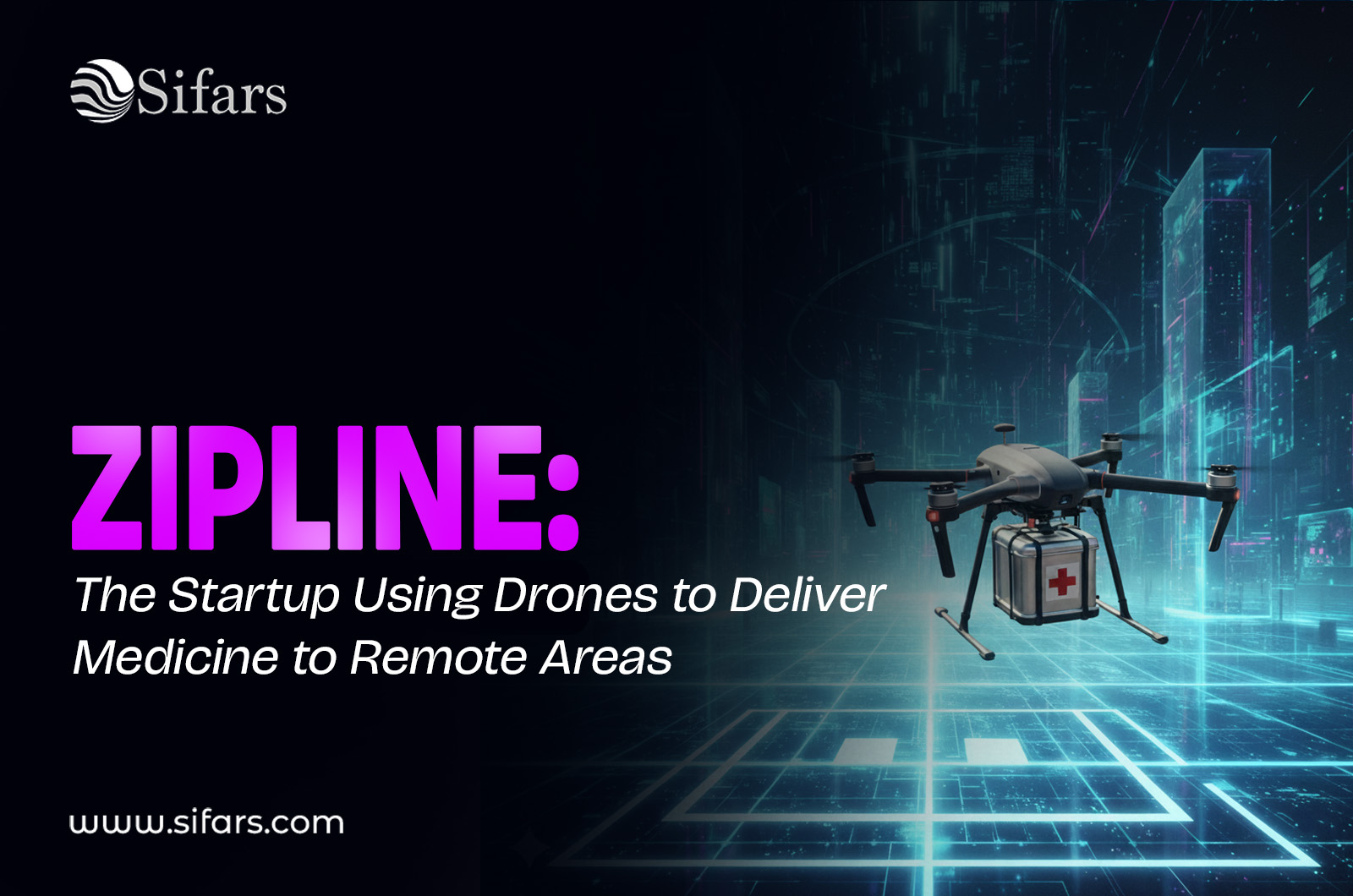
  • Zipline: The Startup Using Drones to Deliver Medicine to Remote Areas

    Zipline: The Startup Using Drones to Deliver Medicine to Remote Areas

    Reading Time: 3 minutes

    In many parts of the world, life-saving medical supplies exist but cannot reach patients in time. Poor road infrastructure, long travel distances, difficult terrain, and limited transportation systems often prevent clinics from receiving urgent medical resources.

    A Silicon Valley startup called Zipline is solving this problem with an innovative approach delivering medicines using autonomous drones.

    What began as an ambitious experiment has now grown into one of the world’s most advanced medical drone delivery networks.

    Just as companies delivering healthcare innovation rely on advanced technology, organizations working with an AI development company are also building intelligent systems that transform industries through automation and data-driven decision making.

    The Problem Zipline Wanted to Solve

    Healthcare professionals in rural Africa, remote islands, and developing regions face a harsh reality:

    • Vaccines spoil before reaching clinics
    • Emergency blood supplies arrive too late
    • Life-saving medications cannot survive long transport journeys
    • Access to healthcare depends heavily on geography

    Traditional transportation methods such as trucks, motorcycles, and ambulances often fail in areas with poor infrastructure.

    Where many saw logistical challenges, Zipline saw an opportunity to apply advanced technology to healthcare logistics.

    Zipline’s Breakthrough: Medical Delivery Drones

    Zipline created a fully autonomous logistics network powered by delivery drones called “Zips.”

    How It Works

    1️⃣ Hospitals send medical requests through a digital platform.
    2️⃣ Zipline prepares the required medical package.
    3️⃣ A drone launches from a nearby distribution center.
    4️⃣ The package is dropped via parachute close to the clinic.
    5️⃣ The drone automatically returns to its base.

    The entire delivery process can take as little as 15–30 minutes, regardless of terrain or road conditions.

    Technologies like predictive routing and intelligent logistics systems often built by a machine learning development company enable drones to navigate efficiently and safely.

    Why Zipline’s Model Works

    Speed Saves Lives

    In medical emergencies, minutes can determine survival.

    Zipline drones travel at speeds of over 100 km/h, delivering blood, vaccines, and medications significantly faster than traditional road transport.

    Works in Any Terrain

    Mountains, floods, and damaged roads do not affect drone routes. The system operates above obstacles, ensuring reliable delivery.

    Minimal Infrastructure Required

    Clinics do not need runways, delivery vehicles, or drivers. They simply receive secure parachute drops.

    Reduces Medical Waste

    On-demand deliveries allow clinics to order supplies only when needed, preventing overstocking and expiration.

    Scalable and Cost-Efficient

    Once a distribution hub is operational, thousands of deliveries can be performed daily with minimal additional cost.

    These types of intelligent delivery systems often rely on AI automation services to manage logistics, optimize routes, and analyze operational data.

    Where Zipline Is Making an Impact

    Zipline launched its first drone delivery network in Rwanda in 2016, a country known for mountainous terrain and progressive digital governance.

    Today the company operates in several regions including:

    • Rwanda
    • Ghana
    • Nigeria
    • Kenya
    • Japan
    • United States (Arkansas and Utah)
    • Ivory Coast
    • Tanzania (expanding)

    Millions of deliveries have already been completed, transforming healthcare logistics in these regions.

    Real-World Healthcare Impact

    Faster Emergency Response
    Blood deliveries for trauma and childbirth emergencies can be up to 80% faster.

    Expanded Vaccine Access
    Zipline supported vaccination programs during the COVID-19 pandemic, delivering vaccines to remote communities.

    Reliable Medical Supply Chains
    Clinics rarely run out of essential medicines.

    Reduced Maternal and Child Mortality
    Rapid access to blood and medications has saved thousands of lives.

    Why Zipline Matters for the Future of Healthcare Logistics

    Zipline represents more than just drone delivery—it demonstrates how technology can redesign entire systems.

    Its model proves that:

    • Technology can solve real-world human challenges
    • Innovation thrives when addressing urgent needs
    • Startups can transform national infrastructure
    • Automation enhances human capability rather than replacing it

    Many modern logistics systems now combine drone technology, predictive analytics, and intelligent platforms similar to those developed by an enterprise software development company.

    Businesses exploring advanced technology solutions often evaluate leading software development companies in US to build scalable digital infrastructure.

    Cloud-based platforms also play a critical role in managing real-time drone networks and logistics operations, similar to systems developed by a cloud development company.

    Innovation with Purpose

    What makes Zipline unique is its mission-driven innovation.

    The company uses advanced technology not for convenience, but to address critical global healthcare challenges.

    Its mission is simple:

    “To provide every human on Earth with instant access to essential medical supplies.”

    Through intelligent automation and advanced logistics, that vision is steadily becoming reality.

    Want More Technology & Innovation Insights?

    At Sifars, we help businesses leverage emerging technologies such as:

    • Artificial Intelligence
    • Intelligent Automation
    • IoT Systems
    • Scalable Cloud Platforms

    These technologies enable organizations to build smarter digital systems, optimize operations, and deliver innovative solutions across industries.

  • Stop Overworking, Start Optimizing: AI for a Healthier Work-Life Balance

    Stop Overworking, Start Optimizing: AI for a Healthier Work-Life Balance

    Reading Time: 2 minutes

    Work today is faster, more demanding, and often overwhelming. Constant emails, endless tasks, and tight deadlines have made burnout a common part of modern professional life.

    But it doesn’t have to be this way.

    AI is no longer just a productivity tool—it’s becoming a powerful solution for creating a healthier, more balanced way of working. Businesses and professionals leveraging AI development company solutions are discovering how automation can reduce workload, improve focus, and enhance overall well-being.

    It’s time to stop overworking and start optimizing.

    Automate the Work You Shouldn’t Be Doing

    Most burnout comes from repetitive, low-value tasks.

    With modern AI automation services, you can automate:

    • Email sorting and responses
    • Calendar management
    • Meeting summaries and notes
    • Data entry and reporting
    • Document creation

    By delegating these tasks to AI, you can save hours every week and focus on meaningful work.

    Use AI to Make Smarter Decisions

    Working harder doesn’t always mean working better.

    AI-powered tools help you:

    • Identify high-impact tasks
    • Predict workload and deadlines
    • Avoid overcommitment
    • Create energy-based schedules

    These capabilities are often built using systems designed by an enterprise software development company, enabling organizations to make data-driven decisions efficiently.

    The result? You move from reactive work to proactive planning.

    Reduce Mental Load with AI Assistants

    Decision fatigue is real—and it affects productivity and well-being.

    AI assistants can help by:

    • Summarizing long documents
    • Answering repetitive questions
    • Generating templates
    • Providing actionable suggestions

    Many of these intelligent assistants are powered by conversational systems developed by an AI chatbot development company.

    This allows your brain to focus on strategic thinking, creativity, and innovation.

    AI Helps You Set Healthy Boundaries

    Work-life balance is not just about discipline it’s about system design.

    AI tools can:

    • Limit notifications after work hours
    • Detect burnout patterns
    • Track workload intensity
    • Automate follow-ups without manual effort

    These small optimizations help create a healthier and more sustainable work routine.

    Make Meetings Smarter and Shorter

    Meetings are one of the biggest productivity drains.

    AI improves meetings by:

    • Generating agendas
    • Recording and summarizing discussions
    • Creating automatic action points
    • Identifying unnecessary meetings

    This leads to fewer meetings, shorter discussions, and better outcomes.

    Stay Consistent Without Overworking

    Burnout often comes from inconsistent workflows and last-minute pressure.

    AI systems help maintain consistency by:

    • Tracking deadlines
    • Sending reminders
    • Structuring daily tasks
    • Monitoring progress without micromanagement

    Over time, this reduces last-minute stress and late-night work sessions.

    Use Saved Time for What Truly Matters

    The biggest benefit of AI is not just productivity—it’s time freedom.

    Instead of filling saved time with more work, you can invest it in:

    • Health and fitness
    • Family and relationships
    • Learning new skills
    • Creative pursuits
    • Mental rest

    AI creates space you decide how to use it.

    The Future of Work: Balance Over Burnout

    AI will not replace meaningful work it will replace unnecessary work.

    Professionals who adopt AI early will experience:

    • Better work-life balance
    • Higher productivity
    • Reduced stress
    • Improved decision-making
    • Longer, healthier careers

    Organizations exploring advanced productivity solutions often look at leading software development companies in US to build scalable AI-powered systems.

    The future belongs to those who work smarter not harder.

    Ready to Optimize Your Workday?

    At Sifars, we help businesses implement intelligent solutions powered by:

    • Artificial Intelligence
    • Automation Systems
    • Smart Workflows
    • Scalable Digital Platforms

    Our goal is simple:
    Help organizations create efficient, balanced, and future-ready work environments.

  • NVIDIA’s AI Solutions Driving Faster Innovation in Industries

    NVIDIA’s AI Solutions Driving Faster Innovation in Industries

    Reading Time: 3 minutes

    NVIDIA has established itself as a global leader in artificial intelligence by building powerful hardware and software ecosystems that accelerate innovation across industries.

    From advanced GPUs to enterprise AI platforms, NVIDIA is transforming how organizations adopt and scale artificial intelligence. Businesses working with an AI development company are leveraging similar technologies to build intelligent, scalable, and future-ready solutions.

    NVIDIA’s Leadership in AI Technology

    Dominance in GPUs

    NVIDIA revolutionized AI computing with its GPUs, originally designed for graphics rendering but now essential for machine learning and deep learning workloads.

    Its Hopper Architecture GPUs lead the market in AI training and inference, offering unmatched speed and efficiency. Innovations such as:

    • Transformer Engine
    • Multi-Instance GPU (MIG)

    help maximize data center utilization and support complex AI models.

    These GPUs power hundreds of systems in the Top500 list, demonstrating NVIDIA’s dominance in high-performance computing.

    AI-Ready Enterprise Solutions

    NVIDIA’s Tensor Core technology, featured in A100 and H100 GPUs, accelerates AI adoption for enterprises.

    Tools like TensorRT enable businesses to deploy AI models efficiently at scale.

    Organizations implementing such solutions often rely on advanced platforms developed by an enterprise software development company to integrate AI into real-world business workflows.

    From healthcare to finance, enterprises are using AI to enhance decision-making and productivity.

    Sustainability in Computing

    NVIDIA is also leading in energy-efficient AI computing.

    Its GPUs power a majority of systems in the Green500 rankings, reducing energy consumption while maintaining high performance.

    This balance between performance and sustainability supports critical research areas such as:

    • Climate modeling
    • Genomics
    • Scientific simulations

    Innovations Driving Industry Growth

    Digital Twins and Climate Modeling

    NVIDIA’s Earth-2 Digital Twin initiative showcases how AI can address global challenges.

    By simulating Earth’s climate with high precision, tools like CORDIF and ForecastNet:

    • Predict weather patterns
    • Analyze climate change impacts
    • Improve disaster forecasting

    These systems make climate modeling up to 500x faster than traditional methods.

    Transforming Media and Gaming

    NVIDIA has revolutionized creative industries with:

    • Generative AI for digital humans
    • RTX real-time lighting
    • Omniverse collaboration platform

    These technologies enable filmmakers and developers to create hyper-realistic environments and reduce production timelines significantly.

    Empowering Developers with Tools

    NVIDIA supports developers through tools like cuPyNumeric and the CUDA-X ecosystem.

    These tools allow Python developers to scale workloads to GPUs without rewriting code.

    Such innovations simplify AI adoption, especially for developers working with systems built by a machine learning development company.

    Future Growth Opportunities

    Making AI Accessible

    NVIDIA is democratizing AI through platforms like Omniverse, enabling collaborative workflows across industries such as:

    • Manufacturing
    • Engineering
    • Education

    These tools reduce barriers and accelerate AI adoption.

    Advancing AI Hardware

    NVIDIA continues to invest in next-generation chips and AI accelerators.

    Future hardware is expected to deliver:

    • Faster processing speeds
    • Higher efficiency
    • Better support for large AI models

    Cloud infrastructure also plays a key role in scaling these innovations, similar to solutions offered by a cloud development company.

    Growth in Emerging Markets

    NVIDIA is expanding into high-growth sectors including:

    • Healthcare (diagnostics & drug discovery)
    • Robotics
    • Autonomous vehicles

    Platforms like NVIDIA DRIVE are enabling the future of self-driving technology.

    Challenges and Competitive Landscape

    Despite its leadership, NVIDIA faces strong competition from:

    • AMD
    • Intel
    • Cloud providers like Amazon (Trainium chips)

    To stay ahead, NVIDIA must continue innovating while improving cost efficiency.

    Regulatory and Ethical Concerns

    As AI adoption grows, concerns around:

    • Data privacy
    • Ethical AI use
    • Market dominance

    are becoming increasingly important.

    Companies must ensure responsible AI deployment while maintaining innovation.

    Conclusion

    NVIDIA is not just advancing AI it is shaping the future of global technology.

    With a powerful ecosystem of GPUs, software platforms, and AI tools, the company is driving innovation across industries.

    Organizations looking to build similar scalable solutions often explore leading software development companies in US to develop AI-driven systems.

    To maintain its leadership, NVIDIA must continue balancing innovation, sustainability, and competition.

    One thing is clear:

    NVIDIA is not just participating in the AI revolution it is leading it.

    Ready to Accelerate Your Business with AI?

    At Sifars, we help organizations adopt intelligent technologies including:

    • Artificial Intelligence
    • Automation Systems
    • Cloud Solutions
    • Scalable Digital Platforms

    Our mission is to help businesses innovate faster and operate smarter.

  • AI Ethics in the USA: Building Trust in Artificial Intelligence

    AI Ethics in the USA: Building Trust in Artificial Intelligence

    Reading Time: 2 minutes

    Introduction

    Artificial Intelligence (AI) is rapidly transforming industries, unlocking new levels of innovation and efficiency. However, as AI systems become deeply integrated into decision-making processes, concerns around ethics, transparency, and reliability are becoming more important than ever.

    Building trust in AI is not just a technical challenge it requires a balanced approach involving governance, accountability, and human oversight. Organizations working with an AI development company are increasingly focusing on responsible AI frameworks to ensure ethical deployment.

    This blog explores the core principles that help build trustworthy AI systems.

    Why Trust is a Barrier to AI Adoption

    Despite rapid advancements, trust remains a major obstacle to AI adoption.

    Reports indicate that only a small percentage of organizations have strong frameworks in place to manage AI risks. This highlights a clear governance gap.

    Trust is critical because AI systems often make decisions that directly impact people’s lives. Without trust, users hesitate to adopt these technologies, limiting their potential benefits.

    Organizations are now leveraging AI automation services to create more transparent and reliable systems that enhance user confidence.

    Five Principles of Trustworthy AI

    1. Transparency

    Transparency means making AI systems understandable.

    This includes:

    • Clear documentation of algorithms
    • Data sources used
    • Decision-making processes

    Transparent systems help users understand how outcomes are generated.

    For example, companies like Google emphasize explainable AI to build trust and improve usability.

    2. Human Oversight

    AI should assist humans not replace judgment entirely.

    Human oversight ensures:

    • AI decisions are monitored
    • Ethical considerations are applied
    • Critical decisions can be overridden

    Frameworks like those from NIST highlight the importance of keeping humans in the loop.

    3. Accountability

    Organizations must define responsibility for AI outcomes.

    Accountability ensures:

    • Clear ownership of AI decisions
    • Mechanisms to address errors
    • Legal and ethical compliance

    Many organizations implement governance structures similar to those designed by an enterprise AI development company to ensure responsible AI operations.

    4. Bias Mitigation

    Bias in AI often originates from historical data patterns.

    If not addressed, it can lead to:

    • Discrimination
    • Unfair decision-making
    • Reputational damage

    Bias mitigation includes:

    • Using diverse datasets
    • Continuous testing
    • Monitoring post-deployment

    Advanced systems built by a machine learning development company often include fairness checks and bias detection models.

    5. Security and Resilience

    AI systems must be secure, reliable, and adaptable.

    Key elements include:

    • Data protection
    • Model security
    • Monitoring for threats
    • System resilience

    As AI adoption grows, cybersecurity and risk mitigation are becoming top priorities.

    Secure AI systems are essential for maintaining trust and long-term adoption.

    The Future of Trustworthy AI

    AI is moving toward more autonomous systems, making ethical design more critical than ever.

    Organizations that prioritize:

    • Transparency
    • Accountability
    • Security
    • Human-centered design

    will gain a competitive advantage.

    Businesses exploring advanced AI solutions often evaluate leading software development companies in US to build scalable and responsible AI systems.

    Conversational AI also plays a major role in user trust, which is why many enterprises collaborate with an AI chatbot development company to deliver secure and transparent user interactions.

    Conclusion

    Building trust in AI is not optional it is essential for sustainable growth.

    The core principles of:

    • Transparency
    • Human oversight
    • Accountability
    • Bias mitigation
    • Security

    form the foundation of responsible AI systems.

    Organizations that embed these principles into their AI strategies will not only reduce risk but also accelerate innovation and adoption.

    The future of AI belongs to those who build it responsibly—with purpose, ethics, and human values at the center.

    Ready to Build Trustworthy AI Solutions?

    At Sifars, we help organizations design and implement AI systems that are:

    • Scalable
    • Secure
    • Ethical
    • Future-ready

    We combine advanced technology with responsible practices to deliver meaningful business outcomes.

  • SpaceX: Redefining Aerospace and Inspiring the Next Wave of Entrepreneurs

    SpaceX: Redefining Aerospace and Inspiring the Next Wave of Entrepreneurs

    Reading Time: 3 minutes

    In 2002, private space travel was still considered science fiction. The aerospace industry was dominated by government agencies and legacy companies, with launch costs reaching up to $55,000 per kilogram.

    That changed when Elon Musk entered the space industry with a bold vision to make space travel affordable and eventually enable human life on Mars.

    Organizations across industries from aerospace to digital transformation are inspired by such innovation. Companies working with an AI development company are similarly leveraging advanced technologies to disrupt traditional systems and build scalable solutions.

    Origin Story: From Idea to Industry Disruption

    The idea for SpaceX was born out of a simple frustration—rockets were too expensive.

    After selling PayPal, Musk initially planned a Mars mission called “Mars Oasis.” However, after failing to purchase affordable rockets from Russia, he realized a critical insight:

    The materials used in rockets were relatively inexpensive—the high cost came from inefficiencies and lack of reusability.

    Instead of buying rockets, he decided to build them.

    In 2002, SpaceX was founded in California. With engineers like Tom Mueller, the company built its first rocket, Falcon 1, marking the beginning of a new era in aerospace innovation.

    Development Strategies That Changed Aerospace

    1. Vertical Integration

    SpaceX manufactures around 80% of its components in-house, including engines, structures, and software systems.

    This approach:

    • Reduces costs significantly
    • Speeds up innovation cycles
    • Eliminates supplier delays

    Modern tech companies follow similar strategies, often supported by platforms developed by an enterprise software development company to control operations and scale efficiently.

    2. Reusability as a Core Mission

    SpaceX made rocket reusability a non-negotiable goal.

    Key innovations included:

    • Restartable rocket engines
    • Hypersonic grid fins
    • Autonomous drone landing systems

    In 2015, SpaceX achieved its first successful booster landing, and by 2017, it launched a reused rocket.

    This breakthrough reduced launch costs dramatically from $50 million to under $15 million for reused launches.

    3. Strategic Partnership with NASA

    SpaceX formed a highly successful partnership with NASA through programs like:

    • Commercial Orbital Transportation Services (COTS)
    • Commercial Crew Program (CCP)

    Unlike traditional contracts, NASA set performance goals while allowing SpaceX to innovate freely.

    This resulted in:

    • Reduced costs for NASA
    • Faster innovation cycles
    • Development of the Crew Dragon spacecraft

    Entrepreneurial Lessons from SpaceX

    1. Think from First Principles

    Instead of improving existing systems slightly, SpaceX redefined the problem entirely.

    This approach is widely used in modern innovation, including AI systems built by a machine learning development company.

    2. Treat Failure as Data

    SpaceX embraced failures as learning opportunities.

    Early rocket explosions were not setbacks—they were data points that accelerated innovation.

    3. Control Speed Through Ownership

    By owning its manufacturing process, SpaceX achieved faster iteration and lower costs.

    Similarly, businesses today use AI automation services to control workflows, reduce inefficiencies, and improve speed.

    4. Build a Mission-Driven Culture

    SpaceX attracts top talent by offering a powerful mission making humanity multi-planetary.

    Purpose-driven organizations consistently outperform competitors.

    5. Create Your Own Market

    SpaceX didn’t just rely on launch services it created Starlink, a global satellite internet business.

    This strategy generates revenue while funding long-term goals like Mars colonization.

    Why SpaceX Matters for the Future

    SpaceX is not just an aerospace company it is a blueprint for modern innovation.

    Its success shows that:

    • Technology can disrupt even the most complex industries
    • Startups can challenge legacy systems
    • Innovation thrives with bold vision and execution

    Businesses looking to build scalable and disruptive solutions often explore leading
    software development companies in US
    to develop advanced digital platforms.

    Cloud-based infrastructure also plays a crucial role in scaling such innovations, similar to solutions offered by a
    cloud development company.

    Conclusion

    SpaceX has redefined aerospace by combining engineering excellence with entrepreneurial thinking.

    From reusable rockets to cost-efficient launches, the company has proven that innovation can transform even the most complex industries.

    Its journey offers valuable lessons for entrepreneurs:

    • Challenge assumptions
    • Embrace failure
    • Build with purpose
    • Focus on scalability

    The future belongs to those who dare to rethink systems and execute relentlessly.

    Ready to Build the Next Big Innovation?

    At Sifars, we help businesses leverage:

    • Artificial Intelligence
    • Automation Systems
    • Cloud Technologies
    • Scalable Digital Platforms

    Our mission is to help organizations innovate faster and build future-ready solutions.

  • Think Big, Start Small: The Power of AI in Incremental Business Growth

    Think Big, Start Small: The Power of AI in Incremental Business Growth

    Reading Time: 3 minutes

    Artificial Intelligence is no longer a futuristic concept it’s already transforming how businesses operate, create, and grow. From content creation to automation, AI is helping organizations improve efficiency without requiring massive upfront changes.

    Tools like ChatGPT have shown how AI can generate human-like content using Natural Language Processing (NLP). But the real question is not whether AI is powerful it’s how businesses can use it effectively without losing creativity or control.

    Companies working with an AI development company are increasingly adopting a practical strategy: start small, scale gradually, and optimize continuously.

    AI in Creative Industries: Opportunity vs Uncertainty

    AI is already being used across multiple creative domains:

    • Content writing
    • Image generation
    • Video creation
    • Music production

    Tools like DALL·E, Midjourney, and Synthesia are enabling faster content production, while platforms like Jasper and Copy.ai assist in writing.

    However, this rapid growth raises important questions:

    • Can AI replace human creativity?
    • What about originality and authenticity?
    • How do we manage ethical risks like plagiarism and bias?

    The answer lies in balance AI should enhance creativity, not replace it.

    The Smart Approach: Think Big, Start Small

    Many agencies fail with AI because they try to automate everything at once.

    A better strategy is:

    • Start with small, repetitive tasks
    • Test AI tools in controlled workflows
    • Gradually scale based on results

    This incremental approach allows businesses to adopt AI automation services without disrupting operations.

    Where AI Adds Immediate Value

    1. Automating Repetitive Tasks

    AI can handle:

    • Product descriptions
    • SEO keyword clustering
    • Email responses
    • Basic content drafts

    This saves time and reduces operational costs.

    2. Faster Content Research & Ideation

    AI helps teams:

    • Generate ideas quickly
    • Summarize research
    • Create content outlines

    Agencies can focus more on strategy and storytelling rather than manual research.

    3. Enhancing Productivity

    Businesses using AI report:

    • Faster turnaround times
    • Improved workflow efficiency
    • Reduced manual workload

    These systems are often integrated into platforms developed by an enterprise software development company to ensure scalability.

    Human + AI: The Winning Combination

    AI is powerful but it’s not perfect.

    It still lacks:

    • Emotional intelligence
    • Deep creativity
    • Brand storytelling ability

    That’s why successful businesses use a hybrid approach:

    AI handles speed and automation
    Humans handle creativity and strategy

    Conversational tools built by an AI chatbot development company are a great example of this collaboration—automating responses while maintaining human-like interaction.

    Challenges You Can’t Ignore

    While AI offers huge advantages, there are risks:

    • Content quality issues
    • Bias in AI outputs
    • Copyright concerns
    • Over-reliance on automation

    Businesses must implement proper checks and maintain human oversight.

    AI in Web & Design Workflows

    AI is also transforming web development and design:

    • Automated UI/UX suggestions
    • Website performance optimization
    • Image and layout generation
    • Testing automation

    These improvements help agencies deliver better results faster.

    Staying Competitive in an AI-Driven World

    AI is no longer optional it’s becoming a competitive necessity.

    Businesses that adopt AI early will benefit from:

    • Lower operational costs
    • Faster execution
    • Better customer insights
    • Scalable growth

    Companies exploring digital transformation often research leading
    software development companies in US
    to build AI-powered systems and stay ahead in the market.

    Use AI to Amplify Creativity Not Replace It

    The biggest misconception about AI is that it replaces humans.

    In reality:

    AI supports creativity
    AI accelerates execution
    AI enhances decision-making

    But the final output the story, emotion, and connection still comes from humans.

    Conclusion

    AI is not about replacing work it’s about optimizing it.

    By starting small and scaling strategically, businesses can:

    • Improve efficiency
    • Reduce burnout
    • Enhance creativity
    • Drive sustainable growth

    The future belongs to organizations that combine human intelligence with artificial intelligence.

    Ready to Grow Smarter with AI?

    At Sifars, we help businesses implement:

    • AI-powered automation
    • Smart workflows
    • Scalable digital systems

    Our approach focuses on incremental growth with maximum impact.

  • Meta’s LLaMA Models: Democratizing Access to Advanced AI Tools

    Meta’s LLaMA Models: Democratizing Access to Advanced AI Tools

    Reading Time: 3 minutes

    Artificial Intelligence has become a driving force behind modern innovation powering applications from natural language processing to computer vision. However, access to advanced AI models has traditionally been limited to large organizations with significant resources.

    That dynamic is changing.

    With the release of LLaMA models, Meta is redefining how AI technology is accessed and used. By adopting an open-source approach, Meta is enabling developers, startups, and enterprises to leverage powerful AI tools more easily.

    Organizations collaborating with an AI development company are now able to integrate such open-source models into scalable, real-world solutions faster than ever before.

    The Evolution of Open-Source AI

    A Brief History of AI Development

    AI has evolved through multiple phases:

    • Symbolic AI
    • Neural networks
    • Deep learning

    Open-source platforms like TensorFlow and PyTorch played a major role in democratizing AI development.

    The LLaMA series builds on this foundation by providing high-performance models that are both accessible and customizable.

    Meta’s Role in AI Innovation

    Meta has been at the forefront of AI research for years.

    From investing in research labs to collaborating with academic institutions, Meta has consistently pushed innovation boundaries.

    Earlier versions like LLaMA 2 proved that high-performance AI models can be both powerful and open.

    With newer iterations, Meta is aiming to deliver:

    • Better performance
    • Greater scalability
    • Real-world usability

    What Makes LLaMA Models Powerful

    Advanced Architecture

    LLaMA models are built using optimized neural network architectures that:

    • Improve pattern recognition
    • Enhance language understanding
    • Support complex AI tasks

    These capabilities are similar to systems developed by a machine learning development company for enterprise applications.

    Scalability and Flexibility

    The modular design allows developers to:

    • Customize models for specific use cases
    • Scale solutions across industries
    • Optimize performance based on needs

    This flexibility makes LLaMA suitable for both startups and large enterprises.

    Optimized Performance

    LLaMA models balance:

    • Speed
    • Accuracy
    • Efficiency

    This is critical for real-time applications such as chatbots, analytics systems, and automation platforms.

    Energy Efficiency

    Meta has also focused on reducing computational costs.

    Energy-efficient AI models help businesses scale sustainably while maintaining performance an increasingly important factor in modern AI adoption.

    The Power of Open-Source AI

    Democratizing AI Access

    By making LLaMA open-source, Meta enables:

    • Startups to innovate faster
    • Developers to experiment freely
    • Enterprises to reduce costs

    This democratization is accelerating global AI innovation.

    Transparency and Trust

    Open-source AI promotes:

    • Model transparency
    • Bias detection
    • Ethical AI development

    This aligns with modern AI standards where trust and accountability are critical.

    Community-Driven Innovation

    Developers worldwide contribute to:

    • Improving models
    • Fixing limitations
    • Building new use cases

    This collaborative ecosystem accelerates innovation far beyond what closed systems can achieve.

    Real-World Applications of LLaMA

    Healthcare

    • Disease prediction
    • Personalized treatment
    • Drug discovery

    Finance

    • Fraud detection
    • Risk analysis
    • Market prediction

    E-commerce

    • Product recommendations
    • Inventory optimization
    • Customer insights

    Natural Language Processing

    LLaMA excels in:

    • Chatbots
    • Virtual assistants
    • Content generation

    Many of these applications rely on conversational systems built by an AI chatbot development company to deliver seamless user experiences.

    Opportunities and Challenges in Open-Source AI

    Opportunities

    • Faster innovation
    • Lower development costs
    • Increased accessibility

    Challenges

    • Security risks
    • Misuse of AI
    • Quality control

    Businesses must implement governance frameworks to balance innovation with responsibility.

    Popular LLaMA Integrations

    LLaMA models are increasingly integrated into:

    • Slack → smarter communication workflows
    • Microsoft Teams → AI-powered collaboration
    • Notion → intelligent documentation
    • Google Docs → automated writing assistance
    • Jira → AI-driven project management

    These integrations demonstrate how AI is becoming embedded in everyday workflows.

    Organizations exploring scalable AI systems often research leading
    software development companies in US
    to build and deploy such solutions effectively.

    Conclusion: The Future of Open AI Innovation

    Meta’s LLaMA models represent a major shift in the AI ecosystem.

    By making powerful AI tools accessible, Meta is:

    • Accelerating innovation
    • Encouraging collaboration
    • Setting new standards for transparency

    The future of AI will not be controlled by a few—it will be built collectively.

    Ready to Build with AI?

    At Sifars, we help businesses leverage:

    • AI-powered automation
    • Intelligent systems
    • Scalable platforms

    Our approach ensures that technology is not only powerful but also practical and growth-driven.